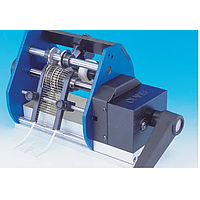
Lead Cutter
In electronics assembly, clean and consistent lead preparation has a direct impact on solder quality, board fit, component handling, and overall process efficiency. Whether the job involves trimming loose radial components, forming transistor leads, or preparing parts from tubes for insertion, the right Lead Cutter setup helps reduce manual variation and supports repeatable production results.
This category brings together equipment and tooling used for cutting and forming component leads in SMT and electronic assembly environments. It is especially relevant for production lines, repair departments, and component preparation stations where lead length, shape, and handling accuracy matter before soldering or final assembly.
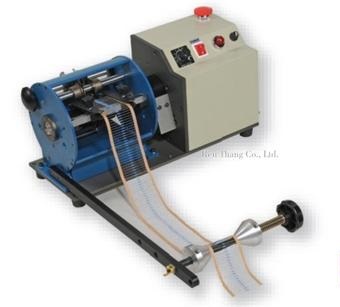
Where lead cutting equipment fits in the assembly process
Lead cutting is often one of the small steps that has a large effect downstream. Components with improper lead length or poorly formed terminals can slow insertion, affect seating on the PCB, and create inconsistency during soldering. In higher-volume environments, dedicated cutting and forming machines also help improve operator productivity and reduce handling damage.
For many electronics manufacturers, lead preparation works alongside other process tools such as soldering stations and rework systems. That makes this category useful not only for new production setups, but also for maintenance teams and engineering departments refining manual or semi-automatic assembly workflows.
Typical equipment included in this category
The products shown here cover several common lead-processing tasks rather than a single machine style. Some models are designed for loose radial components, while others are intended for transistors in tube packaging or IC components that require both cutting and forming in a controlled sequence.
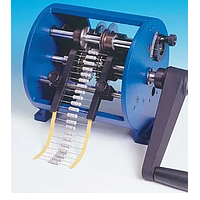
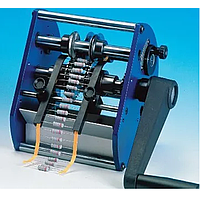
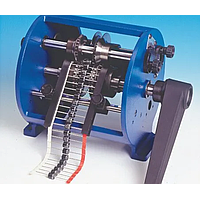
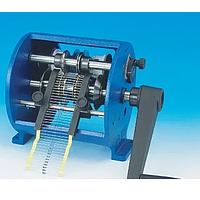
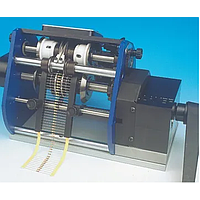
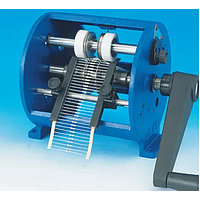
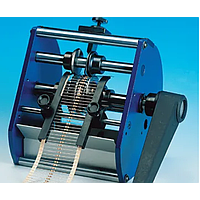
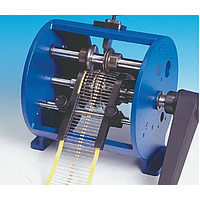
Examples from Olamef illustrate this range clearly. The TP/TC4 is a motorized cutting machine for loose radial components, while the TP/LN-500/1, TP/LN-500/2, and TP/LN-100 address pneumatic cutting tasks for similar component types. For more specialized preparation, the TP/SC4 and TP/TS1 support cutting and forming operations, and the TP/TO-CF is designed for transistor handling from tube-fed input.
This category also includes supporting tooling and machine-related parts. For example, the REN THANG RT500-B205A Forming Die Set is relevant where a forming machine requires dedicated dies for a specific part geometry, while items such as the REN THANG CF360-C37 Aluminum Guard Rail and CF360-C36/CF360-C38 metal trail parts fit the broader equipment ecosystem around component processing machinery.
Cutting only vs. cutting and forming
One of the first decisions when selecting equipment is whether the process only needs lead trimming or also requires lead forming. Cutting-only machines are suitable when the objective is to bring leads to a target length before insertion or soldering. These are often used for loose radial parts where the board layout and assembly method do not require a more complex bend profile.
Cutting-and-forming machines are more appropriate when components need a defined shape for placement, spacing, or mechanical fit. In those cases, interchangeable or dedicated dies become important because the final geometry must match the component package and the assembly requirement. This is why a model such as the Olamef TP/SC4 or TP/TS1 serves a different role from a simpler pneumatic cutter.
For transistor packages and tube-fed components, the process may also benefit from automation and better control of part orientation. The Olamef TP/TO-CF and TP/IC-F are examples of equipment aimed at applications where repeatability and package-specific handling are more critical than basic trimming alone.
How to choose the right lead cutter for your process
The best choice depends less on brand name and more on the way components arrive at the workstation and how they need to leave it. A practical starting point is to define the component format: loose radial parts, transistors in tube, or IC components in tube. From there, it becomes easier to narrow the selection toward manual feed, pneumatic, or motorized equipment.
It is also important to consider whether the application needs a standard process or a dedicated forming profile. Machines that accept interchangeable dies can support broader production flexibility, while a dedicated die set may be more suitable for stable, repetitive jobs. If your line handles multiple package styles, tooling availability can matter just as much as the base machine itself.
Another key factor is workflow integration. In some operations, lead preparation is a standalone bench task; in others, it is part of a larger repair or assembly environment that may also include desoldering stations or localized rework tools. Choosing equipment that matches the pace, operator skill level, and required consistency of the process will usually lead to better long-term results than focusing only on machine type.
Representative products in this category
Several listed products are useful reference points for understanding the scope of this category. The Olamef TP/TC4 is suited to motorized cutting of loose radial components, helping users who need adjustable speed and straightforward manual feeding. The TP/LN series expands that capability with pneumatic options for trimming loose radial parts in different production contexts.
Where forming is part of the requirement, the Olamef TP/SC4 and TP/TS1 are relevant choices for loose radial components, with the TP/TS1 positioned for applications involving transistor forming. For tube-fed work, the TP/TO-CF supports cutting and forming for transistor packages, while the TP/IC-F addresses IC components in tube where pitch and lead shape are important to downstream assembly.
On the tooling side, REN THANG products such as the RT500-B205A Forming Die Set and CF360 series mechanical parts show that lead-processing systems often depend on more than the main machine alone. Tooling, rails, and support parts can be just as important when maintaining repeatable operation or adapting equipment to a specific job.
Applications across electronics manufacturing and repair
Lead cutting equipment is commonly used in through-hole component preparation, mixed-technology assembly, repair benches, and pre-solder processing stations. In some facilities, it supports high-mix manufacturing where operators frequently switch component types. In others, it is part of a more standardized production cell focused on one package family or a narrow range of parts.
These tools also complement neighboring process categories. For example, after components are cut or formed, they may move to soldering, touch-up, or rework steps supported by hot air and SMT rework systems. In that sense, lead preparation is not an isolated task, but part of a broader assembly chain where mechanical consistency supports electrical and thermal process quality.
What to review before ordering
Before selecting a machine or accessory, it helps to confirm a few practical points: component package type, required cut length or form, feeding method, expected throughput, and whether the application depends on dedicated dies. These details determine whether a pneumatic bench tool, a motorized cutter, or a more automated cutting-and-forming machine is the better fit.
If you are comparing products within this category, focus on the actual handling requirement rather than choosing the most complex option. A simpler cutter may be ideal for loose radial parts, while specialized tube-fed or die-based equipment makes more sense for controlled, repeatable shaping tasks. Matching the tool to the process is usually the most efficient way to improve consistency without overcomplicating the workstation.
Choosing with process fit in mind
A well-selected lead cutter supports smoother assembly, better part preparation, and more predictable downstream soldering or insertion results. This category includes both cutting machines and related tooling for different electronic component formats, making it easier to align equipment with the real demands of bench work, repair operations, or production lines.
If your process involves loose radial components, transistor leads, or tube-fed IC preparation, reviewing the available machine type, tooling approach, and workflow compatibility will help narrow the right solution. The goal is not simply to cut leads, but to create a more controlled and repeatable preparation step within the wider electronics assembly process.
Get exclusive volume discounts, bulk pricing updates, and new product alerts delivered directly to your inbox.
By subscribing, you agree to our Terms of Service and Privacy Policy.
Direct access to our certified experts