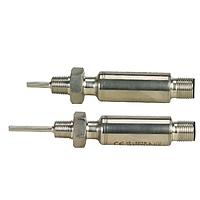
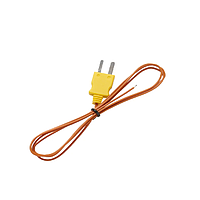
Temperature sensor
Reliable temperature data is fundamental to process control, equipment protection, product quality, and energy efficiency. In industrial automation, electronics design, and laboratory environments, the right temperature sensor helps convert thermal changes into usable signals for monitoring, switching, alarming, or closed-loop control.
This category brings together temperature sensing solutions used in both contact and non-contact measurement tasks. Depending on the application, users may need compact board-level devices for embedded systems, rugged industrial probes for harsh environments, or infrared instruments for high-temperature targets where direct contact is not practical.
Where temperature sensors are used
Temperature sensors are found across manufacturing lines, furnaces, HVAC systems, storage areas, power electronics, test benches, food processing equipment, and environmental monitoring setups. Their role is not limited to displaying a temperature value; they also support protection logic, stability control, process repeatability, and predictive maintenance.
In electronics and embedded design, compact devices from Analog Devices are often selected for PCB integration, analog output conditioning, or digital communication over common interfaces such as SPI and I2C. In heavy industry, non-contact measurement becomes especially important when surfaces are moving, energized, inaccessible, or operating at extreme temperatures.
How temperature sensing works in practice
At a basic level, a sensor responds to heat and converts that change into an electrical signal. That output may be analog voltage, current, resistance change, or a digital signal that can be read by a controller, display, PLC, or data acquisition system. The best choice depends on the required accuracy, response time, installation method, and control architecture.
Contact temperature sensors are used when the probe can be mounted directly on or inside the target medium. These are common in tanks, pipelines, machinery, chambers, and HVAC systems. Non-contact temperature sensors, such as pyrometers, detect thermal radiation and are useful when the target is very hot, moving, or difficult to access safely.
Typical sensor formats in this category
This category covers a broad sensing ecosystem rather than one single device type. On the electronic side, board-mount sensors and IC-based solutions are widely used in compact systems where designers need stable measurement in a small footprint. Examples include the Analog Devices ADT75ARZ-REEL for digital sensing and the AD592BNZ for temperature measurement in signal-processing applications.
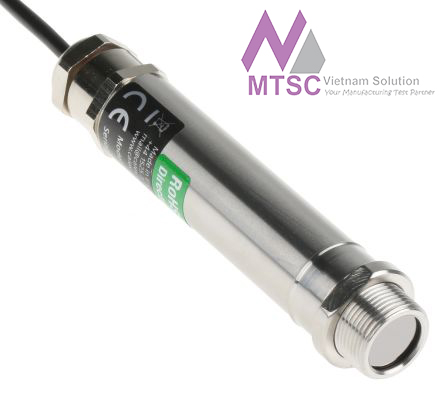
For analog conditioning and thermocouple-related designs, models such as the Analog Devices AD595CDZ and AD8496ARMZ-R7 are relevant examples. These devices are often considered when engineers need a practical path from raw sensor input to a signal that can be interpreted by control or acquisition hardware. For users working around high-temperature industrial processes, the Advanced Energy IGA 320 compact digital pyrometer illustrates the non-contact side of the category, especially for elevated temperature ranges.
Key selection factors before choosing a sensor
Choosing the right model starts with the measurement range. Low-temperature ambient monitoring, machine surface measurement, and furnace observation all require very different sensing technologies. Range should always be checked alongside expected operating conditions, not in isolation.
The next important factor is output type. Analog outputs may be preferred for simple integration or legacy control systems, while digital outputs can simplify communication in modern embedded designs. Response time, installation constraints, ambient conditions, and required measurement uncertainty also matter, especially in applications where fast thermal changes affect product quality or safety.
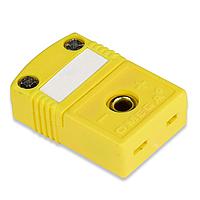
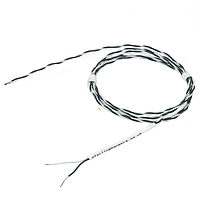
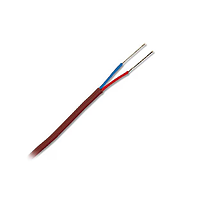
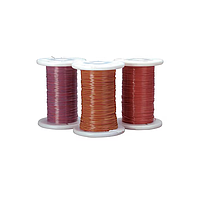
Mechanical and environmental considerations are equally important. Industrial users should review housing materials, connector styles, ingress protection, and resistance to vibration or electrical noise. In many systems, the sensor is only one part of the measurement chain, so compatible temperature wire and cable or suitable connection hardware can directly influence signal quality and long-term reliability.
Contact vs non-contact temperature measurement
Contact sensors are usually the preferred option when the process allows direct installation and when stable thermal coupling is achievable. They are commonly used for liquids, air handling systems, machinery frames, heated plates, and enclosed process points. These solutions are often straightforward to integrate into industrial monitoring and control loops.
Non-contact sensing is more suitable when direct probe placement is difficult or unsafe. The Advanced Energy IGA 320 compact digital pyrometer is an example of this approach, with a high-temperature operating range and industrial-style output options suited to process environments. For applications where users need a broader visual view of heat distribution rather than a single spot measurement, a thermal imaging camera may be a better fit.
Supporting components and system integration
A sensor rarely works alone. In real installations, the full measurement path may include connectors, extension cable, transmitters, displays, controllers, and protective mounting hardware. Good system design considers signal transmission, environmental protection, calibration workflow, and maintenance access from the beginning.
For that reason, it is often useful to review related items such as temperature accessories when specifying a complete solution. In many industrial projects, the difference between a stable measurement system and an unreliable one comes down to practical details such as wiring method, shielding, connector selection, and sensor placement.
Representative products in this category
Several products in this category reflect the diversity of temperature sensing tasks. The Analog Devices TMP01FJ is an example of an analog temperature switch-oriented device, while the AD7417BR-REEL represents digital sensing with a 2-wire I2C interface. The ADT7518 series shows how serial interface temperature devices can support integration in embedded electronics and control boards.
On the industrial side, the Advanced Energy IGA 320 compact digital pyrometer demonstrates how temperature sensing extends beyond contact probes into demanding high-temperature environments. This makes the category relevant not only for maintenance teams and instrumentation engineers, but also for OEMs, panel builders, R&D teams, and system integrators looking for fit-for-purpose thermal measurement components.
Choosing the right solution for your application
The most suitable sensor depends on what you need to measure, how fast the temperature changes, where the device will be installed, and how the signal will be used downstream. A compact board-level sensor may be ideal for embedded monitoring, while an industrial probe or infrared sensor may be more appropriate for production equipment and process control.
When comparing options in this category, focus on application fit rather than only headline specifications. Measurement method, interface type, environmental compatibility, and installation practicality usually determine long-term performance more than any single datasheet number. A well-matched temperature sensor supports better control, more stable operation, and more dependable measurement across the entire system.
Get exclusive volume discounts, bulk pricing updates, and new product alerts delivered directly to your inbox.
By subscribing, you agree to our Terms of Service and Privacy Policy.
Direct access to our certified experts