Hydraulic meter
Reliable hydraulic troubleshooting depends on more than a simple pressure reading. In many service, maintenance, and commissioning tasks, engineers need to see flow, pressure, and temperature together to understand pump condition, valve behavior, system losses, and overall circuit performance. That is where a hydraulic meter becomes a practical diagnostic tool for workshops, field technicians, OEMs, and industrial maintenance teams.
What a hydraulic meter is used for in practice
In hydraulic systems, faults rarely appear as a single, isolated symptom. Reduced machine speed, overheating, unstable actuator movement, and pressure drop can all be connected. A hydraulic meter helps technicians assess real operating conditions directly in the circuit, making it easier to verify whether the issue comes from insufficient flow, internal leakage, excessive restriction, or incorrect load behavior.
This category covers instruments used to measure hydraulic performance under working conditions. Depending on the setup, they can support routine preventive maintenance, acceptance testing after repairs, comparison of actual versus expected pump output, and performance checks on mobile or industrial hydraulic equipment.
Typical measurement parameters and why they matter
The most useful hydraulic diagnostics combine several values rather than looking at one signal alone. Flow measurement indicates how much fluid the circuit is delivering, while pressure shows the resistance or load in the system. Temperature adds important context because fluid condition and viscosity directly affect hydraulic efficiency and repeatability.
Some portable test solutions also allow testing under load, which is especially valuable when evaluating pump condition or identifying flow loss that only appears during operation. For users who need a broader view of related instruments, the wider range of pressure and temperature monitoring devices can also support plant-level condition checks and environmental measurement tasks.
Main product types in this category
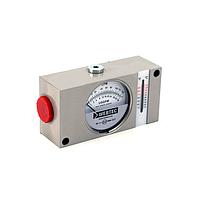
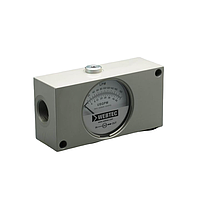
Within this range, one common approach is the use of positive displacement flow meters. These are well suited to lower and medium flow ranges where stable, repeatable measurement is required across a wide range of fluid viscosities. Models such as the Webtec GF025-MAP-B-6, GF070-MAP-B-6, and GF150-MAP-B-6 illustrate this type of solution for metric flow applications, while GF025-MAP-S-6, GF070-MAP-S-6, and GF150-MAP-S-6 serve corresponding US flow ranges.
Another important group is turbine flow meters with built-in loading capability. Products such as the Webtec LT600R-FM-S-S-7, LT600R-FM-F-B-3, and LT800R-FM-S-B-7 are intended for applications where users need to observe flow behavior while applying load to the hydraulic circuit. This makes them especially useful for evaluating pump performance and overall system response in service environments.
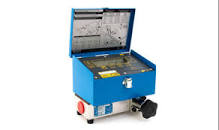
For more complete field diagnostics, a portable kit may be the most efficient format. The Webtec DHCR1500R complete hydraulic test kit is a good example of an integrated setup designed to measure flow, pressure, and temperature under load, all in a transportable package for on-site work.
How to choose the right hydraulic meter
Selection usually starts with the real operating window of the system rather than the nominal machine specification. Flow range should match normal and peak conditions closely enough to maintain useful resolution, while pressure rating must comfortably cover the circuit’s maximum working pressure. Connection type and port style also matter because they affect installation speed, compatibility, and the risk of introducing leakage points during testing.
Fluid type, temperature, and viscosity should also be reviewed before choosing a meter. Some flow meter designs are better suited to a wider range of hydraulic media, and measurement behavior can change as viscosity rises or falls. In maintenance applications, portability and readability may be just as important as accuracy, especially when technicians need fast checks in the field rather than a fixed laboratory-style test setup.
If the goal is broader circuit analysis rather than a dedicated hydraulic flow test, it may also be useful to compare options in the hydraulic meter range with standalone pressure tools such as manometers, depending on how much diagnostic detail is required.
Why loading capability is important in hydraulic testing
Measuring no-load flow alone does not always reveal how a hydraulic system performs in real service. A pump may appear acceptable at low resistance but lose effective output once pressure rises. Meters with a built-in loading valve, or complete test kits designed for loaded measurement, help reproduce working conditions more accurately and provide more meaningful data for fault finding.
This is particularly relevant in applications such as pump verification, commissioning after overhaul, and troubleshooting complaints related to weak actuator force or slow cycle times. A loaded test helps determine whether the root cause is pump wear, bypass leakage, valve restriction, or temperature-related fluid behavior rather than an issue elsewhere in the machine.
Representative Webtec solutions in this category
Webtec is the key manufacturer represented in this category, with solutions spanning compact flow meters, higher-capacity turbine meters, and complete portable test kits. The GF series is suited to conditioned output measurement where users need reliable electronic signals, while the LT series supports higher-flow hydraulic testing with integrated loading functionality.
For users working on larger systems, the Webtec DHCR1500R kit and HV1500-related configuration provide a practical route to high-flow testing under load. For lower-flow circuits, models in the GF025 and GF070 families offer a more focused measurement range, helping technicians avoid oversizing the meter and losing measurement resolution.
Installation and application considerations
Good measurement practice matters as much as instrument selection. In hydraulic testing, hose routing, secure mechanical support, and clean fluid conditions all affect reliability. A correctly installed upstream filter and stable hose clamping help protect the meter and reduce the chance of misleading readings caused by contamination, vibration, or unstable flow conditions.
It is also important to match the instrument to the maintenance workflow. Portable kits are often preferred by service teams who move between machines, while dedicated inline meters may be more suitable for repeat testing benches or production support. In either case, choosing a hydraulic meter with the appropriate flow range, pressure capability, and output type helps reduce diagnostic time and improves confidence in the test result.
Finding the right fit for your hydraulic system
The best choice depends on what you need to learn from the system. If you want quick, portable troubleshooting with multiple parameters in one setup, a complete test kit can be efficient. If you need continuous or repeated flow checks within a defined operating band, a dedicated positive displacement or turbine-based meter may be the better option.
This hydraulic meter category is intended to support practical measurement needs across maintenance, repair, and industrial diagnostics. By matching the instrument to the expected flow, pressure, fluid conditions, and test method, it becomes much easier to isolate faults, validate repairs, and keep hydraulic equipment performing as intended.
Get exclusive volume discounts, bulk pricing updates, and new product alerts delivered directly to your inbox.
By subscribing, you agree to our Terms of Service and Privacy Policy.
Direct access to our certified experts