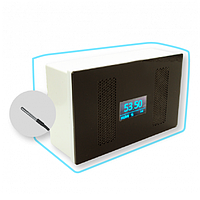
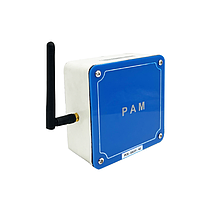
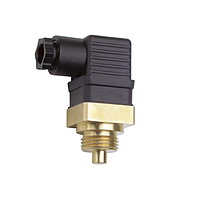
Pressure, Temperature & Humidity Monitors
Maintaining stable environmental conditions is critical in many industrial, laboratory, and building-management applications. When pressure, temperature, or humidity drifts outside the target range, product quality, process safety, and room performance can all be affected. This is why Pressure, Temperature & Humidity Monitors are widely used to provide continuous visibility of key conditions and support faster response when values move out of tolerance.
Within this category, users typically look for monitoring devices that are easy to install, readable in daily operation, and suitable for integration into control or alarm systems. For applications involving controlled rooms, air handling, and indoor environmental monitoring, these instruments help operators confirm conditions at a glance while also supporting signal output for supervisory systems.
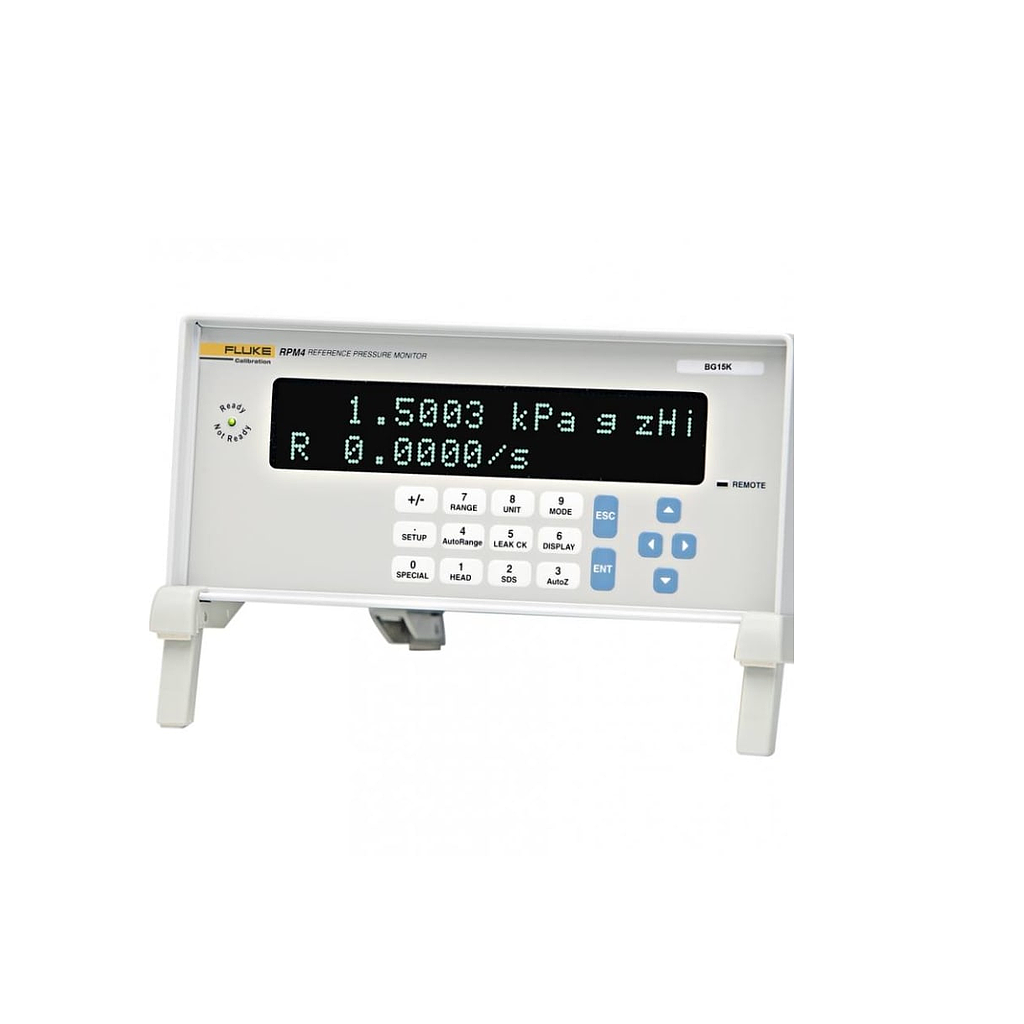
Where these monitors are commonly used
Environmental monitoring is especially important in spaces where airflow balance and room condition control matter. Typical use cases include clean areas, healthcare rooms, laboratories, production spaces, HVAC systems, and other indoor installations where low differential pressure and related room conditions must be observed continuously.
In secure or controlled environments, operators often need a local display for immediate status checks as well as an electrical output for remote monitoring. Compared with standalone spot-check tools, permanently installed monitors are better suited to ongoing supervision and routine facility management. If you are comparing installed solutions with handheld instruments, the broader range of manometers may also be useful for temporary checks and commissioning work.
What to expect from monitors in this category
Devices in this group are designed to measure and display one or more environmental variables that influence process stability or room integrity. Depending on the application, buyers may prioritize clear graphical indication, analog output options, switch functionality, or compatibility with building automation systems.
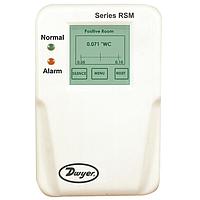
The representative products in this category show a practical feature set for facility monitoring: local graphical display, selectable current or voltage output, indoor enclosure design, and installation suitable for wall mounting. Some models also support communication options such as BACnet MS/TP, which can be useful when data needs to be shared with a central control platform. For users reviewing a wider set of fixed-install instruments, the full selection of pressure, temperature and humidity monitoring devices helps narrow down application fit.
Representative Dwyer models for secure environments
A key brand visible in this category is Dwyer, with several low differential pressure monitors intended for secure environments. Examples include the Dwyer RSM-1-A and RSM-1-B for very low ranges, the RSM-3-A and RSM-3-B for moderate low-pressure monitoring, and the RSM-6-A and RSM-6-B for higher ranges within the same product family.
These models illustrate how range selection and power configuration can vary while the overall installation concept remains consistent. Across the listed units, users can find monitoring ranges from 0.05 inH₂O up to 2.5 inH₂O, with ±0.5% accuracy, barbed fittings for 3/16 in tubing, and output choices such as 4-20 mA, 0-5 VDC, or 0-10 VDC. In practice, this allows engineers and facility teams to choose a monitor that aligns with both the sensitivity required by the room and the electrical interface expected by the control system.
How to choose the right monitor
The first step is to define the variable that matters most in your process. In this category, many buyers are focused on room pressure monitoring, especially where pressure relationships between adjacent spaces must be maintained. In those cases, selecting the correct pressure range is essential: a monitor with too wide a range may reduce useful resolution for very low-pressure applications, while a range that is too narrow may not match real operating conditions.
Next, consider the installation and signal requirements. Some projects require simple local indication only, while others need analog output to a PLC, BMS, or alarm panel. Power supply also matters during selection, since the listed models include variants intended for different supply conditions. When system verification involves other pressure measurement tasks beyond room monitoring, related categories such as portable vacuum pressure instruments may help with field diagnostics.
Why pressure range and output type matter
For low differential pressure applications, small changes can be operationally significant. A space that must remain slightly positive or negative relative to adjacent areas may only require a fraction of an inch of water column to maintain the desired airflow direction. That is why models such as the RSM-1 series, with a 0.05 inH₂O range, are suited to very sensitive monitoring, while higher-range options like the RSM-5 or RSM-6 series may fit applications with larger expected deviations.
Output signal selection is equally important. Current outputs such as 4-20 mA are often preferred for robust transmission in industrial environments, while voltage outputs can be suitable where the receiving controller is designed around that signal type. Optional communication support may further simplify integration for sites using networked building or facility monitoring.
Installation and operating considerations
Most fixed monitors in this group are intended for indoor use and routine wall installation. Buyers should confirm mounting method, tubing connection style, enclosure suitability, and ambient operating conditions before ordering. The featured products, for example, are designed for indoor applications with NEMA 1 / IP20 enclosure ratings and use screw terminals for electrical connection.
It is also good practice to review the media compatibility and surrounding environment. The listed Dwyer units are intended for air and common gases such as nitrogen and oxygen, which aligns with many HVAC and room-monitoring tasks. If your application involves a different measurement objective, such as atmospheric reference tracking, a dedicated barometer may be more appropriate than a low differential pressure room monitor.
Supporting reliable environmental control
Environmental monitoring is not only about displaying a number on the wall. It supports documentation, alarm response, maintenance planning, and confidence that rooms or systems are operating within target conditions. In facilities where compliance, containment, or product consistency matters, a stable and readable monitoring solution becomes part of everyday operational control.
This category is therefore most useful for buyers who need practical instruments for ongoing observation of pressure-related room conditions and similar indoor parameters. By reviewing range, output, power supply, and integration needs, you can select a monitor that fits the application without overcomplicating the system. If you are building out a complete pressure measurement toolkit, this category works well alongside other fixed and portable measurement solutions used for setup, verification, and maintenance.
Get exclusive volume discounts, bulk pricing updates, and new product alerts delivered directly to your inbox.
By subscribing, you agree to our Terms of Service and Privacy Policy.
Direct access to our certified experts