
Redundancy Modules
In industrial control panels, process lines, and machine power architectures, avoiding a single point of failure is often just as important as selecting the right power supply. Redundancy Modules are used to combine multiple DC power sources while helping isolate faults, so a failure on one supply does not immediately bring down the full load. This makes them a practical choice for applications where uptime, controlled shutdown behavior, and stable DC distribution matter.
On this page, you can explore redundancy modules for common industrial DC systems, especially DIN rail-based installations and related control cabinet designs. The category is relevant for engineers, panel builders, OEMs, and maintenance teams looking to improve power availability without overcomplicating the system layout.
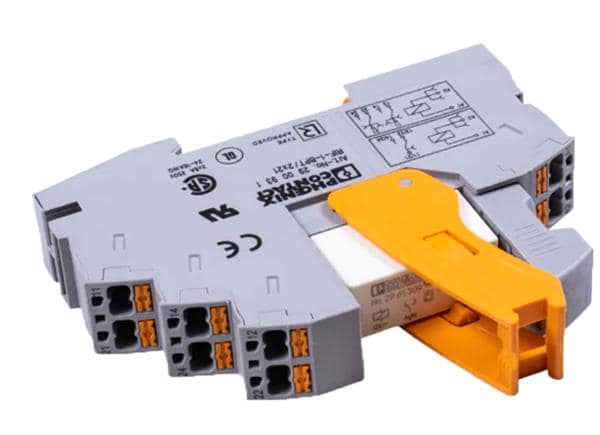
Why redundancy modules matter in industrial DC power systems
Many industrial loads rely on continuous 12 VDC, 24 VDC, or 48 VDC power for PLCs, I/O, communication devices, sensors, and safety-related controls. If one DC power supply fails, a properly designed redundancy stage can allow a second supply to continue feeding the load path. In practice, this helps reduce unplanned stoppages and protects system availability in critical sections of the machine or plant.
A redundancy module is typically installed between parallel power supplies and the downstream load. Its job is to manage current paths and prevent reverse feeding from one source into another. In compact cabinet designs, this can be a cleaner and more reliable approach than building a similar function from separate components.
Typical configurations and where they are used
Most redundancy modules in this category are intended for industrial DC applications and commonly support DIN rail installation, making them suitable for standard control cabinets. Typical use cases include automation panels, packaging lines, conveyor systems, utility skids, process instrumentation cabinets, and infrastructure systems where a power interruption can create downtime or recovery complexity.
They are often paired with DIN rail power supplies to create a dual-source DC architecture. In projects that also require ride-through capability during mains loss, redundancy may be combined with a UPS solution as part of a broader industrial power design.
What to look for when selecting a redundancy module
The first step is matching the module to the system voltage and current. In this category, examples include 12 VDC, 24 VDC, and 48 VDC solutions, with current ratings ranging from lower-current branches to higher-load industrial outputs such as 20 A, 40 A, and beyond. The selected unit should support the expected continuous load current as well as installation conditions such as ambient temperature and panel space.
Mounting format is another practical consideration. Many products here are designed for DIN rail mounting, which suits standard industrial enclosures, while some chassis-mount options are also relevant in equipment-integrated designs. It is also useful to consider how many inputs and outputs the module provides, especially when designing separate redundant sources for control and field loads.
Environmental performance should not be overlooked. Industrial applications may require operation across wide temperature ranges, so engineers usually check the allowable minimum and maximum operating temperature, enclosure style, and isolation characteristics where applicable. Selection should always be based on the actual cabinet environment and total power architecture, not current rating alone.
Examples from leading industrial manufacturers
This category includes solutions from well-known power and automation suppliers such as PHOENIX CONTACT, MEAN WELL, Delta Electronics, Inc., and SIEMENS. These brands are commonly specified in industrial power systems where standardized installation, serviceability, and compatibility with cabinet-based equipment are important.
For example, the PHOENIX CONTACT 2320173 QUINT-ORING/24DC/2X10/1X20 and PHOENIX CONTACT 2902879 QUINT-ORING 24DC/2X40/1X80 illustrate how redundancy modules can serve different load levels within 24 VDC systems. In 48 VDC applications, the PHOENIX CONTACT 2320160 QUINT-DIODE/48DC/2X20/1X40 is relevant where higher-voltage DC distribution is used. For compact 12 VDC architectures, MEAN WELL ERDN20-12 and ERDN40-12 provide examples of current-rated redundancy modules for lower-voltage systems.
SIEMENS options such as 6EP19642BA00 and 6EP43477RB000AX0 show how redundancy modules fit into control-oriented DC power schemes, from smaller branch loads to higher-current cabinet power distribution. Delta Electronics, Inc. DRR-40N is another example suited to industrial DC redundancy, particularly in systems built around DIN rail power ecosystems.
Redundancy module vs. related power components
Redundancy modules are only one part of a robust power design. They do not replace the need for correctly sized power supplies, proper upstream protection, or energy buffering where required. Their primary value is fault isolation between parallel DC sources and maintaining output continuity when one source is lost.
In some systems, engineers also use DIN rail mount isolated DC/DC converters when voltage conversion or galvanic isolation is needed between subsystems. That is a different function from redundancy, although both may appear in the same cabinet. Keeping these roles separate helps avoid specification errors during system design and procurement.
Application-driven selection tips
For PLC and control power, the focus is usually on stable 24 VDC delivery, manageable current levels, and straightforward DIN rail integration. In these cases, compact models such as the SIEMENS SITOP redundancy units or mid-range PHOENIX CONTACT modules can fit well, depending on current demand and architecture. For heavier cabinet loads or aggregated field devices, higher-current modules become more relevant.
For distributed systems or communication infrastructure, voltage range and thermal behavior can be just as important as output current. A module intended for wider DC input ranges may simplify integration where source voltages vary slightly across the system. In maintenance-heavy environments, installers may also prefer solutions with familiar form factors and clearly defined wiring layouts to speed troubleshooting and replacement.
When specifying a redundant power path, it is good practice to review the complete chain: power supply sizing, load diversity, cable losses, panel ventilation, and expected fault scenarios. A redundancy module works best when it is part of a coordinated power strategy rather than a last-minute add-on.
Supporting more reliable panel and machine designs
As control systems become more connected and downtime costs rise, power availability becomes a design requirement rather than just a preference. Redundancy modules help create a more resilient DC backbone for automation systems, particularly where a single failed supply could stop communications, control logic, or critical field devices.
Whether you are building a new panel, upgrading an existing machine, or standardizing a plant power scheme, this category brings together practical options for redundant DC supply design. Reviewing voltage range, current capacity, mounting style, and overall cabinet architecture will help narrow the right choice for your application and make the rest of the power system easier to maintain over time.
Get exclusive volume discounts, bulk pricing updates, and new product alerts delivered directly to your inbox.
By subscribing, you agree to our Terms of Service and Privacy Policy.
Direct access to our certified experts
