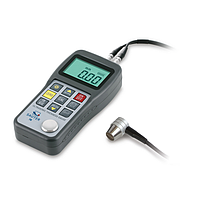
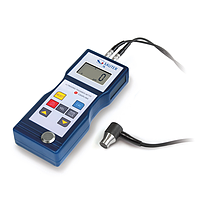
Ultrasonic Thickness Gages
How Ultrasonic Thickness Gauges Work
Have you ever wondered how an ultrasonic thickness gauge measures material thickness? Behind this technology lies the fundamental principle of ultrasonic sound waves. These waves operate at frequencies beyond the range of human hearing, typically below 20 MHz. What is remarkable is that sound waves can travel through different materials at different speeds, depending on each material’s elastic properties. Interestingly, sound transmits best through solids, followed by liquids and then gases.
Consider this familiar situation: you are standing near a railway track. When the train is still far away, you may not hear anything. But if you place your ear on the rail, an entire world of sound suddenly becomes audible. This perfectly illustrates the strength of sound wave transmission in solid materials.
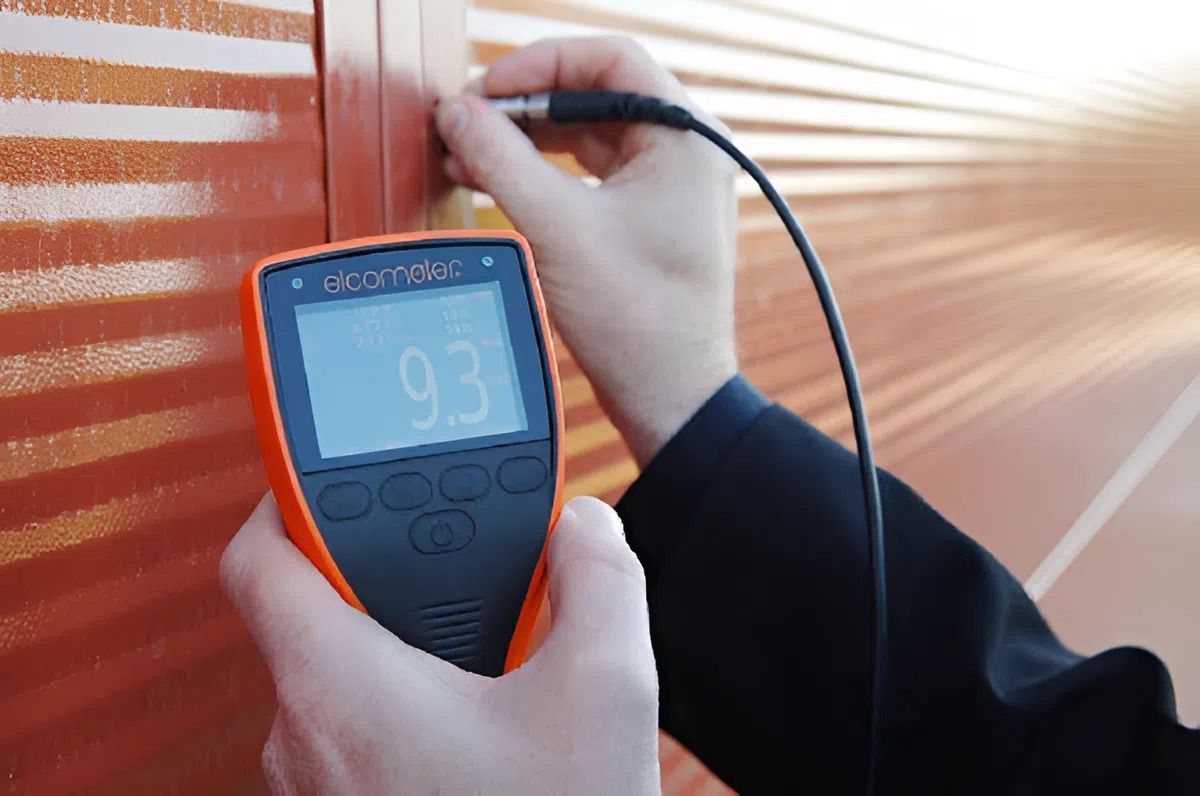
Ultrasonic thickness gauges use the principles of sound wave transmission, reflection, and refraction to determine material thickness. The device sends ultrasonic waves from the surface of the material, allowing them to travel through it and partially reflect back. The sensor then receives the reflected waves and calculates the distance traveled. Based on wave velocity and travel time, the instrument determines the material thickness.
Sensor of an Ultrasonic Thickness Gauge
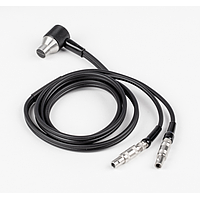
The sensor of an ultrasonic thickness gauge has a specialized design. It integrates both the ultrasonic transmitter and receiver into a single probe. When you hold the probe in your hand with the surface facing upward, you can clearly see two distinct sections: one half functions as the transmitter, while the other half serves as the receiver.
To ensure measurement accuracy, the sensor surface is always manufactured to be flat, without any convex or concave deformation. This is critically important because reflection and refraction characteristics of sound waves depend heavily on the contact surface.
When measuring curved surfaces, calculations become more complex. In addition, sound waves can create interference zones where waves may cancel out or reinforce each other, a phenomenon known as resonance. For this reason, manufacturers develop their own proprietary algorithms to maintain measurement accuracy.
As a result, even when measuring the same location with two different instruments, the results may not be identical. This is one of the noticeable differences users may encounter when working with different ultrasonic thickness gauges.
Operating Principle of Thickness Measuring Instruments
Electromagnetic induction and eddy currents are the basic principles used by coating thickness gauges. The probe generates eddy currents and measures changes in the magnetic field between two layers: the coating layer and the base material.
The varying current is collected by the probe and converted into an electrical signal before being transmitted to the instrument. The data processor analyzes the signal and delivers results quickly, ensuring high accuracy. This electronic induction principle enables precise measurement of coating, paint, and plating thickness.
Applications of Thickness Gauges
Automotive Industry: Thickness gauges are widely used in the automotive industry to inspect the thickness of metal panels. Ultrasonic thickness testing devices are essential for detecting manufacturing defects, while coating thickness gauges play a key role in repairing and maintaining paint layers on vehicles.
Jewelry Industry: Jewelers use thickness gauges to test gold and other precious metals. This helps determine whether a gold item contains other materials or alloys.
Construction: Thickness gauges are commonly used to check the thickness of walls and construction materials, ensuring structural strength and safety. Copper pipes and industrial pipelines also require periodic inspection to detect corrosion.
Archaeology: Scientists and students can use non-destructive ultrasonic testing techniques to analyze the thickness of ancient stone artifacts.
Medical Field: Coating thickness gauges ensure that medical instruments have plastic coatings of sufficient thickness, providing protection and safety for patients.
Fuel and Chemical Storage Tanks: Ultrasonic thickness gauges provide information on corrosion levels in fuel and chemical storage tanks, helping maintain safety and operational efficiency during storage.
Recommended Ultrasonic Thickness Gauge: SMARTSENSOR AS840
When it comes to material thickness measurement, having a reliable and accurate instrument is essential. The SMARTSENSOR AS840 ultrasonic thickness gauge is a powerful assistant for precise and efficient measurement tasks and is available for reference at EMIN.
With a measuring range of up to 225 mm, the AS840 offers versatile thickness measurement across a wide range of materials. Accuracy is ensured at ±(1%H + 0.1) mm, an impressive specification that allows you to trust the results of every measurement.
The AS840 is designed with user convenience as a top priority. Features such as automatic zero calibration and automatic linear compensation enable quick setup and consistently accurate results. Even without expert-level knowledge, users can operate the device easily and efficiently. From the automotive industry and skilled jewelers to construction and archaeology, this instrument proves useful across many fields.
Thanks to its ability to operate reliably under various weather and environmental conditions, the AS840 becomes a dependable companion. From construction sites to small jewelry workshops, this device is always ready to perform.
In addition, there are many other options available when you are interested in material thickness measurement.
Popular metal thickness gauges and coating thickness gauges trusted by users include UNI-T UT345A, Smartsensor AS860, PCE TG 75-ICA, and LCOMETER 307. Each model offers distinct features suitable for different applications.
Conclusion
Understanding information about different types of thickness gauges provides a comprehensive view of their classifications and functions. This knowledge makes it easier to select the most suitable thickness gauge for your specific needs, ultimately improving work efficiency.
If you have any questions or need further consultation, feel free to contact EMIN Vietnam. We are always ready to answer your questions and support you in choosing the most suitable product.
Get exclusive volume discounts, bulk pricing updates, and new product alerts delivered directly to your inbox.
By subscribing, you agree to our Terms of Service and Privacy Policy.
Direct access to our certified experts
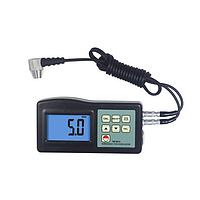
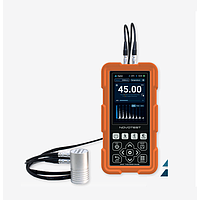
![SAUTER TU 80-0.01US Thickness Gauge, Ultrasonic, Premium, 0.75-80mm, [d]0.01mm](/s-cdn/d7/d71d3f4c834d124470668f59cfcdb0a1161c854c.png)
![SAUTER TU230.0.01US Thickness gauge, Ultrasonic, Premium, 1.2~200mm/230mm, [d]0.01mm/0.1mm](/s-cdn/38/385d689e0e0648a6fbfd0f97eafc147fd8f750f4.gif)
![SAUTER TN230.0.01US Thickness gauge, Ultrasonic, 1.2~200mm/230mm, [d]0.01mm/0.1mm](/s-cdn/b9/b9de122a6eec29dad8da12fd6a99a85323a88bc0.png)
![SAUTER TN 80-0.01US Thickness Gauge, Ultrasonic, 0.75~80mm, [d]0.01](/s-cdn/94/94a761774941724dbe3499ac24e137da3f3f1903.gif)
![SAUTER TD225.0.1US Thickness Gauge, Ultrasonic, 1.2~225mm, [d]0.1mm](/s-cdn/86/86594f928d31c42fa6357cb3d900ddff586237af.png)