Pressure Regulators
Stable pressure is one of the basics behind reliable pneumatic, analytical, and process systems. When supply pressure fluctuates, even a simple air line or gas handling setup can become harder to control, less repeatable, and more prone to equipment wear. That is why Pressure Regulators are a key part of many industrial and laboratory installations, helping maintain a defined downstream pressure for instruments, valves, flow devices, and air preparation assemblies.
Where pressure regulators fit in a control system
A pressure regulator is used to reduce and stabilize inlet pressure to a usable output level. In practice, this supports more consistent operation of downstream components such as flowmeters, shut-off valves, pneumatic tools, air preparation units, and pressure-sensitive instrumentation.
Within a broader pressure management setup, regulators are often selected alongside other pressure controllers and valves when the application requires both pressure reduction and flow isolation or switching. The exact configuration depends on the medium, allowable inlet pressure, required outlet range, connection type, and environmental conditions.
Common application areas
Pressure regulators are used across compressed air systems, gas distribution lines, analytical equipment, flow measurement assemblies, and machine air circuits. Their main role is not simply to lower pressure, but to keep that pressure within a controlled range as upstream supply and downstream demand change.
In industrial settings, this can mean feeding clean, regulated air to tools or actuators. In instrumentation, it can mean supporting stable operation for flowmeters or sample handling systems. For users comparing options across a wider range of devices, our broader pressure regulator selection can help narrow down products by application and connection style.
Typical product types in this category
This category includes several regulator-related formats rather than one single device style. Some products are standalone air pressure regulators for general pressure reduction, while others are integrated air treatment units that combine filtering, pressure adjustment, and lubrication for pneumatic service lines.
There are also regulator kits designed to work with specific flowmeter families. For example, Dwyer regulator kits such as the RK-VFB, RK-RMB, and RKA are intended for compatibility with selected Rate-Master® and Visi-Float® flowmeters. In these cases, the regulator is part of a measurement ecosystem, helping provide the controlled pressure conditions needed for more stable flow indication.
Examples from leading manufacturers
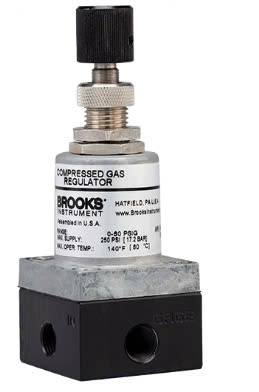
Several established brands appear in this category, each fitting different use cases. Brooks Instrument offers mechanical pressure regulators such as the 8601 series, which is relevant for applications that require controlled low-flow gas service and careful pressure handling. These products are often considered where fine regulation characteristics matter in instrument-related systems.
OMEGA provides air pressure regulators such as the PRG300-120, PRG320-120, and PRG320-60, including variants intended for harsh environments. For compressed air lines, this can be useful when the installation area demands a regulator that can handle tougher operating conditions while maintaining a defined output range.
Dwyer appears here with regulator kits matched to compatible flowmeters, while YATO includes practical air preparation products such as the YT-2383 filter-reducer and the YT-2384 and YT-2385 air filter regulator and lubricator units. LDetek, represented by manual and pneumatic shut-off valves in this dataset, is also relevant in systems where regulation and isolation are used together as part of a controlled gas path.
How to choose the right pressure regulator
The first selection point is the pressure range. A regulator should be chosen based on both maximum inlet pressure and the downstream pressure you actually need to maintain. Oversizing or selecting an unsuitable control range can reduce adjustment sensitivity and make precise setting more difficult.
The second factor is media compatibility. Some products in this category are intended for clean dry air, while others are used in gas service or in assemblies connected to flow measurement devices. Body and seal materials also matter, especially in corrosive, high-purity, or harsh industrial environments.
Connection size and type should also match the existing piping or instrument interface. The examples in this category include common sizes such as 1/4 in and 1/2 in, often with NPT female connections. When the regulator is part of a larger pneumatic service assembly, features such as filtration or lubrication may be more useful than a standalone unit.
Regulators, filters, and shut-off valves: understanding the difference
Users often compare regulators with nearby product groups because they are installed in the same line. A regulator controls downstream pressure. A filter removes contaminants from the air stream. A lubricator introduces oil mist where pneumatic components require it. A shut-off valve isolates flow for maintenance, safety, or process sequencing.
That is why some installations use a combined air preparation assembly, while others use separate devices for each function. If your application also involves isolation or more advanced pressure handling hardware, it may be worth reviewing related vacuum gauge controller or control-valve categories depending on the system architecture.
When application details matter most
In many B2B projects, selecting a regulator is less about finding a generic replacement and more about matching the device to the operating context. A compact regulator for instrument air, a regulator kit for a specific flowmeter family, and a filter-regulator-lubricator unit for workshop pneumatics all solve different problems, even though they fall under the same category.
For this reason, it helps to review not only pressure limits but also installation environment, expected flow behavior, maintenance needs, and compatibility with adjacent components. Products such as the Brooks Instrument 8601, OMEGA PRG series, Dwyer flowmeter regulator kits, and YATO air line units illustrate how different regulator formats support different system priorities.
Conclusion
A well-chosen pressure regulator helps protect equipment, improve repeatability, and support smoother system performance. Whether the requirement is straightforward compressed air regulation, integrated air treatment, or pressure control for a measurement setup, the right choice depends on matching pressure range, media, connection, and application context.
Explore the available products in this category to compare regulator types, supported use cases, and compatible system roles. For more complex setups, reviewing related pressure control and valve categories can also help identify the right combination of components for a stable and maintainable installation.
Get exclusive volume discounts, bulk pricing updates, and new product alerts delivered directly to your inbox.
By subscribing, you agree to our Terms of Service and Privacy Policy.
Direct access to our certified experts