

09/10/2026 15:45:57
A plated through-hole (PTH) in a multilayer circuit board features a copper-plated barrel extending through the internal circuit layers; it is not merely an empty hole connecting the top and bottom layers
A plated through-hole (PTH) in a multilayer circuit board features a copper-plated barrel extending through the internal circuit layers; it is not merely an empty hole connecting the top and bottom layers

While both are classified as soldering stations designed to melt solder, a technician repairing wiring inside an electrical cabinet and one working under a microscope on a mobile phone circuit board require vastly different types of equipment. Check out the article below!

The soldering station had just been unboxed, plugged in, and switched on for the first time. A few seconds later, a thin wisp of smoke rose from the tip, accompanied by a faint acrid smell. Before any soldering could even begin, many users hastily turned the unit off, fearing the equipment was damaged
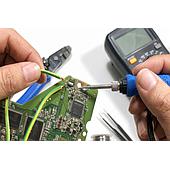
The soldering iron is hot, yet even after touching the resistor lead for ten seconds or more, the solder just clumps up instead of flowing smoothly. A novice's first instinct is often to crank up the temperature. While that sometimes works, temperature isn't always the root cause; in many cases, increasing the heat only burns the flux and pads, potentially ruining the component leads in the process
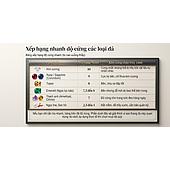
How does the Mohs scale rank gemstone hardness? Why does the metal industry require more precise measurement methods, such as Rockwell, Vickers, and Brinell?
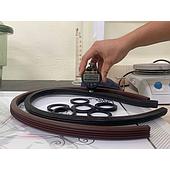
Industrial rubber typically falls within the 40–80 Shore A range, though there is no single standard hardness for all types; components such as gaskets, seals, vibration dampers, and rollers may utilize different hardness levels depending on specific requirements. Temperature also significantly affects measurement results: heated rubber tends to soften—lowering the Shore A value—while cold rubber tends to harden, causing the Shore A reading to rise.

Both Shore A and Shore D are used to measure material hardness, but each scale is suited to a different group of materials. Soft rubber, silicone, or elastic gaskets are typically tested using Shore A, whereas hard plastics, engineering plastics, and materials with low deformation are better suited to Shore D

Learn how to choose and use a feeler gauge correctly to reduce measurement errors during mechanical inspection and maintenance.
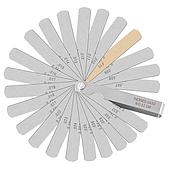
When using metric or inch feeler gauges, the measurement system should match the product's original design specifications. Otherwise, conversion and rounding errors may accumulate across multiple mating surfaces, causing the final clearance to deviate from the intended design value.
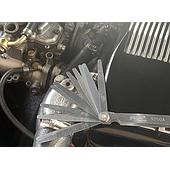
A smaller clearance is often associated with higher precision. However, in mechanical engineering, reducing clearance does not necessarily make a mechanism operate more accurately.
Get exclusive volume discounts, bulk pricing updates, and new product alerts delivered directly to your inbox.
By subscribing, you agree to our Terms of Service and Privacy Policy.
Direct access to our certified experts