Ultraviolet Protection Factor (UPF) describes how effectively a textile limits ultraviolet radiation passing through it. For teams developing UV-protective textiles, a fabric’s result cannot be reliably predicted from one visible characteristic alone. Color, fabric density, construction, and fiber material all influence the way ultraviolet radiation is absorbed, reflected, scattered, or transmitted.
A useful development approach is to consider these variables as a system. A darker shade may improve ultraviolet absorption, but it cannot fully compensate for an open construction. Likewise, a tightly constructed fabric can reduce transmission, while the fiber type and any finishing process may further affect the final result. Measurement is therefore important when comparing samples, refining processes, and monitoring consistency.
What determines the UPF value of fabrics?
The UPF value of a fabric is influenced by its capacity to reduce ultraviolet transmission. In practical textile development, three major factors are color, density, and material. Construction type also matters because it affects the size and distribution of openings within the fabric.
These factors interact rather than working independently. A fabric designed for UV protection typically requires a balanced combination of an appropriate color strategy, a sufficiently compact structure, and a suitable fiber or material treatment. The final UPF value should be verified through testing rather than assumed from appearance or composition alone.
Color: an important contributor to UV absorption
Color affects fabric UPF through the dyes or pigments used in the textile. Different colorants have different molecular structures and therefore different abilities to absorb ultraviolet radiation. This is why color should be evaluated as a material and process decision, not simply as an aesthetic choice.
Dark colors such as black, navy blue, and dark purple are commonly associated with stronger ultraviolet absorption. They may reduce UV transmission more effectively than lightly colored alternatives under otherwise similar conditions. Light colors may have lower UV absorption and rely more on reflection.
However, the idea that darker always means better UV protection is too simple. Light-colored fabrics can still provide substantial protection when paired with a dense construction, a suitable fiber, or specialized dye and finishing approaches. Conversely, a dark fabric with a low-density structure may still allow ultraviolet radiation to pass through openings in the textile.
How to assess color during development
When selecting shades or dye ratios, compare test results from representative samples rather than relying on visual judgment alone. Measuring samples during dye development can help R&D teams identify color options that support the intended UV-protection target while maintaining the desired appearance.
Density and construction: the physical barrier
Fabric density influences how easily ultraviolet radiation can travel through the spaces between yarns. Higher-density textiles generally have fewer or smaller openings, reducing the direct paths through which radiation can pass. Lower-density fabrics tend to have larger pores, which can limit their UPF performance even when the fibers themselves offer some UV absorption.
Construction should be considered alongside density. Woven fabrics and knitted fabrics form their structures differently. Knits use elastic loops that may create more open areas, while woven constructions interlace warp and weft yarns. Among woven fabrics, the construction pattern can also influence compactness; a plain weave has more interlacing points than twill or satin constructions at the same stated density.
Increasing density is not an isolated solution. Textile teams need to balance UV performance with practical requirements such as fabric weight, hand feel, and intended end use. Sampling and measurement help establish whether a construction adjustment achieves the needed protection without introducing unwanted trade-offs.
Fiber material: the foundation of UV protection
Fiber type provides a material basis for fabric UPF. Natural and synthetic fibers differ in molecular structure, yarn uniformity, and the way they interact with ultraviolet radiation. These differences can contribute to different UV-protection outcomes.
Natural fibers such as cotton, linen, and silk may require additional consideration when UV protection is a primary goal. According to the available material, treatments such as UV absorbers or coatings can be used to enhance their performance. Testing is especially useful after changes to coating thickness or absorber concentration because the effect should be confirmed on the finished fabric.
Synthetic fibers including polyester, nylon, and spandex may offer different UV-absorption characteristics due to their molecular structures. Functional fibers can incorporate UV absorbers or reflective particles during spinning. As with all fabric types, the final outcome still depends on the full construction, color, and finishing combination.
Why fabric UPF testing supports quality control
Color selection, density control, and material modification can be difficult to manage when decisions rely only on appearance, hand feel, or manual inspection. A testing process gives teams measurable data for comparing samples and investigating changes between batches.
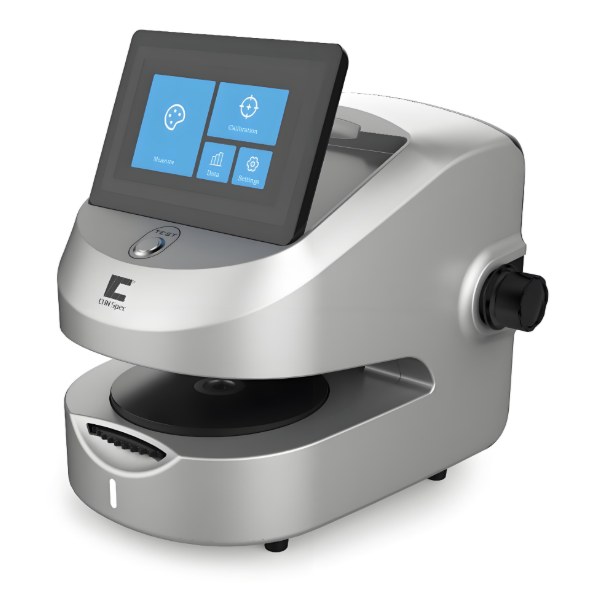
The CHNSpec UPF Analyzer is presented as a tool for quantifying the UV-protection performance of fabrics. It can support comparisons among colors or dye ratios, checks of production samples, and evaluation of material modifications. When a measured result changes unexpectedly, teams can review relevant process factors such as construction settings, yarn alignment, dyeing choices, or finishing parameters.
The source information states that the analyzer uses a 7-inch touchscreen and can export PDF test reports to support data retention and traceability. It also describes a 30-second single-test time. These functions can be relevant for organizations seeking to include UPF measurement in textile R&D and production quality-control workflows.
A practical approach to developing UV-protective textiles
- Define the target: Establish the required UPF performance for the intended textile application.
- Choose the material direction: Consider the fiber type and whether a treatment or coating is part of the development plan.
- Develop color options: Compare representative shades and dye formulations through measurement.
- Optimize construction: Review density, weave or knit structure, and fabric openings alongside weight and comfort requirements.
- Test and document: Measure finished samples and retain results to support process optimization and batch-level quality control.
Key takeaway
Fabric UPF factors should be assessed together. Color can contribute to ultraviolet absorption, density and construction create a physical barrier, and fiber material establishes the foundation for UV-protection behavior. No single factor guarantees a result. By testing fabrics throughout development and production, textile teams can replace assumptions with measurable information and make more controlled decisions for UV-protective textile performance.