Some users have been using the device for a long time but have almost never tried or truly understood what this feature is for.
In modern testing environments, the SPC port is silently changing many operating habits in mechanical and QC departments. Especially as the number of measurements increases continuously each day, manually reading and entering numbers becomes the most difficult and inaccurate method.
The SPC port allows the meter to output data directly instead of requiring manual recording
SPC stands for Statistical Process Control, simply understood as quality control using actual measurement data.
On electronic depth gauges, this port allows direct transmission of measurement values to a computer, management software, or dedicated data acquisition unit. After each measurement, the data is pushed to the system almost immediately, eliminating the need to manually enter each number from the screen as in traditional methods.
It may seem insignificant, but measuring just a few hundred details in a single shift will show a significant difference. Simply entering the wrong decimal point or missing a value can completely skew the inspection data.
Some models, such as the Mitutoyo 571-211-20, are quite popular in QC areas due to their ability to directly output data via the SPC port.
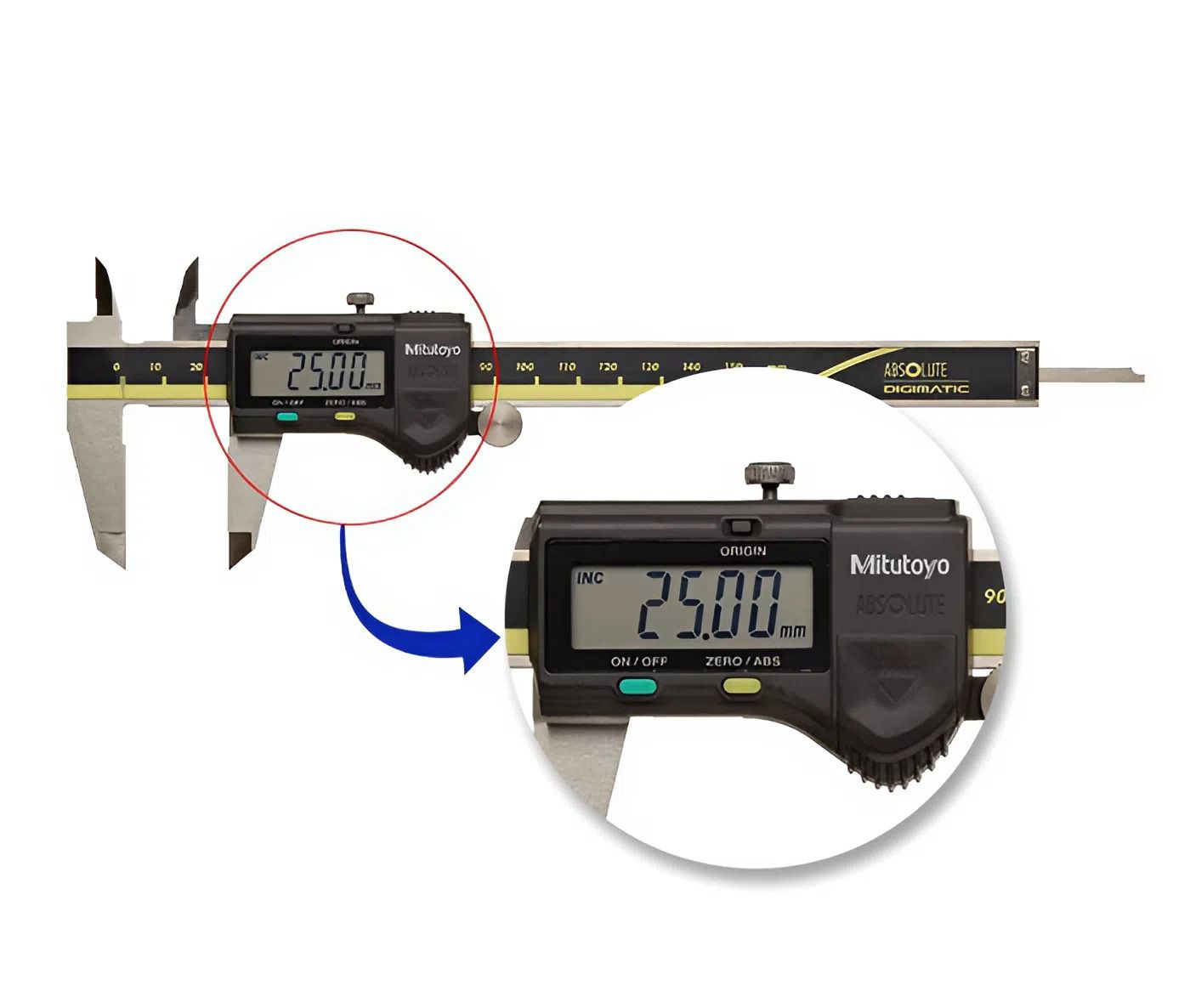
The larger the number of measurements, the more effective the SPC port becomes
In small workshops, measuring and recording measurements on paper is still very common because the volume of inspections isn't too high. But when the production line starts running continuously and the amount of data increases hourly, manual data entry becomes the most time-consuming part.
The person taking measurements has to operate the equipment, look at the screen, and take notes or enter data into Excel. Even a few minutes' delay can easily lead to data errors between different parts.
The SPC gateway handles this quite efficiently. Data is transferred directly to the software in the correct order of measurements, making the inspection process much more seamless. Especially in places that need to keep dimensional records for each production batch, this feature significantly reduces the amount of repetitive work each day.
See more: Should you prioritize water resistance or resolution when choosing a depth gauge?
Not everyone buys a ruler with SPC to use immediately
Many people initially buy a measuring instrument simply because they see a higher-end model or because they were advised to do so. Then, a few years later, as the QC process expands, they realize how incredibly useful the SPC port is.
The key point is that the need for data storage has increased significantly compared to before. Many organizations need to generate periodic dimension reports, store inspection history, or retrieve error data for each production shift. If everything is still recorded manually, the workload will increase rapidly within just a few months.
At this point, the ability to directly export data from the measuring instrument to software has become almost a natural progression in the quality control process.
SPC ports are particularly useful in applications requiring continuous error monitoring
Tasks such as:
+ CNC hole depth measurement
+ Mold groove inspection
+ Monitoring the dimensions of mass-produced machined parts
+ Saving QC data by production batch
+ Checking dimensional deviation trends over time
+ all require a very large amount of measurement data.
In these situations, automatic data storage makes monitoring much easier. The software can aggregate data into charts or issue warnings as soon as dimensions begin to deviate from the allowable limits, instead of waiting until a large number of defective products appear before detecting the problem.
Not all SPC ports use the same connector cable
This is a point many people only discover after purchasing the equipment.
Each manufacturer may use its own communication standard, so SPC cables aren't always cross-compatible between models. Some use USB adapters, others use separate data transmitters, or connect via an intermediate dock.
Models like the Mitutoyo 571-202-30 are often chosen for continuous measurement environments because of their fairly complete synchronized data transmission ecosystem.
Besides connectivity, the data management software also significantly impacts the practical user experience. Some systems allow direct export to Excel, while others save data in an internal management format for production control.
Choosing whether or not a ruler has SPC (Surface Mounting) is often related to long-term intended use
For individual measurements or basic repairs, the SPC port isn't really necessary because manual input is still quite fast and convenient. However, the benefits of data synchronization become increasingly apparent in continuous production environments. Inspection speeds are faster, data is more concise, and errors due to manual input are significantly reduced.
Many workshops initially only needed an electronic depth gauge for basic dimensional checks. After a few years of expanding their QC processes, the SPC port became the most frequently used component on the equipment.