MPO connectors are multi-fiber connectors used in data centers to consolidate backbone cabling, support high-speed parallel optics, and enable breakout configurations. Their fiber count, end-face type, polarity, and connector interface affect how a link is connected, inspected, cleaned, and tested.
For a fiber analyzer, the appropriate test approach depends on whether the MPO is part of a parallel-optics link or is being used behind a duplex patch-panel connection. In every case, connector end faces should be inspected before they are mated.
Summary: MPOs are available in 8-, 12-, 16-, 24-, and 32-fiber formats. They can reduce backbone cable count, support parallel transmission, and split one high-speed port into multiple lower-speed connections. Inspect and clean every MPO end face before connection, then test the link according to its design.
What is an MPO connector?
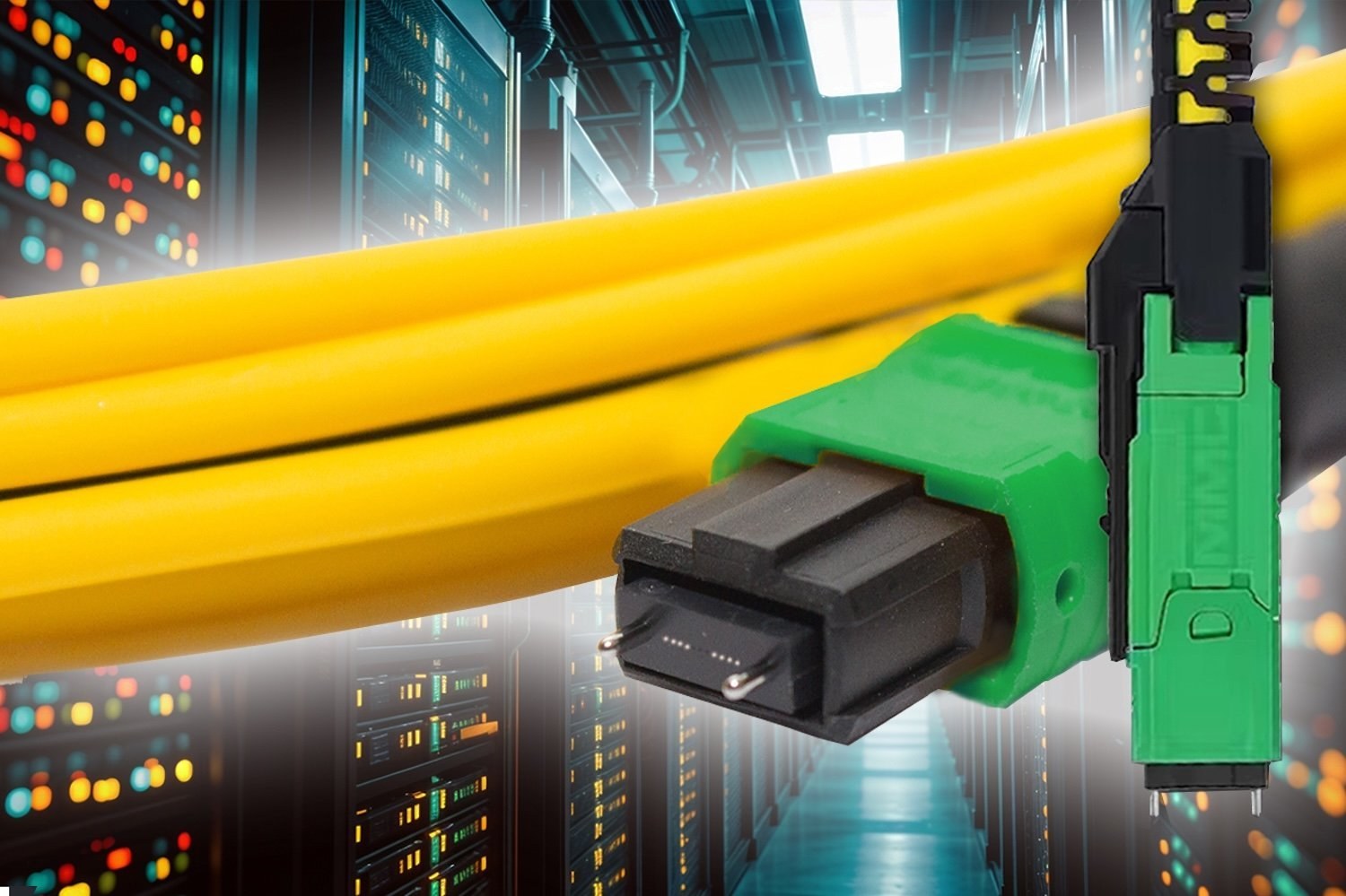
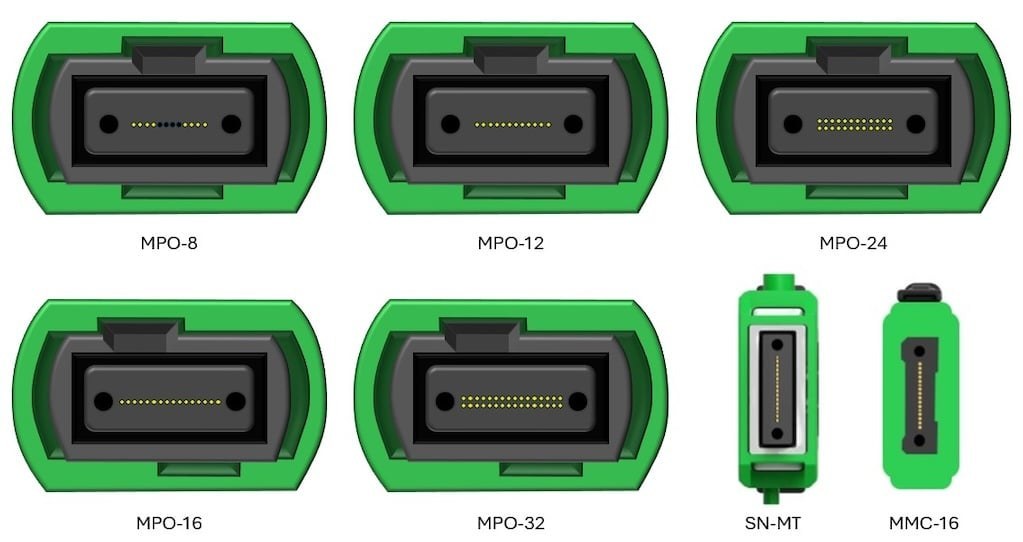
An MPO, or multi-fiber push-on connector, terminates multiple optical fibers in one connector interface. Data center MPOs are available in single-mode and multimode versions, commonly with 8, 12, 16, 24, or 32 fibers.
MPO interfaces may be pinned or unpinned and are keyed to support alignment and polarity. Unpinned versions connect to pinned equipment interfaces, so the interface type must match the intended connection.
How do traditional MPO and VSFF MPO connectors differ?
Very small form factor (VSFF) MPO connectors are designed for ultra-high-density environments by using vertically stacked fibers to reduce housing width. SN-MT is available in 8- and 16-fiber versions, while MMC is available in 12-, 16-, and 24-fiber versions.
Traditional MPOs place fibers in a horizontal row. The source data describes VSFF designs as offering three times the density of traditional MPOs.
When are MPO connectors used in a data center?
MPO connectors are used for consolidated backbone cabling, high-speed parallel optics, and breakout links. These three uses can reduce the number of separate cables or connect one high-speed port to several lower-speed endpoints.
| Use case | How MPO connectivity is used |
|---|---|
| Backbone cabling | An MPO trunk connects to the rear of MPO-to-LC cassettes, while duplex LC ports connect equipment at the front. |
| Parallel optics | Multiple fibers transmit and receive lanes in parallel for higher-speed applications. |
| Breakout configuration | Fibers from one MPO connection are separated into multiple discrete connections. |
How can MPO trunks reduce backbone cable count?
An MPO trunk provides a direct, one-to-one fiber connection and can consolidate many duplex backbone cables. For example, two 48-port patch panels would require 48 duplex cables, or 96 fibers, when connected individually.
Using MPO-12 connectors at the rear of those panels reduces the cable count to eight; using MPO-24 connectors reduces it to four. Polarity in this arrangement is achieved through cassettes and/or patch cords.
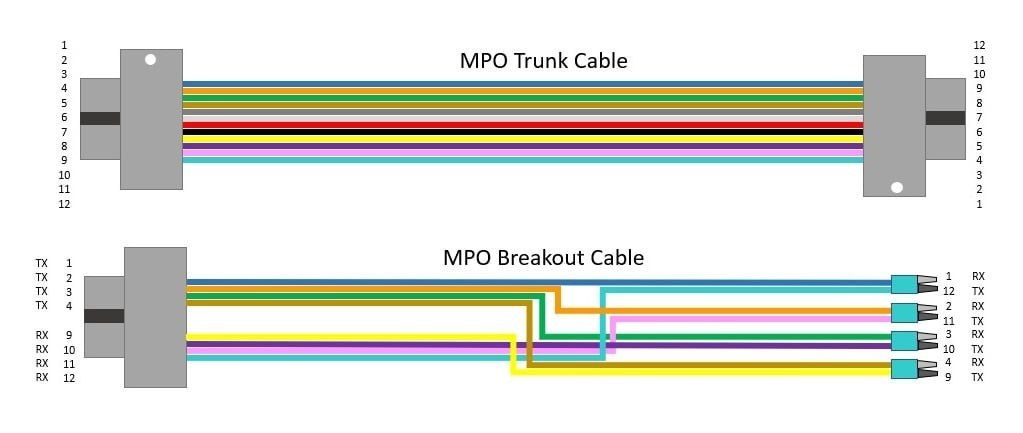
What is the difference between an MPO trunk cable and an MPO breakout cable?
An MPO trunk cable preserves a direct fiber-to-fiber connection, whereas an MPO breakout cable separates fibers into multiple discrete connections. This distinction matters when planning port transitions and choosing a test method.
For example, one 800 Gig 800GBASE-SR8 switch port can connect to two 400 Gig 2X400GBASE-SR4 servers, four 200 Gig 4X200GBASE-SR2 servers, or eight 100 Gig 8X100GBASE-SR1 servers through breakout configurations.
What do UPC and APC MPO end faces mean?
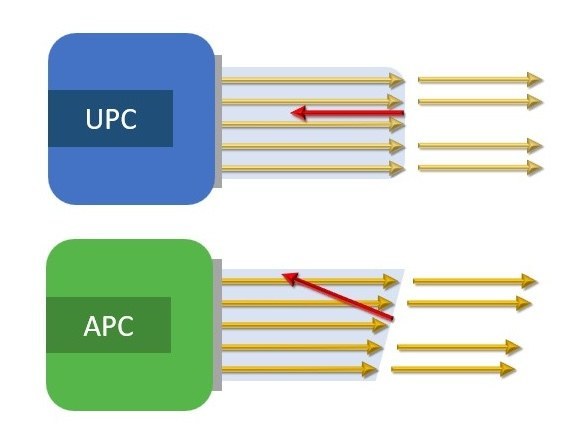
UPC end faces are flat, while APC end faces are angled at 8 degrees to direct reflected light into the cladding and reduce reflection in the fiber core. The end-face geometry must also be considered during inspection.
All single-mode MPO connectors use APC end faces according to the source data. APC multimode MPOs are also used for 400 and 800 Gig multimode applications, where high-speed PAM4 signaling is more sensitive to reflections than earlier 40 and 100 Gig applications.
Why should MPO connectors be inspected and cleaned before connection?
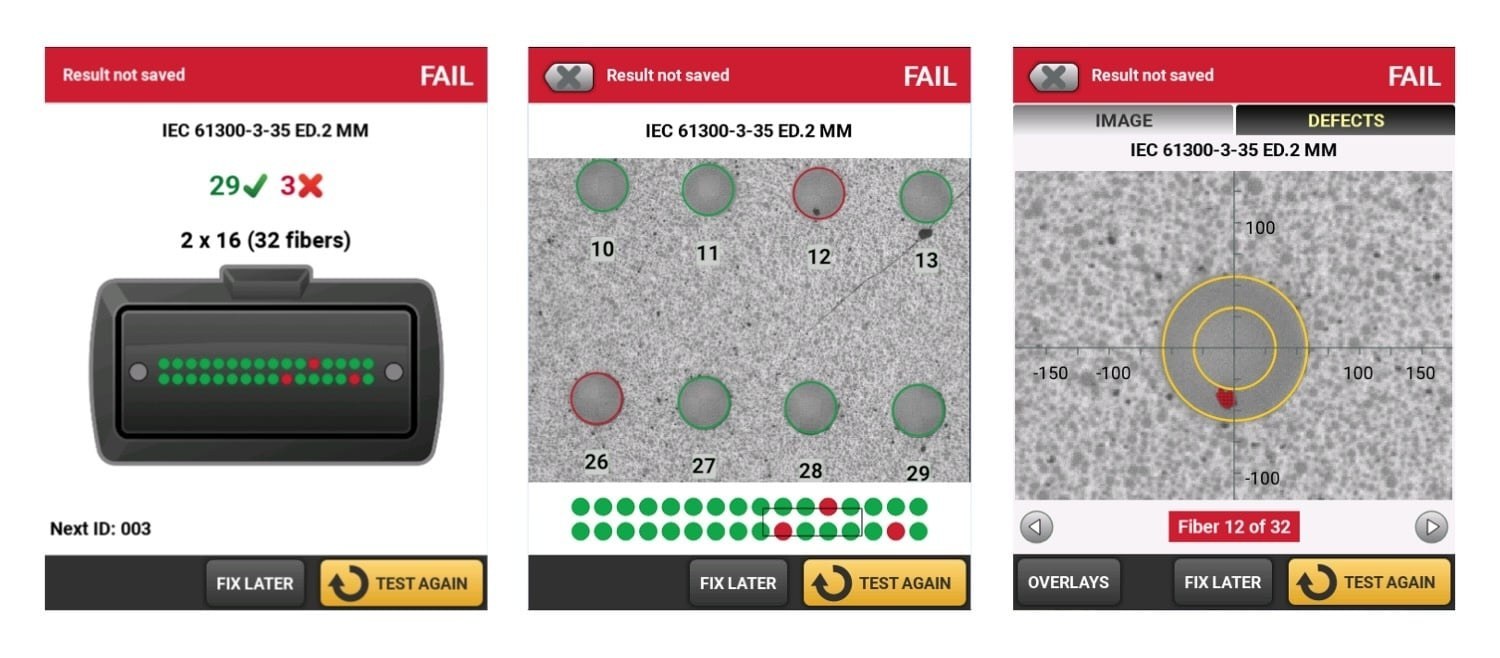
Every connector end face should be inspected before connection and cleaned when contamination is found, including factory-terminated connectors. In an MPO array, contaminants can migrate from one fiber to another.
Inspection begins with the complete ferrule, using a large-field-of-view microscope and an inspection tip that matches both the MPO type and its UPC or APC end face. A mismatched tip may not provide an adequate view of the full end face.
Tools such as the FI-3000 FiberInspector™ Ultra Camera are described as supporting UPC and APC 8-, 12-, and 24-fiber MPO inspection, with accessory tips for 16- and 32-fiber MPOs and VSFF MMC connectors. Cleaning should use products formulated for fiber optics and MPO connectors.
How should MPO links be tested?
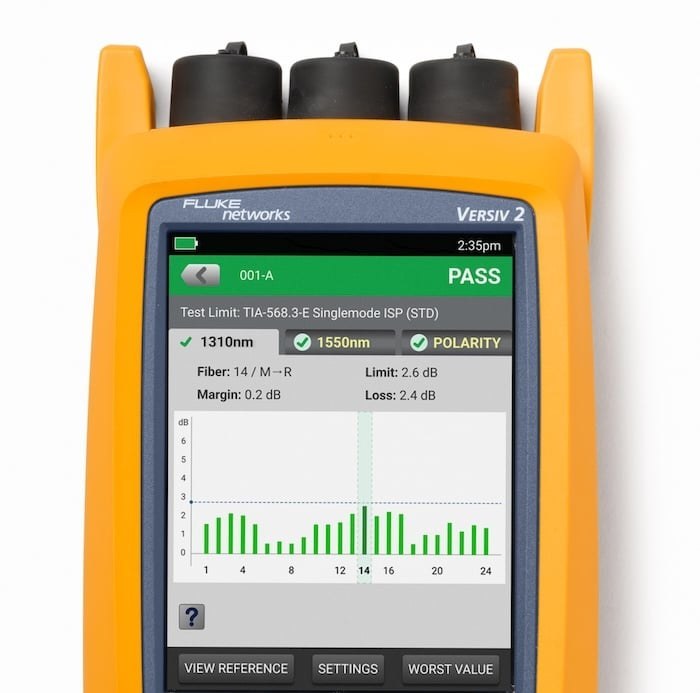
Tier 1 certification testing with an optical loss test set (OLTS) verifies length, loss budget, and polarity against the design specification after fiber installation. For parallel-optics links, a tester with an onboard MPO interface matching the link avoids separately testing each transmit/receive pair with fan-out cords or cassettes.
CertiFiber Pro OLTS supports pinned and unpinned 12-, 16-, and 24-fiber MPOs, plus 16- and 24-fiber MMC interfaces. MultiFiber™ Pro OLTS tester supports 12-fiber MPO connectors; both are described as scanning fibers simultaneously and reporting insertion loss across the link.
Not every link containing an MPO requires a tester connected directly to the MPO. When an MPO trunk is used to consolidate a duplex backbone, testing is performed at the duplex ports on the front of the patch panel, although the resulting loss includes the duplex connectors and MPO connections in the trunk.