Oscilloscopes and digital multimeters support different electrical test and measurement tasks. Understanding what each instrument does—and which specifications affect its use—can help engineers, technicians, and electronics professionals choose equipment more appropriately.
This oscilloscope and multimeter FAQ explains how an oscilloscope makes electrical behavior visible, how bandwidth and sample rate influence waveform observation, when additional channels are useful, and why Bluetooth connectivity can be valuable. It also summarizes the available comparison between the OWON OW18B and B35T+ multimeters without assuming specifications that are not provided.
What is an oscilloscope?
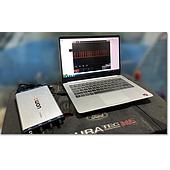
An oscilloscope is a test instrument that converts electrical signals, which cannot be seen directly, into visible waveforms. The displayed waveform shows how a signal changes over time, allowing the user to examine characteristics such as amplitude and waveform shape.
This visual representation can help with troubleshooting a machine, evaluating whether an instrument operates as expected, and checking whether a test objective has been met. An oscilloscope can also be used when examining electrical quantities and signal characteristics such as voltage, current, frequency, phase, and amplitude.
Because it provides a time-based view of electrical activity, an oscilloscope is often described as the engineer’s eyes. Instead of relying only on a numerical reading, the user can observe changes and irregularities in the waveform itself.
How do you choose a suitable oscilloscope?
The appropriate oscilloscope depends on the signals being measured and the number of measurements that must be observed simultaneously. Three primary considerations are bandwidth, sample rate, and channel count.
1. Determine the required bandwidth
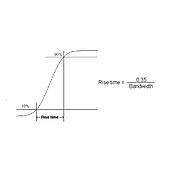
Bandwidth describes the frequency range that the oscilloscope can measure. Before selecting an instrument, identify the expected frequency range of the target signal. The source material gives automotive repair as an example in which a 100M bandwidth oscilloscope may be sufficient. This is an application example rather than a universal requirement for every automotive or electronics task.
Choosing bandwidth should therefore begin with the actual signals involved in the intended work. A specification should not be selected independently of the application.
2. Consider the sample rate
Sample rate affects how much waveform detail the oscilloscope can capture and display. A higher sample rate can provide a more detailed representation, particularly when observing higher-frequency signals.
As general guidance in the source, the sampling rate is described as being five times higher than the bandwidth. When comparing oscilloscopes, users should consider bandwidth and sample rate together rather than treating either specification as an isolated measure of suitability.
3. Select the necessary number of channels
Channel count determines how many signals can be measured at the same time. For work involving only one or two simultaneous signals, a two-channel oscilloscope may be enough. If the task requires more concurrent measurements, additional channels become important.
Three-phase electricity is one example given for selecting a four-channel oscilloscope. The key question is not simply whether more channels are available, but how many signals the user needs to compare or monitor simultaneously.
What is the purpose of a Bluetooth multimeter?
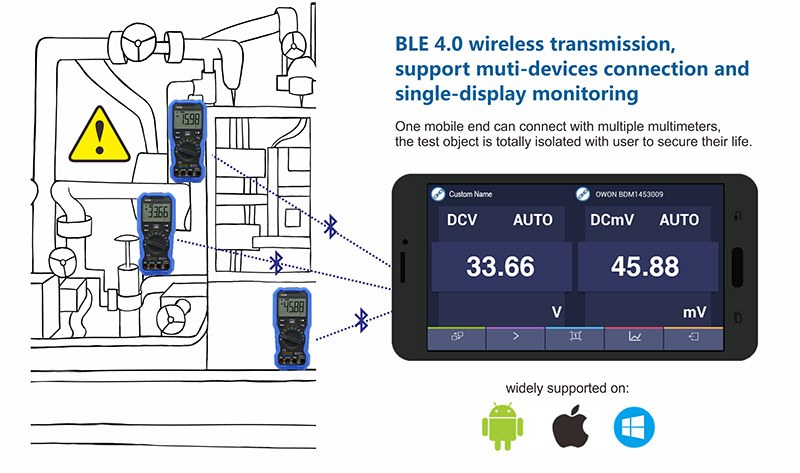
A Bluetooth multimeter supports wireless, remote testing. This can be helpful when a measurement must be performed in a difficult environment or in a location where approaching the instrument during a test is undesirable.
Remote connection and control can allow an engineer to work without remaining immediately beside the meter. This arrangement is also useful for sensitive tests in which a person’s movement near the setup could interfere with the results.
Another stated application is measurement involving moving objects, including moving vehicles. Bluetooth communication allows the user to separate instrument placement from observation or control, depending on the supported functions of the multimeter.
What is the difference between OW18B and B35T+?
OW18B and B35T+ are both described as 3 5/6-digit multimeters. Based on the supplied product information, B35T+ is positioned for industrial use and can be used with industrial fixtures. It is also described as consuming less power and supporting longer recording.
No further OW18B specifications are provided in the source, so a complete feature-by-feature comparison cannot be made here. Buyers comparing OW18B and B35T+ should begin with the stated application differences and verify which model better matches the intended fixture, recording, and operating requirements.
Quick selection checklist
- Signal frequency: Identify the required oscilloscope bandwidth.
- Waveform detail: Evaluate the sample rate alongside bandwidth.
- Simultaneous measurements: Choose a channel count that matches the number of signals.
- Remote operation: Consider a Bluetooth multimeter for difficult, sensitive, or moving test environments.
- Industrial use: Review B35T+ when industrial fixtures, lower consumption, and longer recording are relevant.
Instrument selection is most effective when it begins with the measurement task. Frequency range, waveform detail, simultaneous signal count, working environment, and recording needs provide a clearer basis for choosing between available oscilloscope and multimeter options.