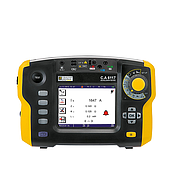
When a Fire Is Detected, Not Everyone Should Rush to Fight the Flames
As soon as the fire alarm is activated, the first priority is to assign a designated person to identify the fire location and respond immediately. According to standard fire protection and prevention (FPP) procedures, a trained response team should be responsible for approaching the scene, assessing the level of danger, and directing other personnel to follow the established emergency procedures.
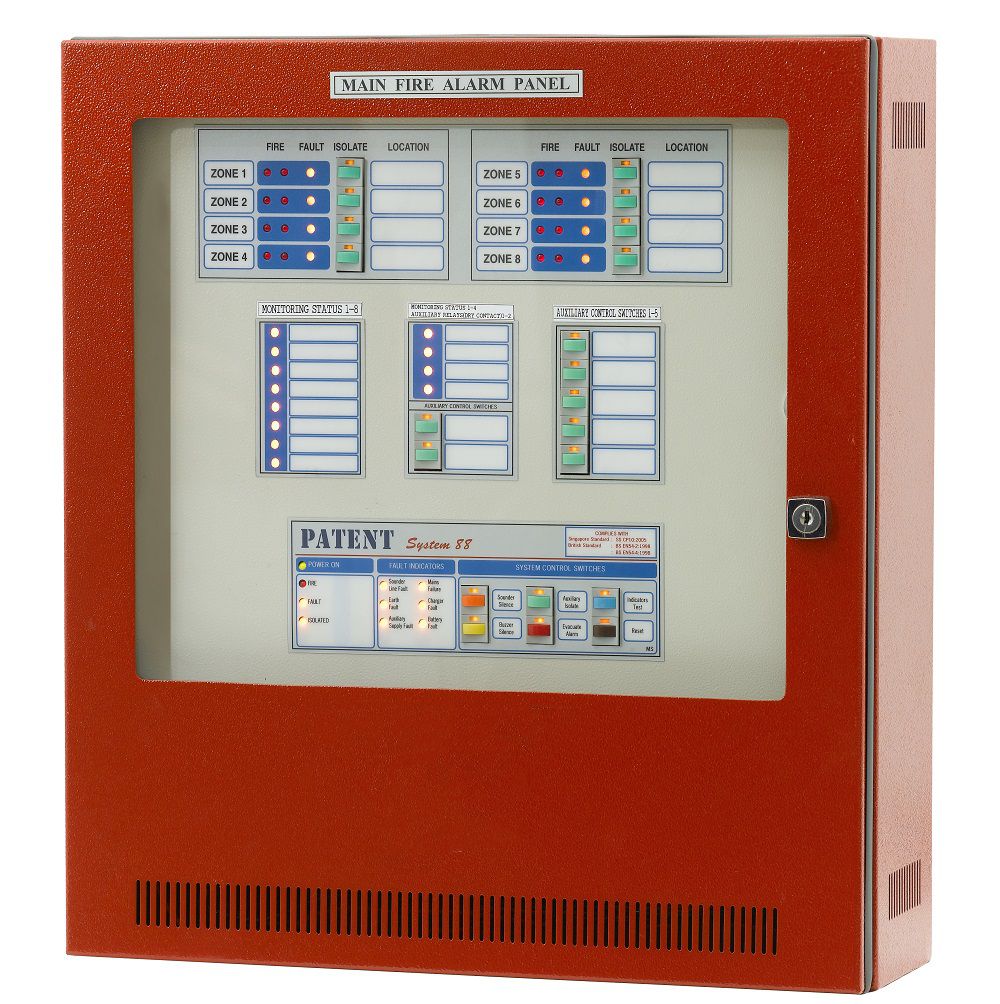
Step 1. Check the Fire Control Panel
If the fire is confirmed to involve electrical equipment, only the designated fire response personnel should operate the electrical system.
Locate the main circuit breaker (main MCCB/MCB).
Switch it to the OFF position.
Identify the fire location using the fire alarm system.
Inspect the affected area and handle the incident. Restore power only after confirming that the area is safe and following the correct restart procedure.
Step 2. The On-Site Fire Response Team Approaches the Scene
Not all employees should rush to the fire location, as this can obstruct emergency operations. Every company or building should establish an on-site fire response team and provide regular training on emergency response procedures.
Once the fire alarm is triggered, the on-site fire response team should perform the following tasks simultaneously:
Wear a smoke or toxic gas mask before inspecting the reported fire area.
Confirm whether it is an actual fire or a false alarm.
Search for anyone who may still be trapped.
Assess the severity of the fire and determine whether additional on-site personnel are required. If the fire exceeds the team's control capability, immediately report the situation to management so that other fire response members can be assigned to firefighting operations while evacuation procedures are carried out simultaneously.
Step 3. Coordinate the Evacuation
During a fire, panic often causes people to rush toward exits at the same time, leading to congestion, confusion, and potentially fatal accidents.
The evacuation leader must remain calm, help stabilize the crowd, and instruct area supervisors to evacuate people in an organized manner.
Guide occupants to evacuate by designated zones. If the fire is on an upper floor and the escape route remains safe, evacuate to the ground floor using the stairwell. If the fire is below your location or blocks the escape route, do not attempt to pass through smoke or flames. Move to a higher floor and wait for rescue personnel.
Prevent two-way pedestrian traffic in stairwells to avoid congestion and improve evacuation efficiency.
Keep stairways clear for firefighting personnel.
Conduct a headcount after everyone reaches the assembly point.
Important: Never use elevators during a fire. Elevators may automatically stop operating or lose power, trapping occupants inside.
Smoke and toxic gases tend to accumulate near the ceiling. During evacuation, cover your nose and mouth with a wet cloth or a smoke-filtering mask, stay low to the ground, and move along the wall to help maintain your orientation when visibility is poor.
Step 4. Select the Correct Fire Extinguisher for Different Types of Fires
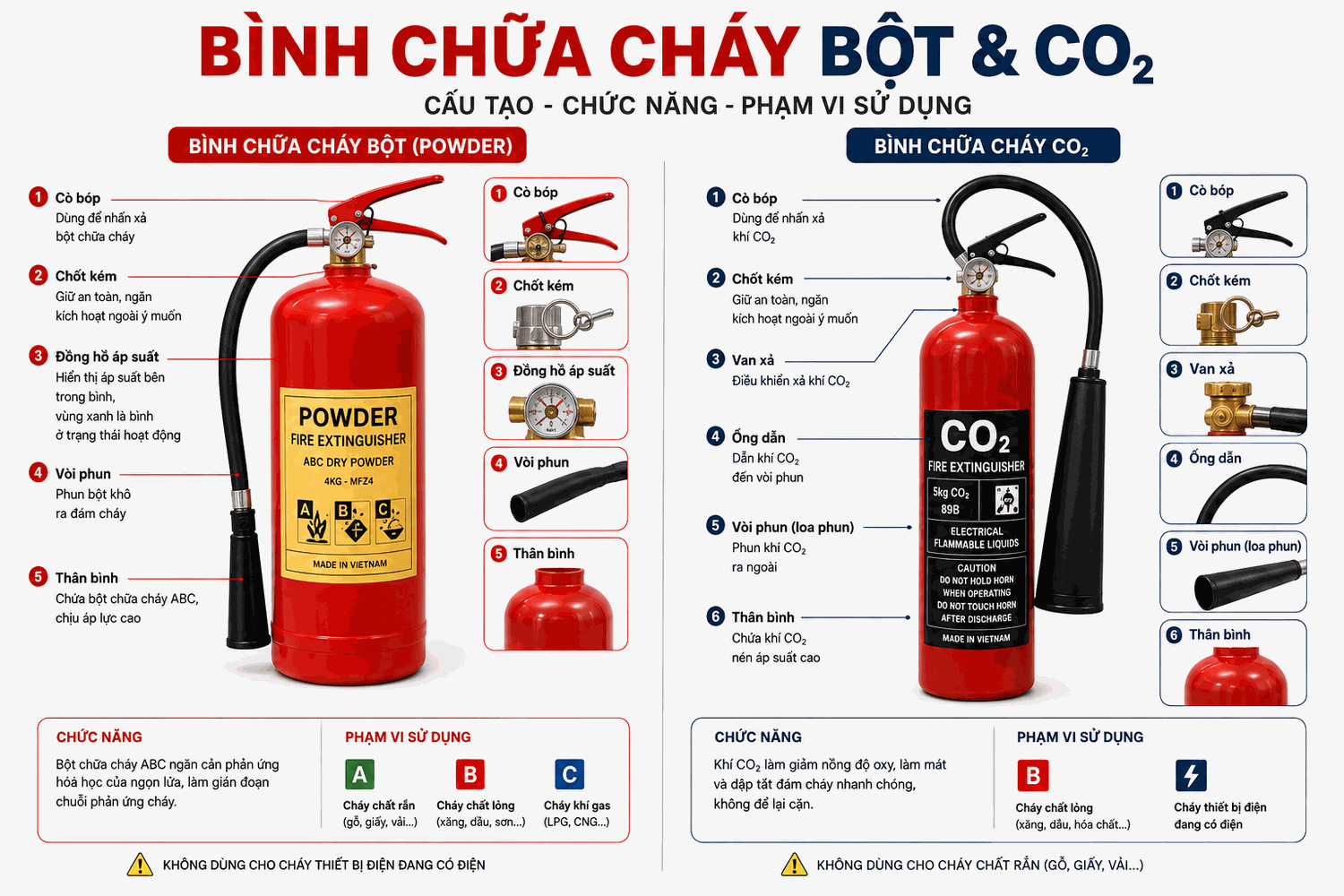
CO₂ Fire Extinguisher
(Recognizable by its large, short discharge horn and the absence of a pressure gauge.)
Suitable for: Electrical cabinets, Energized electrical equipment, Flammable liquid fires
Operating procedure:
Pull the safety pin.
Aim the discharge horn at the base of the flames at an appropriate angle (45°, 90°, or 180° depending on the situation).
Squeeze the operating lever.
Never hold the discharge horn or point it at another person. The horn can reach temperatures as low as -78°C (-108°F), causing severe cold burns.
Dry Chemical Powder Fire Extinguisher
(The most common type, featuring a long discharge hose and a pressure gauge.)
Suitable for: Paper, Wood, Gasoline and oil, LPG and gas fires
Operating procedure:
Check that the pressure gauge needle is in the green zone.
Shake the extinguisher thoroughly before use.
Pull the safety pin.
Stand upwind whenever possible.
Aim at the base of the fire and discharge the extinguishing agent.
Important notes:
Never use a water hose to extinguish energized electrical equipment. Water conducts electricity and significantly increases the risk of electric shock for both firefighters and nearby occupants.
Fire extinguishers should be inspected every month to ensure they are always ready for use. Every extinguisher has a service life, so regularly check the manufacturing date, inspection label, or maintenance tag. For extinguishers equipped with a pressure gauge (such as dry chemical or clean agent extinguishers), the needle must remain within the green zone. If it points to the red zone (indicating either low or excessive pressure), the extinguisher should be recharged or serviced before use. Never use an extinguisher that has expired, is leaking, dented, or shows any signs of physical damage.
Step 5. Reset the Fire Alarm System After Confirming the Area Is Safe
Reset the system only after verifying that there is no remaining fire hazard.
Identify the floor or zone that triggered the alarm.
Open the protective cover of the manual call point.
Reset the manual call point to its normal position.
Close the protective cover.
Press the RESET button on the fire alarm control panel.
Many electrical faults do not appear immediately after installation but develop gradually as electrical connections loosen over time. Performing routine inspections of the electrical system using a clamp meter, multimeter, and fire alarm testing equipment helps identify abnormalities before they develop into fire hazards. A clamp meter is used to measure the load current of individual electrical circuits, while a digital multimeter is used to verify voltage levels and continuity before restoring power to the system.