In many cases, rapid belt degradation, abnormally hot bearings, or slight vibrations in the machine after a few months of operation are not necessarily due to poor quality components. Sometimes the cause lies in the rotational speed deviating from its optimal state, a fact almost never noticed.
This is also why maintenance teams now regularly check RPMs instead of waiting for the machine to malfunction before addressing the issue.
Excessively high RPMs often cause the belt to wear down much faster
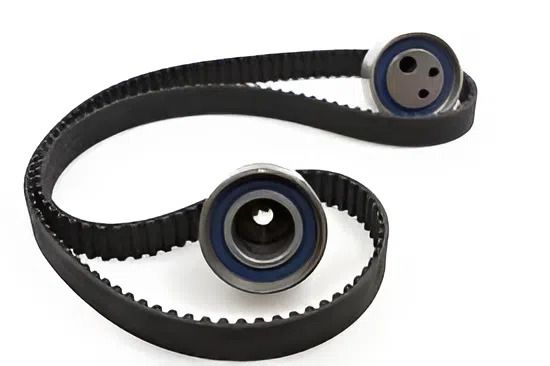
Excessively high RPMs often cause belts to wear down much faster. Belts operate based on friction and elasticity. When the rotational speed increases continuously, the entire surface of the belt is subjected to constant tension, bending, and friction with the pulley at a much higher frequency.
Initially, the machine may still run normally, making it difficult to notice the problem. However, after a long time, the belt surface begins to heat up more quickly, the rubber layer gradually loses its elasticity, and signs such as hardening, small cracks, or uneven wear appear.
Especially in systems that run almost continuously all day, even a small increase in RPM can significantly reduce belt lifespan.
Many workshops only discover that the actual rotational speed is quite different from the machine's initial specifications when the belt slips or makes a squeaking sound.
Unstable RPM can also cause the bearings to experience abnormal loads
Bearings are designed to operate within a suitable load and speed range. If the rotational speed changes continuously or unusual oscillations occur, the forces acting on the ball and the inner bearing ring begin to become unbalanced.
This phenomenon usually doesn't cause immediate failure but rather develops cumulatively. The machine starts vibrating slightly more than usual, the temperature gradually increases, or a small humming sound appears during prolonged operation.
The difficulty is that these signs are easily overlooked in noisy factory environments. Only when the bearing is noticeably worn or the ball bearings break do inspectors discover that the initial cause was simply the unstable rotational speed.
A misaligned or incorrectly installed pulley will also affect the RPM
A drive system depends not only on the motor but also directly on the pulley, belt tension, and shaft alignment.
If the pulley is off-center, has uneven wear, or poor machining quality, the belt will experience abnormal friction during rotation. This causes the actual transmission speed to deviate from the original design.
Over time, the belt degrades faster and significantly increases the load on the bearings.
That's why in many production lines, technicians often check both RPM and vibration simultaneously instead of examining each component separately.
High temperatures also cause RPM to have a stronger impact on the belt
Belts, being made from elastic materials, are quite sensitive to ambient temperature.
In hot areas, near furnaces, or in machines operating at high power continuously, the belt tends to be softer and more prone to changes in state when rotating at high speeds. If the RPM remains high for extended periods, the belt surface will deteriorate significantly faster than under normal conditions.
Besides temperature, fine dust, oil, or small metal particles in the air can also increase friction on the pulley and drive belt surfaces.
In many cases, the belt may look relatively new on the outside, but the inner surface has already begun to wear down or crack due to prolonged operation at inappropriate rotational speeds.
Regular RPM measurements help detect faults before the machine stops suddenly
Many maintenance teams now choose to monitor RPM periodically to detect early abnormalities in the drive system.
Even a slight deviation in rotational speed from the initial state allows technicians to check the pulley, belt tension, or motor load before more serious failures occur.
Several handheld tachometers, such as the CEM AT-8 contact/non-contact tachometer, are frequently used in mechanical maintenance because they can quickly check RPM on-site without disassembling the machine.
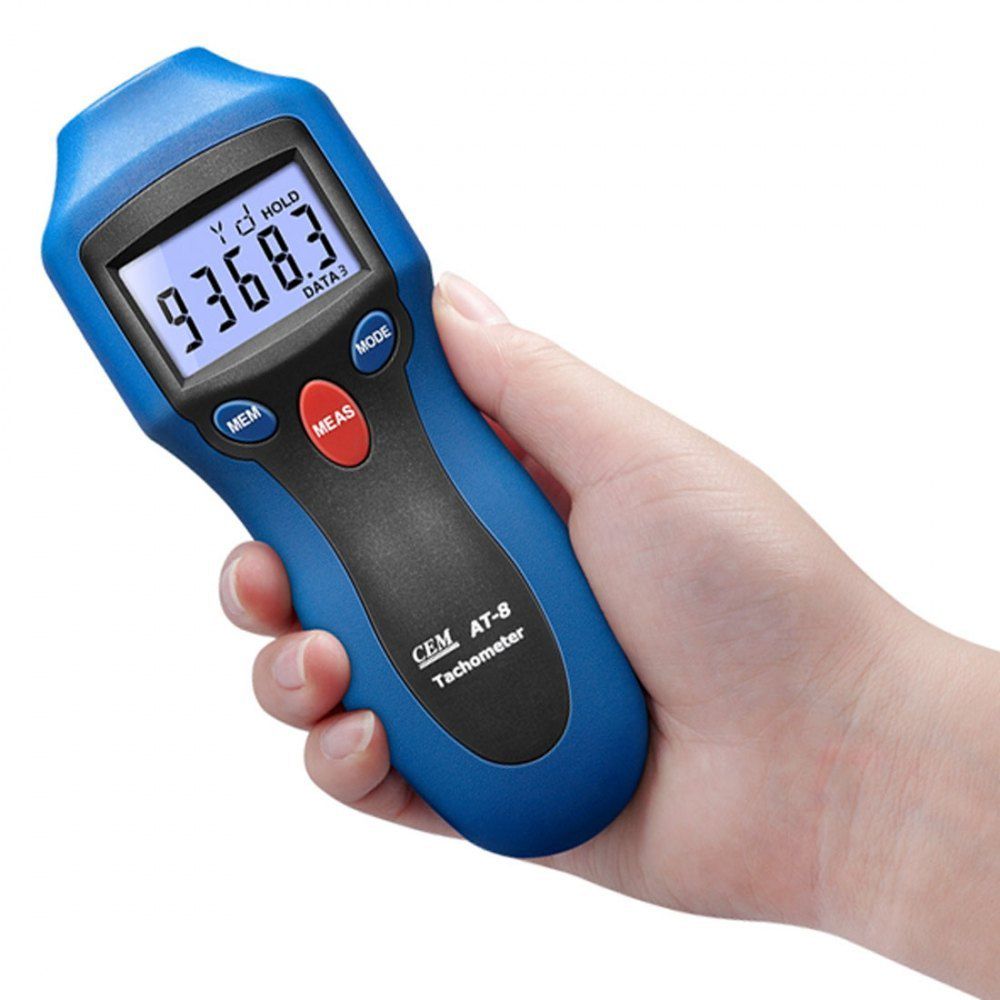
In continuously running systems, regularly monitoring rotational speed significantly reduces the occurrence of sudden belt breakage or premature bearing failure.
Just because the machine is running normally doesn't necessarily mean the drivetrain is in good condition
One of the most common misconceptions is that the machine is still running, leading many to believe the entire drivetrain is fine.
However, in reality, belts and bearings often degrade silently over a long period. Slight changes in RPM, gradually increasing loads, or small vibrations accumulating over months may begin to cause noticeable damage.
By the time loud noises appear or the machine stops completely, internal wear and tear has usually been present for quite some time.