Amplification technique in signal processing
Amplification is the process of increasing the amplitude of an electronic signal without losing its fundamental properties. This allows the signal to retain its original content while having a larger amplitude, making it easier to process, transmit, or measure. The Power amplifier TekBox TBLNA-110M-50 enables weak signals to be amplified to levels more easily handled by spectrum analyzers or radio receivers.
A key aspect of amplification is balancing signal boost with limiting added noise. The DC-Coupled technology in the TekBox TBLNA-110M-50 reduces input noise, preserving the amplified signal's near-original state. This is crucial in spectrum analysis for accurately identifying frequency components in the signal. DC-coupled amplifiers inherently reduce low-frequency noise and offset, improving signal fidelity as compared to AC-coupled approaches, which can introduce capacitive coupling limitations or increased complexity.
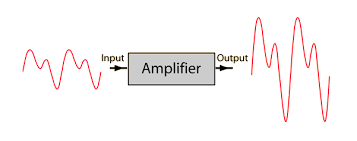
How to support for amplification in spectrum analysis and radio frequency
In spectrum analysis systems or radio frequency measuring devices, amplification is not merely increasing signal amplitude but also helps measure and analyze very low-level signals. Amplifiers raise small signals to a level where measurement devices like spectrum analyzers can accurately read and analyze them. This is particularly useful for analyzing frequency components in radio waves, allowing detection of weak signals that are masked or unwanted frequency interferences.

Conclusion
Amplification is the process of boosting signal amplitude to help weak signals become strong enough for accurate processing and analysis, especially important in spectrum analysis and radio frequency. This technique not only strengthens the signal but also preserves fidelity, enabling detection of weak signals and unwanted noise, thereby improving signal transmission quality and measurement reliability.