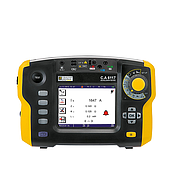
In power system operation, protective relays are responsible for detecting abnormal conditions and issuing trip signals according to their configured settings. To determine whether a protection device responds correctly, technicians need to use a protective relay test set. This specialized equipment generates test signals to help verify the settings and operating behavior of protective devices.
What Is a Protective Relay Test Set ?
A protective relay test set is used to test the performance and support the parameter configuration of various protective relays in power systems. The equipment can generate signals such as voltage, current, and frequency to reproduce operating conditions and certain abnormal situations, such as short circuits or overloads.
The protective relay receives electrical signals, processes them according to its configured settings, and sends a command to the circuit breaker control circuit when an abnormal condition is detected.
By monitoring the output signals, technicians can evaluate the relay's ability to detect abnormal conditions, its response time, and its operating status. The objective is not simply to determine whether the relay operates, but to compare its actual response with the test plan and applicable technical requirements.
Role in Power System Testing
A relay test set helps prepare and perform protection system assessments before commissioning or during maintenance. When relays are tested according to the proper procedure, operators have a better basis for identifying settings or protection responses that may require adjustment.
Relay protection testing can provide the following benefits:
Evaluate the device's ability to operate when a simulated fault signal is applied.
Help verify that the faulted section can be isolated, reducing the risk of fault propagation.
Reduce the risk of unnecessary tripping caused by inappropriate settings or responses.
Support more stable and safer operation of electrical equipment and related personnel.
Testing the Relay or the Entire Protection Circuit ?
A relay test may involve applying signals directly to the relay inputs to evaluate the protection element, or it may be extended to the downstream trip circuit. These two approaches provide different information.
When signals are applied directly to the relay, technicians can determine the current or voltage at which the relay operates, its response time, and whether its actual characteristics correspond to the configured values. If the output contacts, trip circuit, and circuit breaker feedback are also monitored, the test can cover the complete operating sequence.
For systems equipped with current transformers and voltage transformers, applying signals on the secondary side primarily focuses on the relay and control circuit. Primary-side testing has a broader scope because the test signal passes through the current transformers, wiring, terminals, and other associated components before reaching the relay.
Therefore, the test objective should be clearly defined before testing begins: whether the purpose is to check the relay itself, the trip circuit, or the entire protection chain. This determines the appropriate test method and relay test set configuration.
The Pickup Threshold Alone Is Not Enough to Evaluate a Relay
For overcurrent protection, determining the pickup current is only one part of the test. The relay must also operate according to the specified time characteristic at different current levels.
For example, as the fault current increases, the relay operating time may decrease according to its configured characteristic curve. The test should therefore cover multiple points on the characteristic rather than recording only a single pickup value. The results can then be compared with the configured settings and allowable tolerances.
For protection functions that evaluate the phase relationship between current and voltage, phase angle becomes an important test parameter. Changing the phase relationship can alter the relay's fault detection status even when the current and voltage magnitudes remain unchanged.
A relay test set must therefore be capable of controlling amplitude, timing, frequency, and phase angle according to the requirements of each protection function. This capability is particularly important when testing directional protection, differential protection, or functions that use multiple signal channels.
Digital Relays Require Configuration Checks
For digital relays, protection characteristics are not determined solely by the hardware. Settings, operating logic, input/output configuration, and interlocking conditions can all affect the test results.
A test may apply the correct current and voltage signals but still produce an unexpected result if the function settings or output logic differ from the system design. Therefore, the test documentation should be checked against the configuration currently running on the relay before evaluating the results.
For complex protection systems, a relay test set capable of generating multiple independent current and voltage channels provides greater flexibility for simulating fault conditions. Test data should also be stored together with the relevant settings, signal conditions, and operating times to facilitate comparison during subsequent tests.
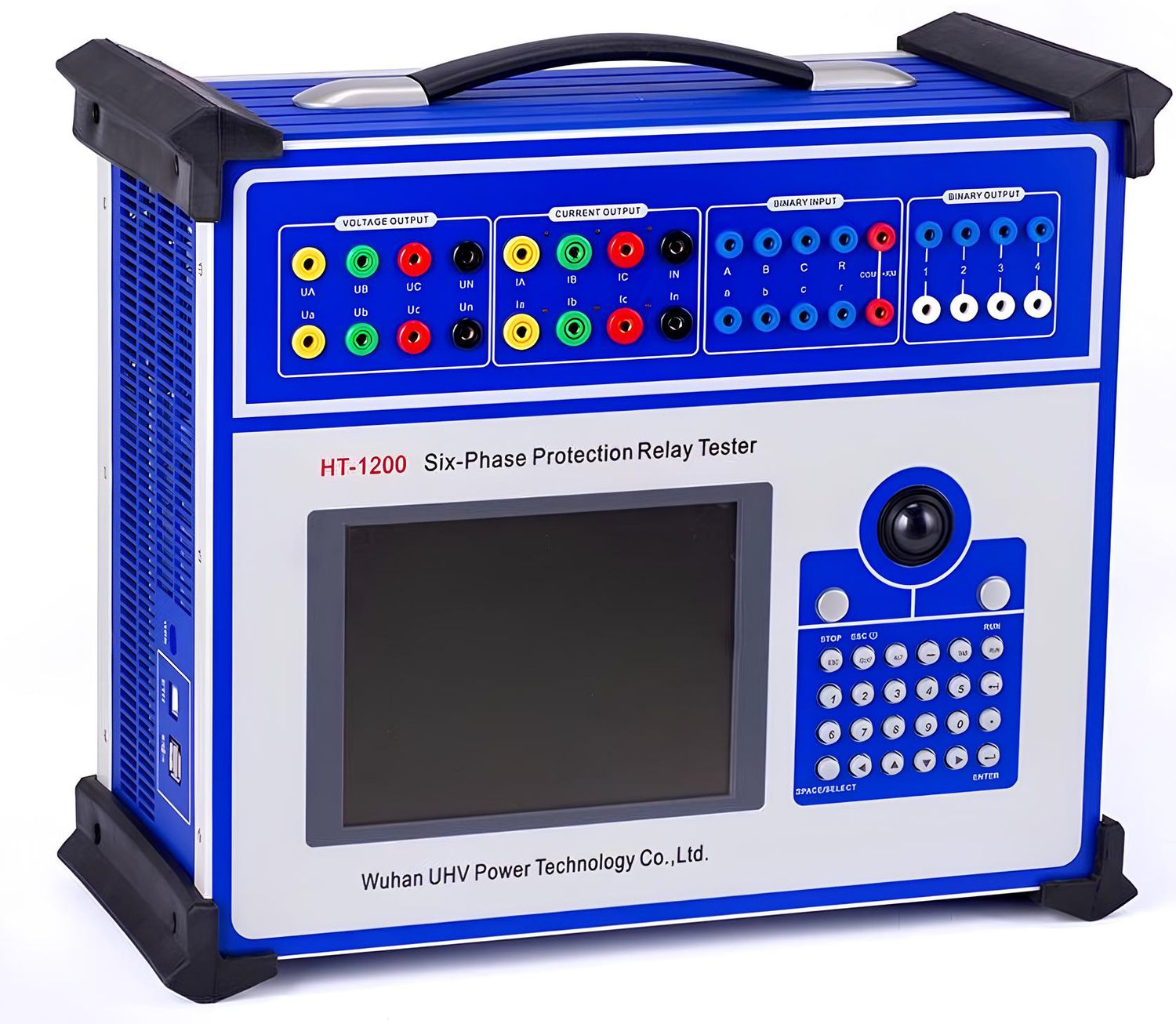
Selecting a Relay Test Set Based on Protection Functions
The configuration of a relay tester should be based on the type of relay and the intended test scope. A single-phase overcurrent relay has different requirements from a three-phase protection system, directional protection, or differential protection.
The number of current and voltage channels determines the ability to simulate multiple conditions simultaneously. Phase-angle control is required for functions that depend on phase relationships. Timing measurement and contact-state monitoring help determine the sequence from signal generation to the relay's trip command.
For field applications, a relay test set that can store test configurations and results can reduce setup time between tests. For laboratories or verification work, the accuracy of the generated signals, ability to create multiple test scenarios, and number of channels often have a greater influence on the scope of testing.
A relay test set is used to verify the response of protective relays and, when required, the complete trip path to the circuit breaker. An effective test should clearly define the test object, accurately reproduce the required signal conditions, and evaluate both the pickup threshold and response time.
Factors Affecting Test Results
Test results depend on more than the relay test set itself. The accuracy and stability of the test equipment are important because deviations in the generated output signals can directly affect the reliability of the test data.
The test plan should also cover the operating conditions and fault types appropriate for the equipment under test. An incomplete test plan may reduce the value of the assessment even when the test equipment provides extensive functions.
Field conditions should also be considered. Temperature, humidity, and electromagnetic interference may affect the testing process. Finally, the operator's expertise is critical when making connections, selecting test modes, interpreting data, and evaluating the results.
Regular maintenance and calibration should not be overlooked. These activities help maintain the stability of the relay test set, extend its service life, and provide a more reliable basis for subsequent test results.
Operators should understand relay protection principles, the characteristics of the equipment under test, and the correct operating sequence. Before each test, the test plan should be prepared, connections verified, and an appropriate test routine selected. After testing, the data should be reviewed in the context of the test conditions rather than being evaluated as an isolated measurement.
Frequently Asked Questions
Does Test Equipment Accuracy Matter ?
Yes. Test equipment accuracy directly affects the reliability of simulated signals and test data. However, the results should still be evaluated together with the test plan, field conditions, and operator procedures.
Does a Protective Relay Test Set Require Maintenance ?
Yes. Regular maintenance and calibration help monitor equipment stability, maintain measurement quality, and support long-term use.
What Should Small Businesses Prioritize ?
Businesses should start with their actual testing requirements and select a relay test set that provides the necessary functions, has a clear operating procedure, and matches the capabilities of their technical personnel.