First, you need to understand what a surface plate is.
Choosing the Optimal Surface Plate: Granite or Cast Iron?
Many people assume that all surface plates are the same, as long as they provide a stable place for measurement tools. But once you start working with equipment that requires high precision, you’ll realize how important it is to choose the right type of plate. Especially when it comes to granite versus cast iron – it might sound simple, but the difference is quite significant.
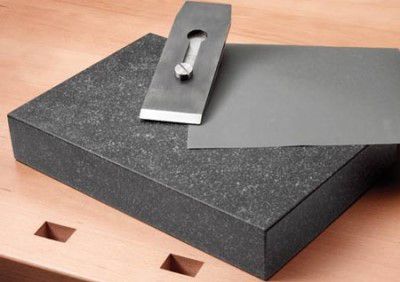
Cast iron is cheaper, but over time, it becomes clear that it doesn’t retain flatness as well as granite. On the other hand, granite plates, especially those from Mitutoyo, are nearly perfectly flat. You can place your equipment on them without worrying about tilting or misalignment – it gives you complete peace of mind.
Another important point is that granite plates have minimal thermal expansion. In workspaces where temperatures fluctuate – hot one moment, cold the next – using a cast iron plate can lead to measurement errors without you realizing why. After switching to granite, everything became stable, and those issues disappeared completely.
With a fine-grained surface, granite plates are non-adhesive, so measurement devices placed on them won’t get scratched and the accuracy of results remains unaffected. It makes the work noticeably more comfortable.
The biggest advantage is that granite plates allow for continuous measurements without vibration or sagging. They feel incredibly solid, especially during tasks that demand high stability. And since they’re made of stone, not metal, there’s virtually no noticeable wear and tear over time.
Of course, granite is heavy and difficult to move. But you're not going to carry it around anyway. Once it’s installed in a lab or inspection area, its weight is no longer a concern.
How Does a Granite Plate Improve Measurement Accuracy?
When you start noticing frequent errors while measuring small parts, you might think the equipment is the problem. You try replacing the probe, resetting the machine, recalibrating everything – and nothing works. Eventually, you realize the issue lies with the table under the instrument.
Previously, I used a wooden table with a metal surface. Over time, I noticed that the measurements fluctuated slightly, even when I wasn’t touching the device. After switching to a granite surface plate, the difference was immediately clear. Granite is extremely heavy, and that weight makes it incredibly stable. When mounting mechanical arms or optical measurement systems, the granite stays firmly in place – no tilting or wobbling when you touch it, unlike with lighter tables.
Another key benefit is that granite is non-conductive. When measuring small electronic components or using devices sensitive to electric fields – like capacitive sensors – the granite doesn’t interfere at all.
Optimizing Lab Measurement Workflows with a Granite Surface Plate
First, granite plates provide an extremely stable surface unaffected by changes in temperature, humidity, or minor vibrations in the surrounding environment. This helps maintain absolute flatness and minimizes deformation during operation, especially when working with small parts or sensitive measurement tools. Operators can confidently perform repeated measurements without needing to recalibrate working conditions.
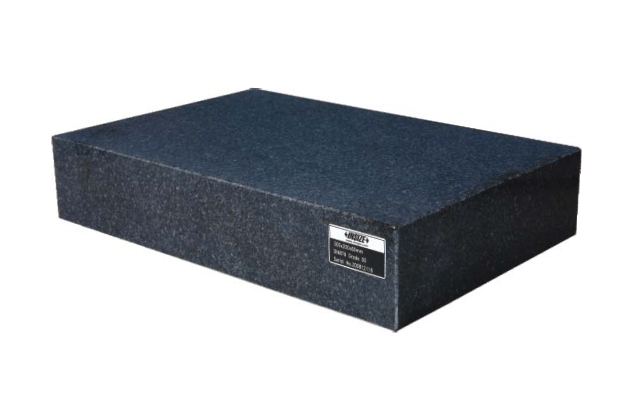
Second, granite surfaces are non-conductive and non-magnetic, eliminating the risk of measurement errors caused by magnetic fields or electromagnetic interference – issues commonly encountered when using electronic measuring instruments. This is a major advantage when conducting micromechanical measurements, contact-based tests, or using advanced devices such as CMMs (Coordinate Measuring Machines), contour or roughness testers.
Third, granite plates allow users to easily work with clamps and auxiliary modules without compromising overall accuracy. Thanks to their fine-grained structure and standardized surface finish, tools placed on them remain stable with no subtle slipping, ensuring more accurate micro-movement measurements.
Finally, maintaining a granite plate is simpler than metal alternatives. Its surface doesn’t corrode or rust over time, and it requires no lubrication or complex maintenance. This helps labs maintain a consistent measurement setup over the long term with minimal operational costs.