Following a period of continuous operation under the influence of ambient temperature and vibration, sensors, signal converters, and measuring devices frequently experience calibration drift. This leads to erroneous control decisions, directly impacting product quality and the overall stability of the plant.
Mastering process signal calibration methods and precise measurement solutions is a core requirement for maintenance engineering teams.
Signal Error Issues and Common Interference Factors
During signal transmission and electrical processing, maintenance engineers frequently face error issues stemming from various objective causes:
Zero Point and Sensitivity Drift: Long-term use of measurement sensors degrades material characteristics, altering the linear relationship between the actual physical quantity (temperature, pressure) and the generated electrical signal.
Thermal Electromotive Force (EMF): Temperature differences at contact points between different metals when connecting wires can generate small millivolt-level voltages, causing significant deviations when calibrating low-voltage or thermocouple signals.
Line Resistance and Electromagnetic Interference (EMI): Voltage drop across long signal cables or industrial noise from nearby inverters and high-power motors fluctuates the feedback current in control loops.
Unstable Loop Power Supply: Voltage fluctuations from the DC power supply for two-wire transmitters also directly distort the signal current value transmitted to the control room.
Functions of Current, Voltage, and Temperature Signal Calibration
Using a process signal calibrator periodically helps re-establish reliability for the measurement system, ensuring errors remain within the allowable limits of factory technical standards:
Current Loop Calibration: This is the most common communication standard in industry due to its excellent noise immunity over long distances. The calibration method requires accurately simulating the 4" mA" (corresponding to the minimum percentage), 12" mA" (corresponding to 50%), and 20" mA" (corresponding to the maximum percentage) milestones to check the linearity of indicators and data acquisition devices.
Voltage Signal Calibration: Typically applied to pressure sensors, level sensors, or internal measurement signals. Technicians supply reference voltages to check response capability and eliminate linear errors across the entire measuring range.
Temperature Signal Calibration: For temperature probes, methods include directly simulating resistance for RTDs or millivolt voltages for thermocouples into signal converters, or combining them with standard heat sources to verify the entire system from the probe to the display.
Professional Process Signal Calibration Solutions from Fluke
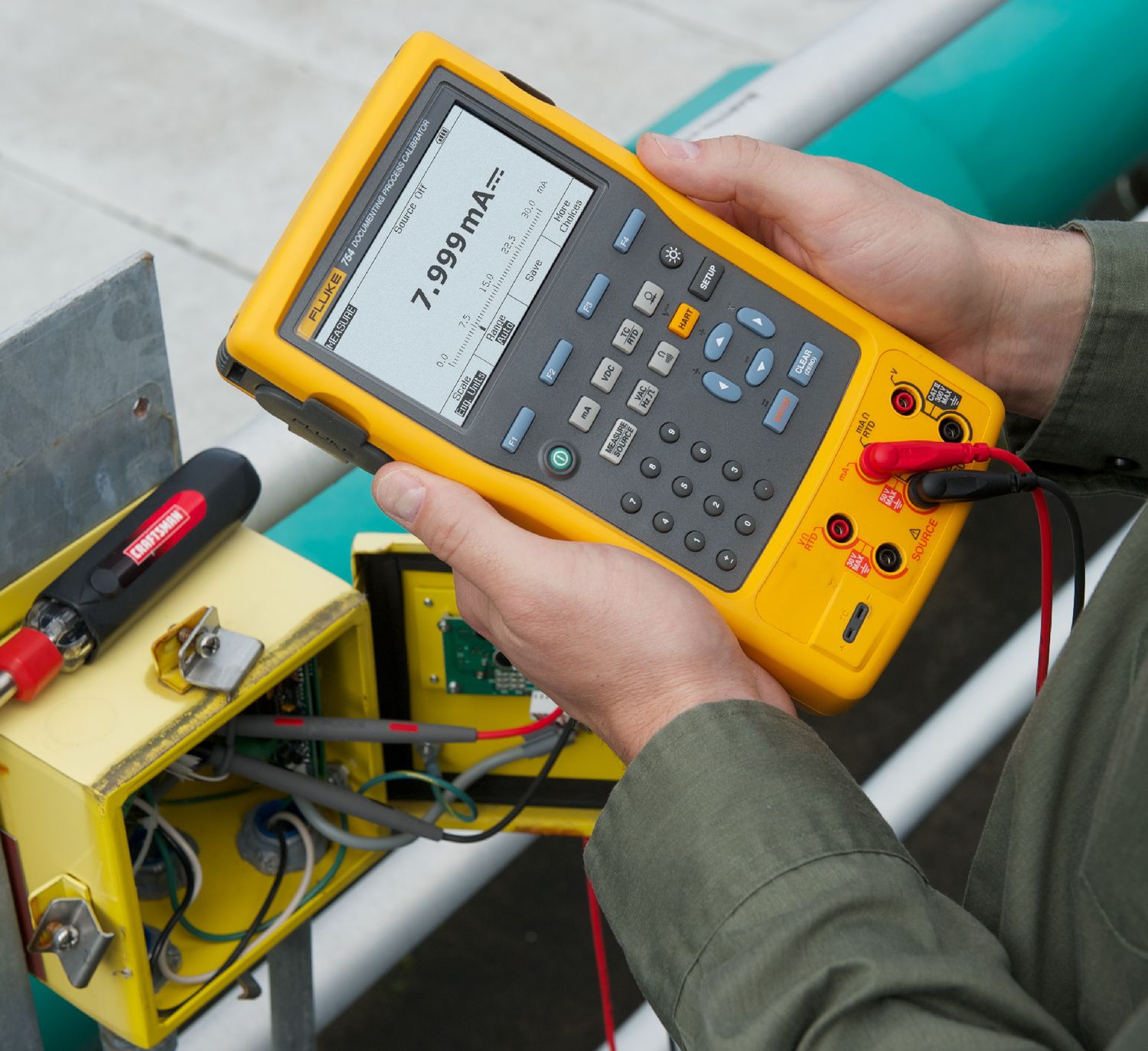
To optimize on-site calibration time and ensure data standardization according to international standards (such as quality management standards or hazard analysis systems), the Fluke 754 multi-function calibrator line is a comprehensive solution for maintenance engineers.
Beyond supporting simultaneous measurement, sourcing, and simulation of current, voltage, temperature, and pressure signals with high accuracy, this device integrates intelligent communication capabilities with industrial standard protocols. It allows for test procedure automation, data logging, and direct connection with maintenance management software to export calibration reports without cumbersome manual note-taking.
Periodic inspection and process signal calibration are essential technical solutions to help prevent abnormal control incidents, optimize operating efficiency, and extend the lifespan of factory automation systems.
Enterprises and engineers interested in specialized measurement and maintenance solutions are welcome to register and participate in the Seminar on Early Factory Failure Prevention & Continuous Operation Solutions organized by EMIN Vietnam held on Tuesday, October 27, 2026, in Tra Vinh.