A bedliner coating thickness gauge is an important inspection instrument used in the truck bed finishing process. Bedliner is typically sprayed onto steel or aluminum surfaces to provide protection against impact, scratches, abrasion, and environmental corrosion. Measuring the cured coating allows contractors to compare actual thickness with the coating manufacturer’s specified requirements.
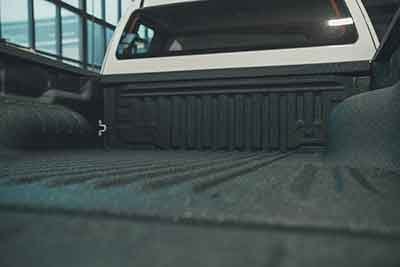
Why spray-on bedliner thickness matters
Truck bedliner coatings may be made from polyurethane, polyurea, or hybrid polyurethane and polyurea layers. The coating is applied directly to a prepared truck bed, which may be constructed from steel or aluminum. Because the liner is intended to protect the substrate, its total cured thickness has a direct role in the finished application.
Bedliner coatings are commonly applied at approximately 3 to 6 mm, or 125 to 250 mils. However, the applicable target is the range specified by the coating manufacturer for the system being used. Measuring the finished coating helps the applicator verify whether sufficient material has been applied across the truck bed.
If the liner is too thin, it may fail prematurely and leave the truck bed more exposed to corrosion. Conversely, applying more material than recommended adds time and material use without providing a necessary benefit. A non-destructive thickness measurement process supports better control of both coating performance and application cost.
Key stages of spray-on bedliner application
Thickness control begins before any measurement is taken. The truck bed surface is cleaned and sanded to promote a strong bond between the substrate and the liner. Depending on the job, the tailgate and other parts may be removed, while exterior surfaces are masked to limit overspray.
The protective coating is applied with a nozzle in long, sweeping motions in a well-ventilated area. Multiple layers are applied to cover all truck bed surfaces and build the required thickness. Drying occurs between coats. Where necessary, a final texture coat can be used to correct areas that are excessively rough or smooth and to promote a more uniform surface texture and slip resistance.

After a short curing period, the truck bedliner is ready for cargo. At this stage, a thickness gauge can be used to assess the cured liner without damaging it.
Selecting a gauge for the truck bed substrate
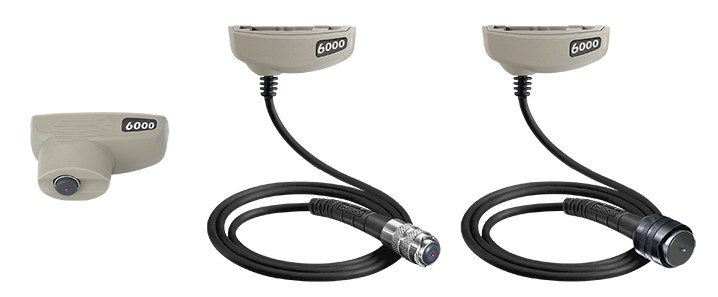
The substrate material is a central consideration when selecting a coating thickness gauge. Steel and aluminum truck beds require different measurement approaches. The PosiTector 6000 Thick Series is intended for non-destructive measurement of spray-on liner coatings on both materials.
Measurement on steel truck beds
PosiTector 6000 FT and PosiTector 6000 FTS use the magnetic principle to measure and display the total liner thickness applied to steel beds. These options support inspection of cured bedliner coatings where the underlying truck bed is steel.
Measurement on steel or aluminum truck beds
PosiTector 6000 FNTS uses magnetic and eddy current principles. This allows the model to measure bedliner thickness on either steel or aluminum truck beds. For applicators working with both substrate types, this combined approach provides one measurement solution for the two common truck-bed materials described here.
Using measurement data in quality control
A useful inspection routine compares measured values with the coating manufacturer’s specified thickness range. Measurements should represent the coated truck bed surfaces rather than relying on a single location. This helps identify areas that may need attention before the liner is placed into service.
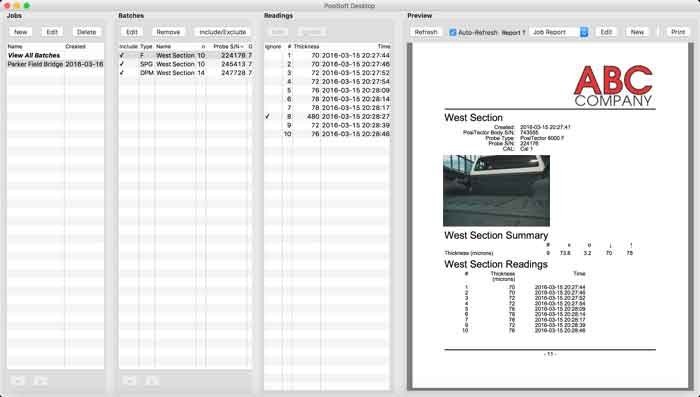
Recording measurements also creates a clearer basis for reviewing application consistency from one truck bed to another. PosiTector 6000 measurements can be connected to a computer using the supplied USB cable. Reports may be viewed from the gauge in a standard web browser, or measurements may be downloaded to PosiSoft Desktop software for professional PDF reporting.
Spray-on truck bedliner thickness measurement is a practical part of verifying a cured protective coating. It helps applicators avoid the risks associated with insufficient coverage while reducing unnecessary material application. For steel beds, PosiTector 6000 FT and PosiTector 6000 FTS use magnetic measurement. For steel and aluminum beds, PosiTector 6000 FNTS combines magnetic and eddy current principles. Selecting the method that matches the truck bed substrate supports reliable, non-destructive inspection of the finished liner.
By monitoring the mesh, emulsion, total stencil thickness, and dry ink layer separately, operators can identify variations throughout the screen printing process. The coating thickness gauge uses a non-destructive measurement method to help monitor and control these thickness parameters.