In the electrical sector, heat is a localized indicator of abnormality. In HVAC, it represents a flow of energy that must be balanced. In mechanical systems, heat is an inevitable byproduct of friction and processing.
Choosing the right temperature meter should begin with a question: What role does temperature operate in your system?
Electrical: When Stability Matters More Than Accuracy
In switchgear maintenance or substation inspections, technicians are not looking for absolute temperature values. What matters is the ability to detect deviations from the system’s normal operating state over time.
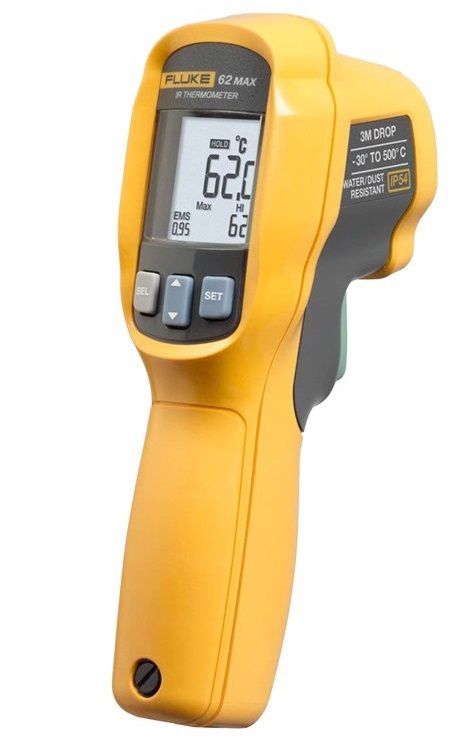
This explains why models like the Fluke 62 MAX remain widely used, even though they do not offer the highest measurement range. Their strength lies not in ±1% or ±2% accuracy figures, but in their ability to deliver consistent and repeatable readings across multiple measurement cycles.
In electrical environments, a large but stable error is rarely critical. In contrast, a device whose readings fluctuate with environmental conditions can undermine trend analysis—the key to identifying emerging hotspots.
HVAC: Temperature Is No Longer a Number, but a Gradient
Unlike electrical applications, HVAC technicians are less concerned with absolute temperature values. What they need is a reliable temperature gradient—one that accurately reflects heat transfer performance within the system.
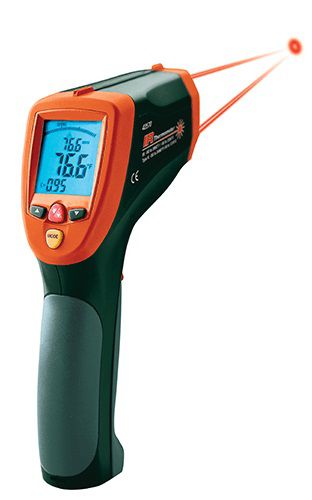
Measurement devices in this context do not need extreme sensitivity to hotspots, but must remain stable enough to capture the true behavior of thermal flow. Popular models such as the Extech 42570 are favored for their ability to maintain consistency across varying surfaces and environmental conditions.
HVAC systems constantly deal with variables such as airflow, humidity, and changing surface materials. If the instrument cannot properly account for emissivity or is overly influenced by ambient conditions, the measured values quickly lose their relevance for performance evaluation.
Mechanical & Manufacturing: Where Physical Limits Become Apparent
In mechanical applications—especially those involving high temperatures or metallic surfaces—temperature measurement becomes significantly more complex.
Unlike the previous sectors, where errors are largely driven by environmental factors, mechanical systems expose the physical limitations of the measurement method itself. Metallic surfaces exhibit high reflectivity, oxide layers evolve over time, and temperature distribution is rarely uniform.
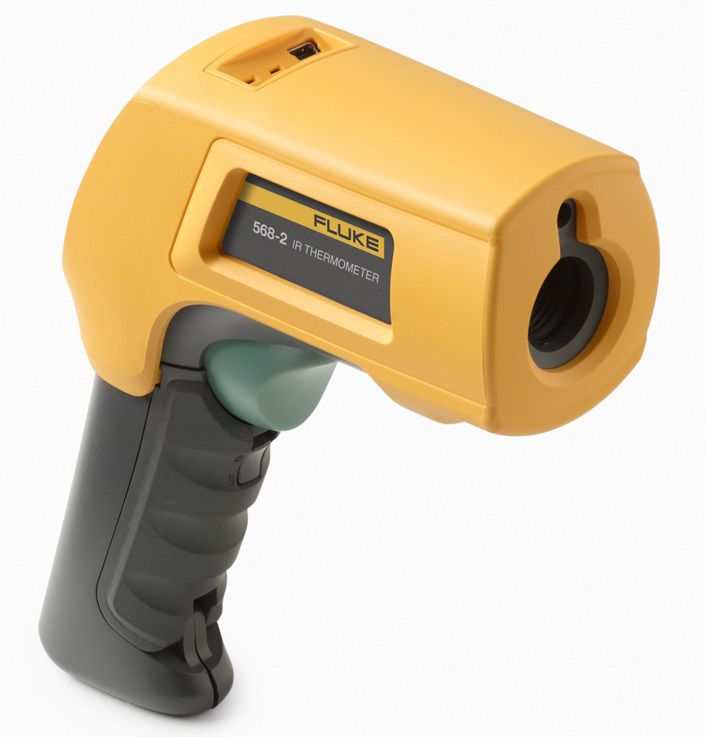
Models such as the Fluke 568 are selected not simply for their extended temperature range, but for their ability to adapt to these conditions. The combination of contact and non-contact measurement allows technicians to cross-validate data, rather than relying on a single method.
In this context, an infrared thermometer is no longer just a data-reading device—it becomes a tool that enables operators to reassess their assumptions about how the system actually behaves.
See more:
Optimizing Temperature Measurement to Reduce Operating Costs by 20%