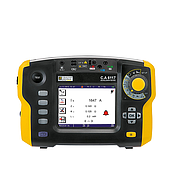
Automotive torque meter are important because torque-wrench accuracy affects how consistently critical fasteners are tightened. In wheel-related work, a controlled torque process helps protect the wheel and fastener assembly from problems associated with incorrect tightening.
For automotive shops, the practical value is the ability to check a torque wrench on demand rather than relying only on periodic, time-based testing. The Validator torque tester is described as an on-site tool for this purpose.
Summary: Accurate torque supports fastener integrity in automotive work. On-demand testing can simplify process checks. The Validator torque tester provides pass/fail status, peak mode, and real-time torque readings.
Why does torque-wrench accuracy matter in automotive service?
Torque-wrench accuracy matters because the torque applied to a fastener influences how the joined parts perform under stress and vibration. This is especially relevant to rotating applications such as wheel assembly, where wheel and fastener integrity are important.
A torque wrench is only useful for process control when its performance is checked appropriately. Testing helps an operator identify whether the wrench is delivering a result that aligns with the intended tightening process.
What are automotive torque calibration tools used for?
Automotive torque calibration tools are used to test torque wrenches and give operators a clear indication of their torque performance. They support process control by bringing the check closer to the point where the wrench is used.
The source describes the Validator torque tester as a tool designed for on-demand, on-site torque-wrench testing. This approach can be useful when a shop wants to verify a tool as needed instead of waiting solely for a scheduled test interval.

How can on-demand torque-wrench testing improve process control?
On-demand testing can make torque verification more accessible during normal shop operations. Rather than depending on rudimentary analyzers and periodic checks alone, an operator can obtain a result at the time a check is needed.
That immediate feedback can support more consistent work practices and help focus attention on the role of correct torque application. It can also make torque testing part of operator awareness and training.
| Testing approach | How it is described | Process-control implication |
|---|---|---|
| Periodic, time-based testing | Testing performed at scheduled intervals using torque analyzers | May not provide a check at every point an operator needs one |
| On-demand, on-site testing | Torque-wrench testing performed when needed at the work location | Provides immediate access to a torque-performance check |
What features does the Validator torque tester provide?
The Validator torque tester is described as providing a pass/fail display, peak mode for click-type mechanical torque wrenches, and real-time torque readings. These functions give the user more than one way to view a test result.
A pass/fail indication can make the calibration-status result easier to interpret. Peak mode is intended for click-type mechanical torque wrenches, while real-time readings allow the applied torque to be observed as it is measured.
| Feature | Stated function | Relevant use |
|---|---|---|
| Pass/fail display | Indicates calibration status | Quick result interpretation |
| Peak mode | Supports click-type mechanical torque wrenches | Testing this wrench type |
| Real-time torque reading | Displays torque as it is measured | Observing applied torque during a test |
When is peak mode relevant for torque-wrench testing?
Peak mode is relevant when testing a click-type mechanical torque wrench. The Validator includes this mode specifically for that wrench category.
Because the source only identifies the feature and its applicable wrench type, the suitable test method and acceptance criteria should follow the requirements of the specific wrench and the shop's torque process.
Note: A pass/fail display communicates a test status, but the source does not state the test limits, torque ranges, or calibration interval for a particular wrench. Those details should be established for the application being performed.
Can torque testing also support operator training?
Yes. Real-time torque readings and on-demand checks can help operators see the relationship between wrench use and the torque being applied. The source presents these functions as training aids that build awareness of proper torque application.
Training value is particularly relevant where a repeatable tightening process is needed, such as wheel service. It reinforces that torque is a controlled input to the assembly process, not simply a step to complete.
How should an automotive shop choose a torque-testing approach?
An automotive shop should choose an approach that matches the type of torque wrench in use and the need for accessible process checks. For torque wrench, peak-mode capability is a stated consideration.
It is also practical to consider whether the team needs pass/fail status, real-time readings, or both. A tool that can be used on site may suit operations that need torque-wrench checks during routine work, while the final testing practice should remain aligned with the shop's own requirements.