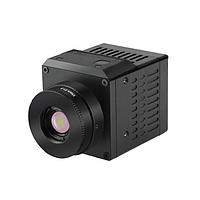
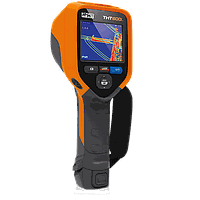
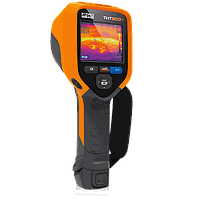
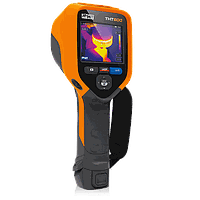
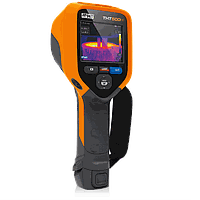
Thermal imaging camera
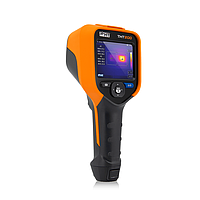
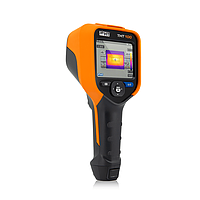
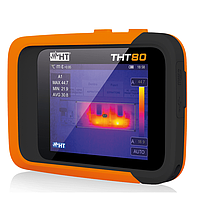
When surface temperature needs to be checked quickly without contact, thermal imaging becomes one of the most practical tools in maintenance, inspection, and troubleshooting. A thermal imaging camera helps teams visualize heat patterns, identify abnormal hot or cold spots, and make faster decisions in electrical, mechanical, building, and process environments.
On this category page, you can explore thermal cameras for different working styles, from compact mobile units that connect to a phone to handheld imagers designed for routine industrial inspection. The range includes well-known options from FLIR and FLUKE, covering everyday temperature screening as well as higher-resolution imaging for more detailed diagnostics.
Where thermal imaging cameras are commonly used
Thermal cameras are widely used wherever temperature distribution matters more than a single point reading. Instead of checking one spot at a time, the camera shows a full thermal scene, making it easier to compare components, detect uneven heating, and trace temperature-related issues back to their source.
Typical applications include electrical panel inspection, motor and bearing checks, HVAC diagnostics, building envelope assessment, process monitoring, and general preventive maintenance. In many workflows, a thermal imager complements other temperature meters and indicators by adding a fast visual layer before a technician moves on to contact verification or deeper analysis.
Mobile and handheld formats for different workflows
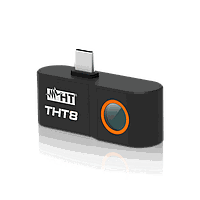
Not every inspection task requires the same form factor. Mobile thermal cameras are useful when portability, quick deployment, and app-based sharing are the priority. Compact models such as the FLUKE FLUKE-TC01A, FLUKE FLUKE-TC01B, and FLUKE Fluke-TC01C are designed for users who want a lightweight solution that connects directly to a compatible smartphone or tablet.
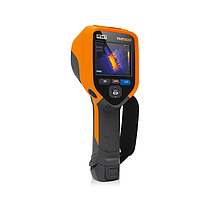
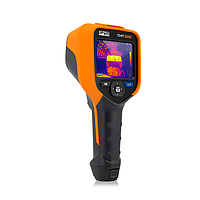
Handheld imagers are usually a better fit for routine site surveys, industrial maintenance routes, and jobs where a dedicated screen and more rugged field use are preferred. Products such as the FLIR E5 Pro, FLIR E6 Pro, FLIR TG268, FLUKE FLK-TIS75+, and FLUKE FLK-TiS20+ show how this category spans from entry-level inspection to more detailed thermal assessment.
There is also a middle ground for practical screening tasks. Devices like the FLUKE FLUKE-VT06/APC and FLUKE FLUKE-VT08/APC visual IR thermometers can support fast checks where users need a simple thermal view without stepping into a more advanced analysis workflow.
What to compare when choosing a thermal imaging camera
The first selection factor is usually IR resolution. Higher resolution can reveal smaller temperature differences across a scene and is especially useful when inspecting crowded electrical assemblies or targets at greater distance. For example, this category includes compact 256 x 192 mobile models as well as higher-resolution handheld units such as the FLUKE FLK-TIS75+ with 384 x 288 imaging.
Temperature range is another practical filter. Some devices are intended for general maintenance and moderate surface temperatures, while others reach higher ranges suited to industrial equipment, hot process components, or more demanding electrical inspections. Selection should reflect the real operating temperatures you expect to encounter, not just the widest available range.
It is also important to check thermal sensitivity, field of view, focusing method, frame rate, and measurement accuracy. In day-to-day work, these characteristics affect how clearly subtle heat patterns appear, how easily the user frames a target, and how comfortably the camera can be used during repetitive inspections.
Examples from FLIR and FLUKE
FLIR products in this category illustrate several common use cases. The FLIR ONE Edge supports smartphone-based thermal viewing with wireless connectivity, making it attractive for mobile inspections and reporting. The FLIR E5 Pro and FLIR E6 Pro move into dedicated handheld imaging, with integrated display, radiometric image capture, and connectivity features that are more suitable for recurring maintenance routines.
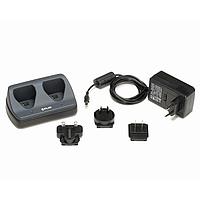
The FLIR TG268 is positioned differently, combining spot measurement workflow with thermal imaging support for fast troubleshooting. For teams already using FLIR handheld platforms, accessories such as the FLIR T300772ACC Battery Charger can also matter for uptime and charging logistics, especially in multi-shift or field service environments. If you also need supporting items, it can be useful to review related temperature accessories for chargers, probes, and other add-ons.
FLUKE offers both mobile and handheld thermal options on this page. The FLUKE-TC01 series supports users who want compact thermal capability through a mobile device, while the TiS and VT series address more traditional maintenance work. The FLUKE FLK-TIS75+ targets users who need a stronger imaging specification for diagnostics, whereas the FLUKE VT06/APC and VT08/APC are suited to quick visual temperature screening.
Thermal imaging versus point temperature measurement
A thermal imager is not simply a replacement for an infrared thermometer. A point measurement tool gives one reading at a selected spot, while a thermal camera provides a temperature map across the observed area. That difference is critical when the fault is not obvious, when multiple components must be compared at once, or when the hottest point may not align exactly with a manually aimed measurement.
In practice, many users combine both methods. The thermal image helps locate suspicious areas quickly, and other instruments can then be used for confirmation, documentation, or process control. This is why thermal cameras often sit within a broader temperature measurement toolkit rather than working in isolation.
Practical buying considerations for B2B users
For industrial buyers, camera selection should be based on workflow as much as specification. Think about who will use the device, how often inspections are performed, whether reports need to be shared from the field, and whether the camera must survive daily transport, repeated startup cycles, or long maintenance rounds.
Compatibility can also affect the decision. Mobile thermal models may depend on the operating system or connector type, while handheld cameras may offer features such as onboard storage, touchscreen operation, wireless transfer, or cloud-connected reporting. If thermal inspection is part of a broader monitoring strategy, related categories such as temperature indicating labels can also support visual tracking in fixed locations where continuous spot checks are not practical.
How to narrow down the right model
If your priority is portability and quick image sharing, a phone-connected model may be the most efficient starting point. If you need a dedicated instrument for routine maintenance, a handheld thermal imager usually offers better ergonomics, battery handling, and image workflow. For occasional troubleshooting, a simpler thermal screening device may be enough.
It also helps to match the camera to target size and inspection distance. Small components, distant targets, and subtle temperature differences generally require stronger imaging performance. On the other hand, for broad building checks or general hot-spot detection, a more straightforward model may already meet the need effectively.
Conclusion
This thermal imaging camera category brings together compact mobile units, dedicated handheld imagers, and practical screening tools for a wide range of inspection tasks. With options from FLIR and FLUKE represented among the featured products, buyers can compare devices by workflow, imaging capability, temperature range, and connectivity instead of relying on specification lists alone.
If you are selecting a camera for maintenance, building diagnostics, or industrial troubleshooting, start by defining the inspection environment, reporting needs, and expected temperature range. That approach makes it easier to choose a thermal imaging solution that fits real operating conditions and supports consistent, efficient temperature analysis.
数量割引、まとめ買い価格の更新、新製品情報をメールでお届けします。
登録することで、当社の利用規約およびプライバシーポリシーに同意したものとみなされます。
認定専門家へ直接アクセス