What Is a Square Angle Ruler?
As the name suggests, a square angle ruler is a measuring tool used to check or create precise 90-degree angles during production processes. It enables fast operation, high accuracy, and is easy to use in various working environments.
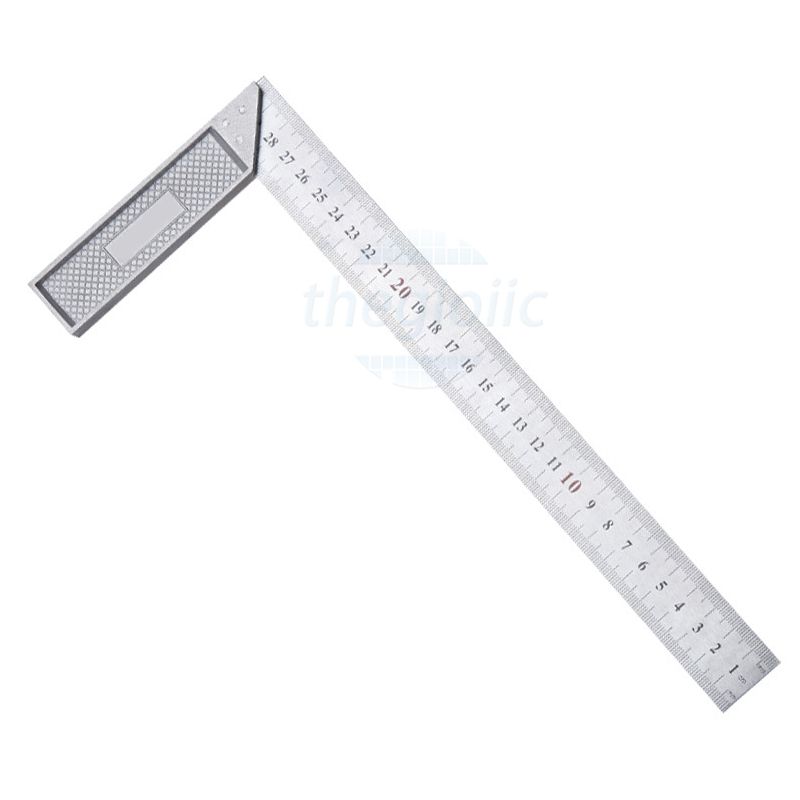
Beveled Edge Square Ruler from Insize
One of the most popular models today is the beveled edge square ruler from Insize. This type of ruler is also known by several other names such as technical square ruler, 90-degree ruler, or right-angle square.
The ruler is designed with two edges forming a 90-degree L shape. The body is marked with graduation lines and numbers for easy measurement and alignment. These rulers are typically made from stainless steel or granite, which makes them resistant to warping, rust, and changes caused by weather or storage conditions.
Many models also come with a sturdy polymer handle, a hardened steel blade, and finely crafted edges to enhance alignment and measuring precision.
In addition to measuring length and width, it is used to check inner diameters, outer diameters, or the depth of cylindrical and square components. Therefore, it is widely applied in various industries such as mechanical engineering, woodworking, aluminum and plastic manufacturing, and scientific research that demands high precision.
How to Use a Square Angle Ruler Properly?
Things to Note Before Use:
To ensure the most accurate measurement results, here are a few things you should check before using the ruler:
- Check the zero point of the ruler to ensure it is not misaligned. Even a slight misalignment can result in completely incorrect measurements.
- When placing the ruler, align one edge of the ruler exactly with the edge you want to measure, and make sure the center of the ruler aligns with the vertex of the angle being checked.
- Clean the ruler before use to avoid dust or smudges obscuring the markings or affecting readability.
- Avoid using the ruler on rough or uneven surfaces as this may lead to measurement errors and reduce the ruler’s lifespan.
Steps to Use a Square Angle Ruler:
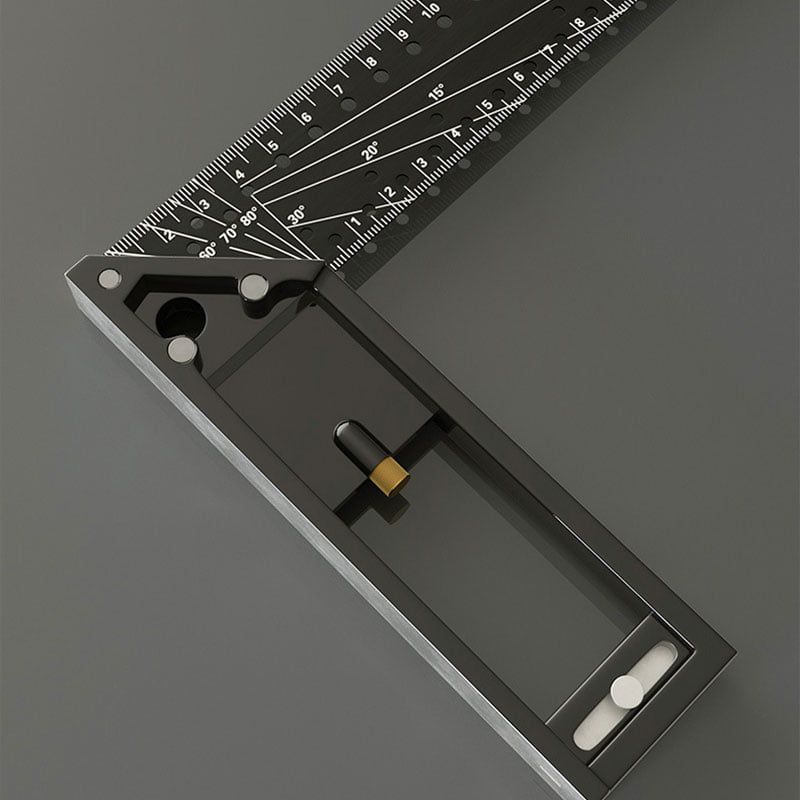
Square angle rulers are widely used in mechanical work, construction, and QC/QA departments to check part angles or assist in marking and drawing. Here are the steps:
1. Place the ruler at the position to be checked, aligning one edge of the ruler with one edge of the object so that the corner of the ruler matches the corner of the object.
2. Observe:
- If the remaining edge of the ruler aligns perfectly with the object’s edge → the angle is exactly 90 degrees.
- If the ruler extends beyond the object’s edge → the angle is less than 90 degrees.
- If there is a gap or misalignment between the ruler and the object’s edge → the angle is greater than 90 degrees.
During measurement, handle the ruler carefully when removing it from the object to avoid shifting, which could cause incorrect results.
After Use:
- After using the ruler, wipe it clean with a soft cloth. You may apply a layer of protective oil if needed to prevent rust.
- Store it in a dry place, away from high humidity or chemical exposure to keep the ruler in optimal condition for future use.
Popular Square Angle Ruler Models on the Market Today
Here are some of the most popular square angle ruler models currently available:
1. Insize 4790-075 Beveled Edge Square Ruler
Material: Premium aluminum
Features: Heat and impact resistant, good rust resistance in humid environments
Compact design, easy to use in tight spaces
Applications: Precision mechanics, interior design, equipment installation
2. Insize 4794 Square Ruler
High accuracy with a deviation of only 0.7 mm/m
Suitable for construction, architecture, interior design
Durable, solid build with flexible handling
3. Insize 4790-0150 Beveled Edge Square Ruler
Convenient design with clear printed markings
Fixed square angle for easy measuring and marking
Commonly used in machining and QC/QA inspection
Where to Buy Genuine Square Angle Rulers?
If you're looking for accurate square angle rulers or other precision mechanical measuring tools like calipers, depth gauges, or concrete crack width rulers, you can find genuine products at EMIN.