Installing and maintaining a rooftop solar PV system involves more than checking the inverter's output voltage. Technicians also need to check string current, polarity, insulation resistance, grounding, and other electrical parameters before putting the system into operation.
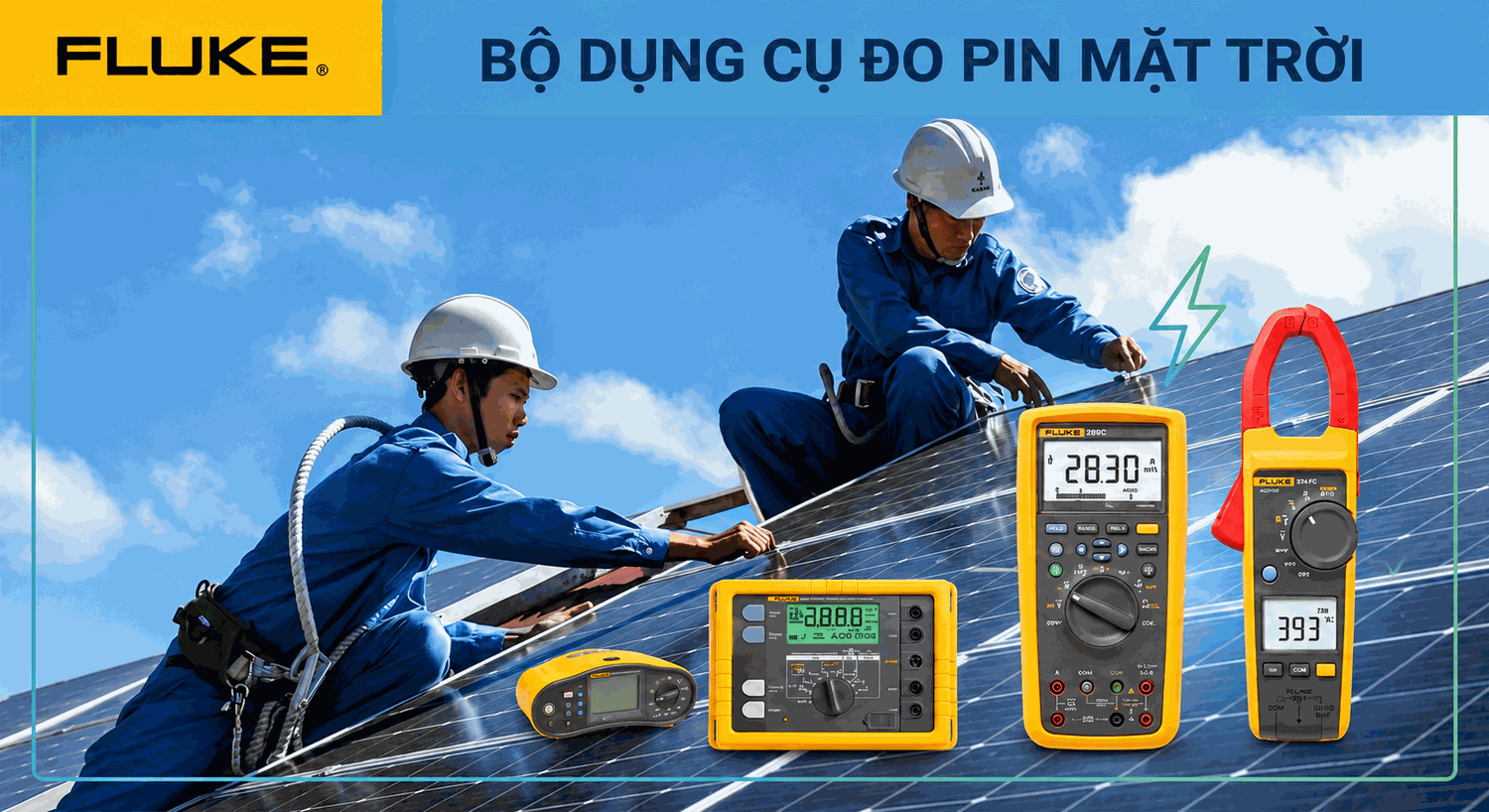
A suitable measurement toolkit does not need to include every possible function. Its effectiveness comes from selecting the right instrument for each measurement and working condition on the roof. The following Fluke instruments are worth considering for these tasks.
Measuring High DC Voltage: Pay Attention to the CAT Safety Rating
Solar PV system voltages can reach several hundred volts or more than 1,000 V DC. When choosing a digital multimeter, technicians should consider not only the measurement range but also the safety rating and the test leads supplied with the instrument.
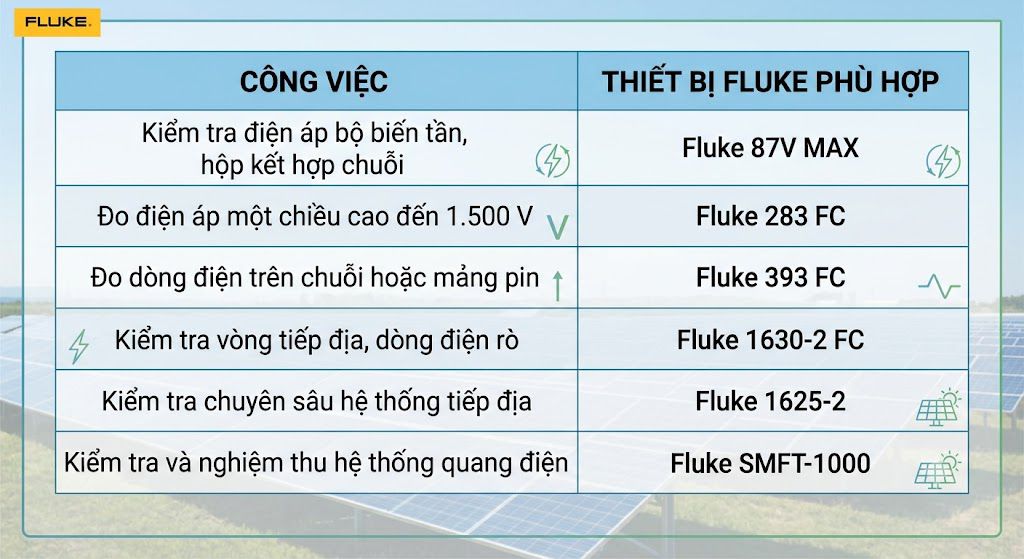
The 87V MAX Digital Multimeter measures AC and DC voltage up to 1,000 V, with CAT III 1,000 V/CAT IV 600 V safety ratings and IP67 protection. It can be used to check inverters, PV string combiner boxes, PV arrays, and related electrical circuits.
For systems with higher voltages, the 283 FC supports DC voltage measurements up to 1,500 V, with CAT III 1,500 V/CAT IV 1,000 V safety ratings. It also provides data logging and wireless data transfer through the Fluke Connect platform.
Measure String Current with a Clamp Meter
Measuring current in a PV string is one of the routine tasks when inspecting a solar PV system. If a digital multimeter is connected in series to measure current, the technician may need to disconnect or modify the circuit connections.
A clamp meter makes the measurement more convenient because it can be clamped directly around the conductor. The 393 FC is designed for solar PV applications, with DC voltage measurement up to 1,500 V and current measurement up to 999.9 A. Its slim jaw design makes it easier to work in confined spaces such as PV string combiner boxes.
The instrument also supports DC power measurement and polarity indication, allowing technicians to perform quick checks when working with PV strings or cables leading to the inverter.
For rooftop work, accessibility can be just as important as the measurement range. An instrument may support high voltage measurements, but if it is difficult to position at the required test point, its practical value can be limited.
Grounding Measurements: 1630-2 FC and 1625-2 Serve Different Needs
Solar PV systems contain numerous metal frames, aluminum rails, and electrical equipment installed outdoors. Grounding inspections should be performed together with checks of protective conductor continuity and equipotential bonding connections.
The 1630-2 FC is suitable for measuring ground loop resistance and leakage current in systems with multiple grounding points. Its clamp-based method allows measurements without disconnecting parallel grounding conductors or installing auxiliary test stakes under suitable conditions.
The 1625-2, meanwhile, is intended for more comprehensive grounding system measurements. It supports several ground resistance testing methods, including fall-of-potential, selective, stakeless, and two-pole measurements.
The two instruments can be distinguished by their typical applications:
For quick checks of ground loop resistance and leakage current in systems with multiple grounding points: Fluke 1630-2 FC.
For evaluating grounding electrode systems using dedicated ground resistance measurement methods: Fluke 1625-2.
Fluke also specifies that the 1630-2 FC is intended for use on energized systems with multiple grounding connections. When the grounding electrode system itself needs to be tested directly, a dedicated ground resistance tester such as the 1625-2 is more appropriate.
When Installation and Commissioning Are Both Required, a Multifunction Tester Has an Advantage
If the job involves not only troubleshooting but also installation, testing, and commissioning of solar PV systems, a dedicated multifunction tester can reduce the number of instruments technicians need to carry.
The SMFT-1000 Kit is a multifunction tester designed for photovoltaic systems. It supports protective conductor resistance, insulation resistance, open-circuit voltage measurements from 5 to 1,000 V, polarity testing, and other tests used for PV system commissioning.
The SMFT-1000 is designed to support photovoltaic system testing in accordance with IEC 62446-1. This makes it suitable for technical teams handling multiple stages of a project, from installation to pre-commissioning inspection.
If the job mainly involves routine electrical troubleshooting, a digital multimeter and a clamp meter may cover most day-to-day requirements. For installation teams responsible for commissioning as well, a multifunction tester provides a broader range of applications.
Build the Toolkit Around the Inspection Process
Instead of selecting instruments based on the number of functions they offer, technicians can build their toolkit around the actual inspection sequence of a solar PV system:
Voltage → Current → Polarity → Insulation → Grounding → System commissioning
A solar technician's toolkit does not need to contain a large number of instruments, but each instrument should address a specific measurement task. The inspection process can begin with voltage and current measurements, followed by insulation and grounding tests, and finally system commissioning.
In addition to measurement specifications, users should check the CAT safety rating, voltage range, environmental protection, test lead design, and ease of access in confined spaces. With solar PV systems, DC circuits can remain energized when the panels are exposed to sunlight. Therefore, measuring instruments and their accessories must be suitable for the system's voltage level and safety requirements.
Selecting instruments according to specific tasks can keep the toolkit more compact, reduce unnecessary disconnection and reconnection work, and make rooftop solar PV inspections more convenient.