Chemical storage is about more than simply using a corrosion-resistant cabinet. As the number of stored chemicals increases or volatile solvents become more common, vapor control has become an important consideration for laboratories and industrial facilities. For this reason, chemical storage cabinets with integrated exhaust systems are increasingly being selected alongside conventional cabinet designs.
Chemical Storage Cabinets without Exhaust Fans Still Meet Basic Storage Requirements
Chemical storage cabinets without exhaust fans remain a practical solution for schools, testing laboratories, and chemical storage rooms.
These cabinets are designed to isolate chemicals from the surrounding environment, minimize the risk of leaks in the event of an accident, and protect chemical containers from heat, light, and physical impact. For chemicals that are tightly sealed and accessed only occasionally, this type of cabinet provides a cost-effective storage solution.
How Does an Exhaust Fan Improve a Chemical Storage Cabinet?
Controlling Chemical Vapors Inside the Chemical storage Cabinet
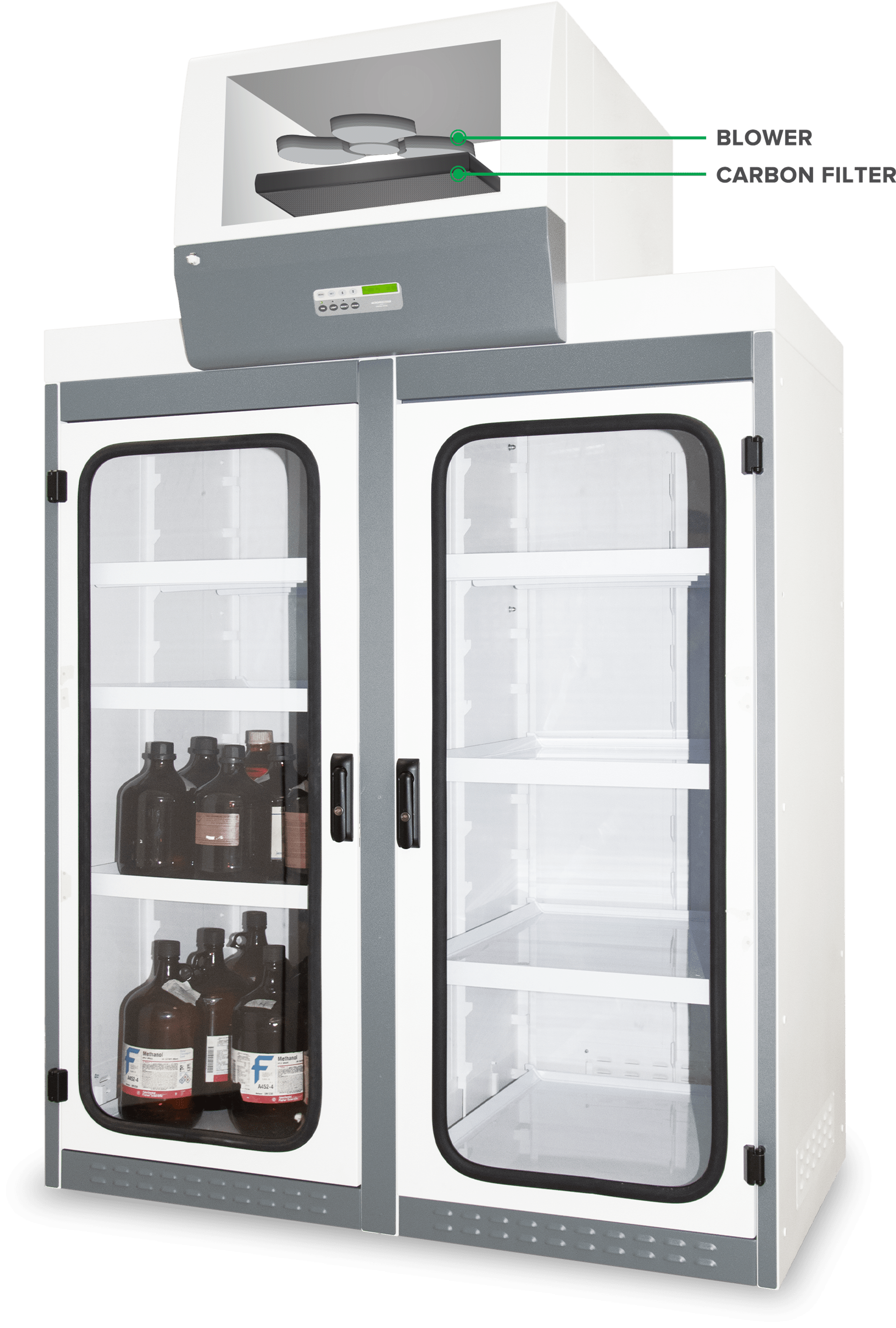
During storage, solvents such as ethanol, methanol, acetone, and other organic chemicals can release vapors even when their containers are tightly sealed. An integrated exhaust fan continuously circulates air, directing these vapors to a filtration unit or an exhaust system instead of allowing them to accumulate inside the chemical storage cabinet.
When the cabinet door is opened, the remaining vapor concentration is lower than in a conventional cabinet, helping to improve the working environment for laboratory personnel.
Additional Features
For effective vapor removal, the extracted air should pass through a dedicated filtration system or be connected to a centralized laboratory exhaust system.
Some advanced chemical storage cabinets are also equipped with airflow monitoring sensors that continuously verify ventilation performance, ensuring the exhaust system operates efficiently at all times.
These enhancements create a more integrated storage solution while providing continuous monitoring of cabinet ventilation.
Designed for High-Frequency Use
In QC laboratories, R&D facilities, and production environments, technicians frequently access chemical cabinets throughout the working day. Each time the cabinet door is opened, a small amount of solvent vapor can escape into the room. Over time, these vapors may accumulate and affect indoor air quality when using a standard cabinet.
A laboratory chemical storage cabinet with an exhaust fan helps reduce vapor buildup, minimizes chemical odors, and provides a safer and more comfortable working environment.
When selecting a chemical storage cabinet, consider the volatility of the chemicals being stored, how frequently the cabinet will be accessed, and the laboratory's existing ventilation system. Evaluating these factors before purchasing will help improve storage safety, enhance operational efficiency, and reduce long-term maintenance and operating costs.