Residual Current Circuit Breakers Tripping Due to Parasitic Capacitive Leakage Current in Solar PV Panels
Users often generally refer to circuit breakers tripping, but the devices reacting to leakage currents are those integrated with residual current protection abbreviated as RCD, ELCB, or RCBO when combined with overcurrent protection functions. Standard MCBs and MCCBs purely protect against overcurrent and short circuits; they will not trip due to leakage current no matter how large it is. Rooftop solar PV systems inherently generate a certain level of leakage current caused by parasitic capacitance between the solar modules and their aluminum frames, as well as between the frames and the grounding system. This physical characteristic exists naturally in all photovoltaic panels, regardless of installation quality.
Mechanism of Leakage Current Generation from Solar Panel Construction
A photovoltaic panel consists of multiple thin material layers a glass layer, photovoltaic cells, and a backsheet layer separated by extremely small insulation distances. This structure effectively creates a parasitic capacitor between the internal live conductors of the panel and the external aluminum frame.

Transformerless inverters are widely used due to their high efficiency and low cost, but they lack an isolation transformer between the DC and AC sides, allowing capacitive leakage current to flow through the grounding system more easily than with isolated inverters. Larger panel surface areas, rain, or high humidity further increase leakage current, as a layer of water on the panel surface enhances capacitive conductivity. Systems with multiple parallel panel strings accumulate leakage currents from each panel, easily exceeding the tripping threshold of residual current protection devices even when no actual insulation fault exists.
Distinguishing Capacitive Leakage Current from True Insulation Faults
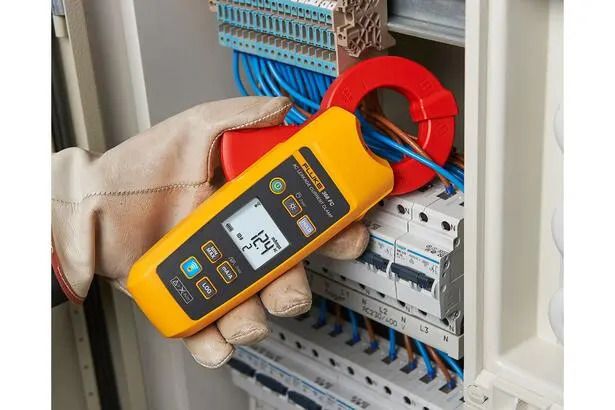
Measure the leakage current using a specialized clamp meter at the system's grounding conductor and compare it against the maximum leakage current specification published by the inverter manufacturer typically ranging from tens to hundreds of milliamperes depending on capacity and inverter type.
If the leakage current stays within published parameters and fluctuates with rain or sunshine, it is normal capacitive leakage. A sudden spike far exceeding specified parameters, or leakage appearing during dry weather, indicates a genuine insulation fault requiring inspection of DC cables, junction boxes, or terminal lugs for moisture, cracking, or rodent damage.
How to Reduce Nuisance Tripping While Maintaining Residual Current Protection
Select selective-type (S-type) residual current circuit breakers with higher tripping thresholds than standard high-sensitivity units, which are suitable for systems with high baseline capacitive leakage such as large-scale rooftop solar installations.
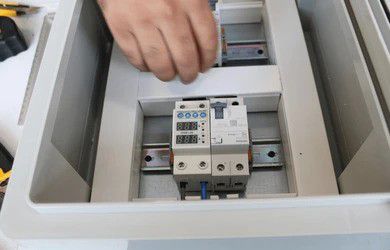
Subdivide the system into smaller sub-groups, assigning a dedicated RCD to each group instead of combining the entire system under a single protective device. This prevents cumulative group leakage from exceeding tripping limits. Regularly inspect the grounding system to ensure earth resistance remains sufficiently low according to standards; poor grounding increases the risk of leakage accumulation causing breaker trips even when the solar array has no faults.
Reference: Rooftop Solar Power – Voltage Drop and Power Loss Issues. Warning: 4 Signs Requiring Investigation.
Frequently Asked Questions
What leakage current threshold triggers an RCD to trip?
High-sensitivity types are typically set to a 30mA threshold for personal protection. Selective types used in larger systems are usually set from 100mA to 300mA, making them better suited for rooftop solar arrays with high baseline capacitive leakage.
Is it a system fault if the breaker trips frequently during rain but works normally in sunny weather?
In most cases, this is due to capacitive leakage increasing with humidity and does not represent a system fault. If the measured current remains within the inverter's specified parameters, the system is safe, and upgrading to a selective RCD should be considered.
Should the residual current breaker be removed entirely to stop nuisance tripping?
No. Residual current protection detects genuine insulation faults that pose electric shock or fire hazards. The correct solution is choosing the proper device type and threshold, not eliminating protection altogether.
If you need leakage current clamp meters or earth resistance testers for rooftop solar systems, explore electrical test and measurement equipment at EMIN.