
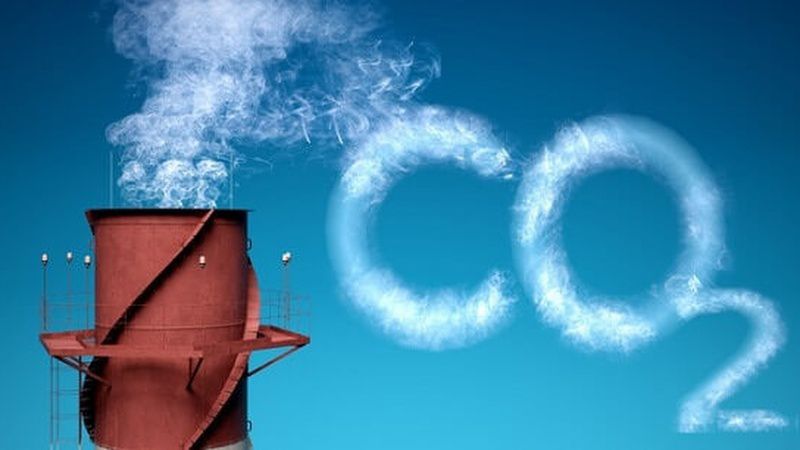
Under normal conditions, CO2 exists as a gas and makes up a small percentage of the Earth's atmosphere. When it turns into a solid, it is known as dry ice. A CO2 molecule consists of one carbon atom bonded to two oxygen atoms.
CO2 gas meters are mainly used to determine the concentration of gas in the surrounding air. Depending on the type of gas and the level of danger, the measuring sensors will have different sensitivities and measuring units to ensure accuracy in accordance with safety standards. Some common units include %LEL, vol%, ppm, or ppb.
Application of CO2 gas meter in industry. Why use CO2 measuring device?
a. In the food industry
CO2 in liquid and solid states is commonly used as a refrigerant in the preservation and transportation of frozen foods, especially ice cream. With its fast evaporation and non-toxic properties, CO2 plays an important role in the cold chain of the food industry. CO2 gas is also used to create gas in carbonated drinks such as Coca-Cola, Pepsi, 7Up... to help bring a refreshing feeling and enhance the flavor of the product.
In the baking industry, CO2 gas produced from baking powder or yeast plays an important role in helping dough rise, creating a spongy structure for bread. While yeast produces CO2 through natural fermentation, chemical leavening powders produce gas when exposed to heat or react with acids.
In addition, CO2 in a supercritical state is also used in food extraction technology to separate color, flavor and fat from raw materials without affecting nutritional quality.
b. In industries
Compressed CO2 is used in life jacket cartridges to inflate rapidly when exposed to water. Similarly, CO2 cylinders are used to supply air to air guns, bicycle pumps and other pneumatic devices.
In its supercritical form, CO2 also acts as an environmentally friendly solvent in the production of spray paints, significantly reducing the amount of organic solvents used.
In the mining industry, the powerful vaporization of liquid CO2 is used to create directional explosions in coal mines. In the welding industry, CO2 is used as a shielding gas, helping to stabilize the arc and improve the quality of the weld. In addition, CO2 gas is also pumped into oil fields to reduce the viscosity of crude oil, making the extraction process easier.
With its low cost and non-flammable nature, CO2 is also a popular choice in pressurization systems and nitrogen fertilizer production, specifically in the reaction of synthesizing urea from ammonia.
c. In daily life
CO2 gas is used in fire extinguishers because of its ability to quickly extinguish flames without leaving any residue. Dry ice – the solid form of CO2 – is also used to create smoke effects on stage, to clean surfaces as an alternative to traditional sandblasting methods, and in some special applications such as creating artificial rain.
In medicine, CO2 combined with oxygen and other gases can help regulate breathing, supporting patients with respiratory problems.
For plants, CO2 is an essential element in the process of photosynthesis. In high-tech agriculture, especially in greenhouses, adding CO2 to the environment helps stimulate growth, thereby increasing crop yields.
d. Why is it necessary to measure CO2 gas?
Although CO2 is not toxic and is not flammable or explosive, when its concentration exceeds the safe level, it can seriously affect human health. Because it is heavier than air, CO2 easily accumulates in enclosed areas with poor ventilation, thereby creating a safety risk in working or living spaces.
At low concentrations, CO2 can cause fatigue, shortness of breath, or headaches. When concentrations increase, the amount of oxygen in the air is replaced, leading to severe oxygen deficiency. Although not directly toxic, if exposed for a long time or in an environment with high CO2 concentrations, people can lose consciousness, faint, or even die due to insufficient oxygen to maintain respiratory function.
Common symptoms include dizziness, lightheadedness, nausea, drowsiness, loss of motor ability, or cognitive impairment. In addition, solid CO2 (dry ice) can cause frostbite, frostbite, and local tissue damage if it comes into direct contact with the skin.
Related article: Effects of CO2 gas in mig/mag welding
Symptoms of CO2 poisoning
When exposed to high concentrations of CO2 gas or for a long period of time, the body will react with a variety of signs, often starting with mild symptoms such as chest tightness, headache, fatigue, dizziness, drowsiness or nausea. These initial manifestations are easily confused with common symptoms, causing the patient to not realize the severity of the exposure.
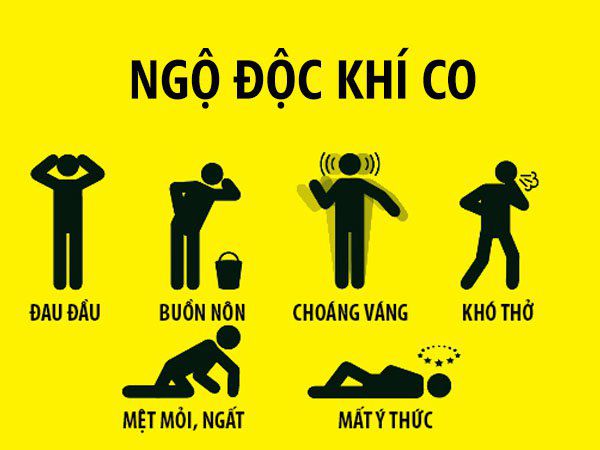
For people with a history of cardiovascular disease, especially angina, chest pain may appear suddenly upon exposure to CO2 gas. If exposure continues without intervention, symptoms will gradually become more severe, including vomiting, impaired consciousness, confusion, neuromotor collapse, and in many cases can lead to coma or death.
The effects of CO2 on individuals can vary depending on their current health and physical condition. Vulnerable groups include young children, the elderly, people with lung or heart disease, people living at high altitudes, or people with high blood CO levels, such as regular smokers.
Pregnant women are also a high-risk group, as CO2 can directly affect the oxygen supply to the fetus, thereby harming fetal development. Therefore, early detection of signs of poisoning and timely intervention are extremely important to ensure the health safety of those exposed.
Some devices for measuring and monitoring CO2 gas in industry
Cosmos XP-3140 High Concentration Gas Detector
This device is designed to monitor the CO2 concentration in the working environment, with the alarm limit set at 50% volume (vol%). The wide measuring range from 0 to 100 vol% allows effective monitoring even in situations with a high risk of leakage.
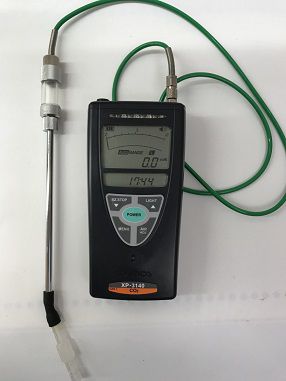
When detecting gas exceeding the safety threshold or a problem, the device will give an alarm signal with a buzzer and flashing red light, and display a visual warning on the LCD screen. Continuous operation time up to 20 hours, meeting the needs of long-term monitoring during work shifts or in hard-to-reach areas.
This device meets explosion-proof standards with Exibd II BT3 certification, operating stably in the temperature range from -20°C to 50°C. Compact size (82 × 162 × 36 mm) makes it easy to carry or install in many different locations in the factory or production area.
CO2 Monitor KS-7R – Made in Japan
Manufactured by Cosmos (Japan), the KS-7R is a specialized device for monitoring CO2 concentration in the air with a measuring range of 360 to 5,000 ppm. This is an ideal choice for enclosed spaces such as research labs, food factories or storage warehouses.
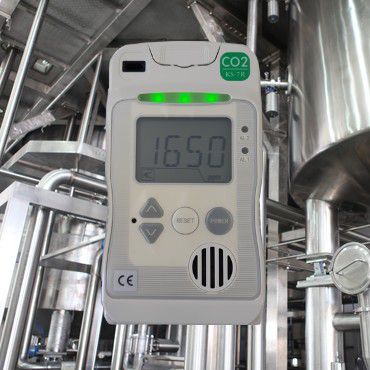
The device is integrated with a sharp LCD screen with backlight for easy reading in low light conditions. The warning system is clearly designed with an alarm with a volume of up to 70 dB/m and a flashing LED light when exceeding the safety threshold.
The highlight of the device is the ability to maintain continuous operation for up to 350 hours thanks to automatic backup power, ensuring uninterrupted monitoring even during power outages. With a compact design and light weight, the KS-7R can be easily installed in many locations without taking up much space.




