
For full functionality of this site it is necessary to enable JavaScript.
EMIN.VN
0

Comparing 150mm and 200mm calipers, which one is a bestseller you shouldn't miss?

2026년 04월 07일 16시 24분 48초

150mm and 200mm calipers are two common sizes, found in almost every mechanical toolkit. The 50mm difference may seem insignificant, but in practice it significantly affects the measuring range and ease of use

Differences in measurement scope and utility

The 150mm version is suitable for small details, components, or general daily measurement tasks. Thanks to its compact and lightweight design, it's easy to carry and convenient for quick checks in the workshop or on-site.

In contrast, the 200mm measuring tape expands the measuring range to include larger details such as shafts, molds, or surfaces exceeding the limits of the 150mm version. However, the longer body requires a bit more comfortable working space.

Stability when measured over a wide range
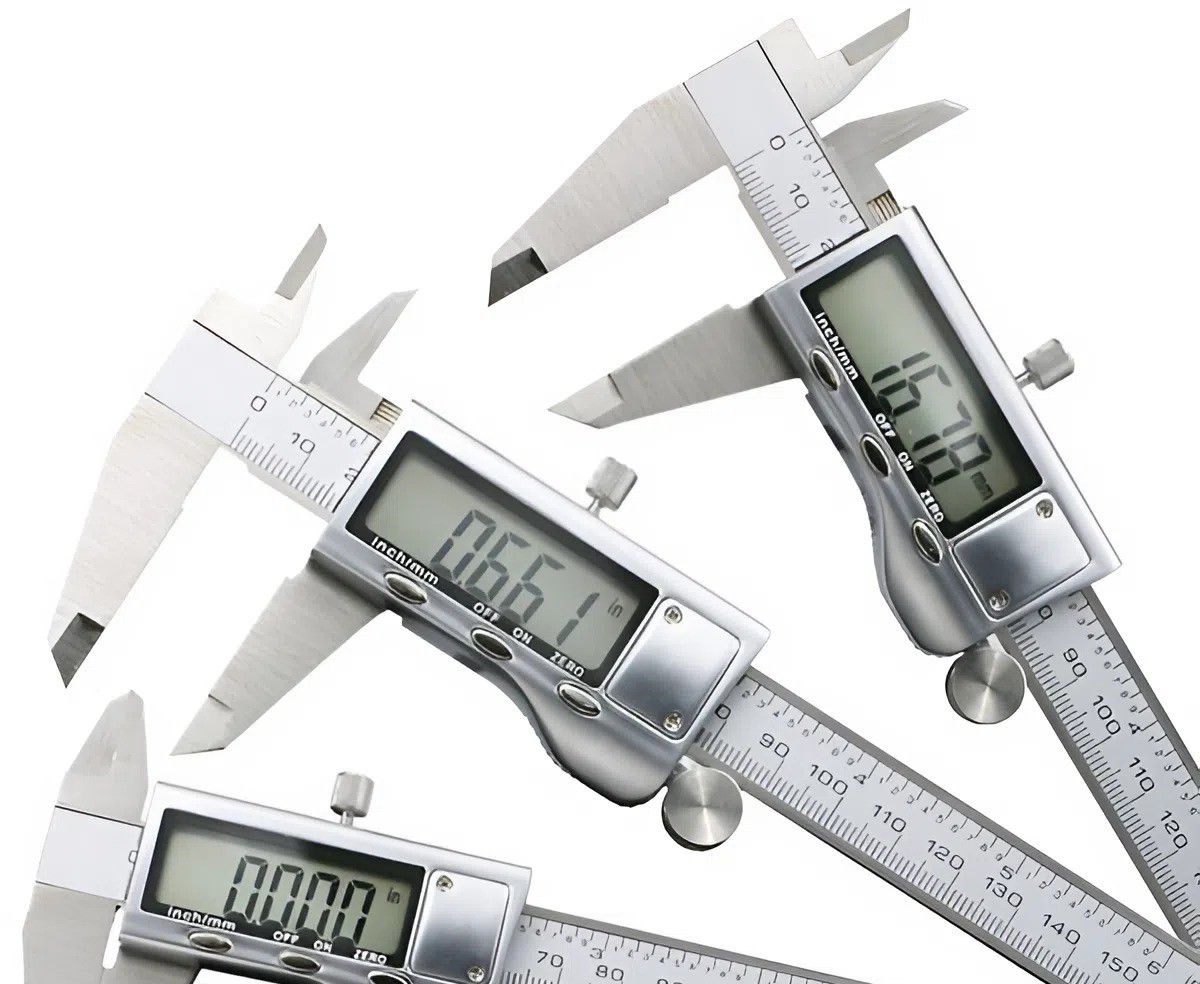
Basically, the accuracy difference between the two types is not significant if they come from reputable manufacturers. However, when measuring over a large range (nearly 150–200mm), the 200mm ruler usually feels more solid and stable, minimizing errors during operation.

If working in environments with a lot of oil, grease, dust, or coolant, it is advisable to prioritize rulers that are waterproof and dustproof to ensure long-term durability.

Additionally, depending on your usage habits, you can choose:

- Electronic ruler: Easy to read, fast, suitable for repeated measurements.

- Mechanical ruler: Battery-free, durable, suitable for harsh environments.

Check out some popular models.

150mm Calipers: You can consider models such as the Mitutoyo 530-312 (mechanical) or the Mitutoyo 500-196-30 (electronic). These are popular, easy-to-use models suitable for everyday measurement needs and are currently available at EMIN.

200mm Calipers: For a larger measuring range, you can consider the Mitutoyo 530-114 (mechanical) or the Insize 1108-200. These models are well-suited for working with larger parts and are also available at EMIN.

Balancing needs and costs

Generally, a 200mm measuring tape is more expensive than a 150mm version, but this difference isn't significant in the long run. For tasks primarily involving small and medium-sized details, the 150mm version is still sufficient, allowing for quick and easy operation and optimizing initial investment costs.

Conversely, if you frequently encounter larger details, choosing a 200mm measuring tape will give you more control during work. You won't need to switch tools mid-way or encounter measurement limitations, thus making the work smoother and saving time.

In summary, no single type is superior in every case; what matters is suitability to your needs. The 150mm version is compact and suitable for general daily tasks. The 200mm version is more suitable for measuring larger details.

If you're unsure which type to choose, you can base your decision on your specific work requirements or consult EMIN for more information to find a reasonable solution that balances efficiency and cost.


관련 뉴스

What Is Fiber Polarity and How Do You Choose an MPO Method?
2026년 11월 14일 11시 35분 16초

Fiber polarity ensures the transmit path connects to the corresponding receive path. For MPO-based duplex channels, the selected method must remain consistent across trunks, cassettes, adapters, and patch cords.

The scent of new wood in a newly handed-over apartment: How to measure and address formaldehyde (HCHO) levels before moving in
2026년 11월 14일 10시 28분 19초

Many people refer to the pungent, acrid odor that emerges when opening a new cabinet as the "smell of new wood," assuming it will simply dissipate after a few days. In reality, however, what is being released could well be formaldehyde—a substance originating from the adhesives used in the pressed-wood panels—and our sense of smell is not a reliable enough gauge to determine the concentration levels present

Guide to Selecting a TCLP Toxicity Characteristic Leaching Procedure Shaker Configuration in Compliance with QCVN 07:2025/BNNMT and TCVN 9239:2012
2026년 11월 13일 17시 23분 39초

Regulation QCVN 07:2025/BNNMT (replacing QCVN 07:2009/BTNMT and QCVN 50:2013/BTNMT) specifies hazardous waste and sludge thresholds based on leachate concentrations. To ensure that analytical results for heavy metals and organic compounds are accepted during ISO/IEC 17025 or VIMCERTS assessments, laboratories must comply with the Toxicity Characteristic Leaching Procedure (TCLP) specified in TCVN 9239:2012, which is equivalent to US EPA Method 1311

Checking the Temperature of Paint and Coating Surfaces After Curing Using an Infrared Thermometer
2026년 11월 13일 16시 11분 22초

An infrared thermometer allows surface temperature measurement without direct contact, making it suitable for products coming out of curing ovens or surfaces that are difficult to access. However, to ensure reliable results for production quality control, it is important to understand the measurement principle and the factors that affect measurements on painted and coated surfaces.

Crowded Gyms and Yoga Studios: How to Manage Air Quality to Retain Members
2026년 11월 13일 15시 07분 40초

Around 6 or 7 in the evening, the gym becomes packed; the music drowns out the sound of heavy breathing, and the air conditioning runs at full blast behind closed doors. At first glance, everything seems fine: the room is cool, the lights are bright, and the equipment is state-of-the-art. Yet, after just a few sessions, regular members begin to feel a heavy-headedness and find themselves running out of breath more quickly eventually, they simply stop renewing their memberships. No one complains about the personal trainers or the exercise machines. The very thing that makes them feel stifled and drives them away is something entirely invisible: the air inside the room

혜택 소식 받아보기

대량 할인, 도매 가격 업데이트 및 신제품 소식을 이메일로 받아보세요.

구독하면 당사의 서비스 이용약관 및 개인정보 처리방침에 동의하는 것으로 간주됩니다.

빠른 지원

인증된 전문가에게 직접 연결


