An engine rarely comes to a sudden halt. Most issues are "foreshadowed" by subtle changes, and RPM is one of the most noticeable indicators. A drop of just a few revolutions per minute might seem insignificant. However, if the cause is a slipping belt, increased bearing friction, or a change in workload, the speed will continue to decline over time. Consequently, temperatures rise, power consumption increases, and the drive assembly wears out faster than normal.
The RPM has dropped but the engine is still running is this a cause for concern?
Yes. An abnormally low RPM does not necessarily mean the motor is broken, but it almost always indicates an underlying issue.
Common causes include:
+ A stretched or slipping belt.
+ Misalignment of the coupling after prolonged operation.
+ Worn bearings causing increased resistance.
+ Unstable supply voltage.
+ The motor is driving a load that exceeds its design specifications.
+ Wear and tear in the gearbox.
The common factor in these cases is a change in rotational speed prior to a major failure.
See related articles:
Measuring Pump Shaft Speed: When Is It Necessary and How Is It Done Correctly?
Does Measuring RPM Help Calculate Conveyor Belt Speed (m/min)?
By taking a measurement at one additional location, the scope of the inspection narrows very quickly
RPM measurements serve a purpose beyond simply tracking engine rotation speed. By measuring at the motor shaft and subsequently at the output shaft of the gearbox or the drive pulley, engineers can compare the readings against the design gear ratio to pinpoint where speed loss is occurring.
If the input speed is correct but the output is lower than expected, the issue likely lies with the belt, gearbox, or coupling. Instead of dismantling the entire drive assembly to locate the fault, inspections can be focused on the specific area requiring attention, thereby saving a significant amount of time.
Measuring RPM with a laser takes barely a few tens of seconds
For operating motors, non-contact measurement methods are widely used. Simply affix a piece of reflective tape to the rotating shaft and aim the laser at the correct spot; the device will automatically display the rotational speed on the screen. There is no need to touch the shaft, stop the machine, or disassemble any components.
Consider models such as the Lutron DT-2234C+ or PCE-T236; both support laser-based RPM measurement and are suitable for motors, pumps, industrial fans, conveyor belts, and various other drive assemblies.
An RPM reading reflects the condition only at the moment of testing. Of greater importance is how the speed changes over time. For instance, a motor might consistently maintain approximately 1,480 RPM for months, only to show 1,450 RPM during the most recent check. While this discrepancy may not cause an immediate production line stoppage, it serves as a signal to schedule an inspection before the issue escalates into a major failure.
Consequently, RPM is often monitored alongside bearing temperature, vibration levels, and electrical current to provide a comprehensive assessment of the equipment's condition.
A small indicator, yet it helps avoid hours of machine downtime
Measuring RPM does more than simply indicate how fast a motor is spinning; it enables the early detection of issues often invisible to the naked eye—such as belt slippage, reduced transmission efficiency, mechanical wear, or abnormally high workloads.
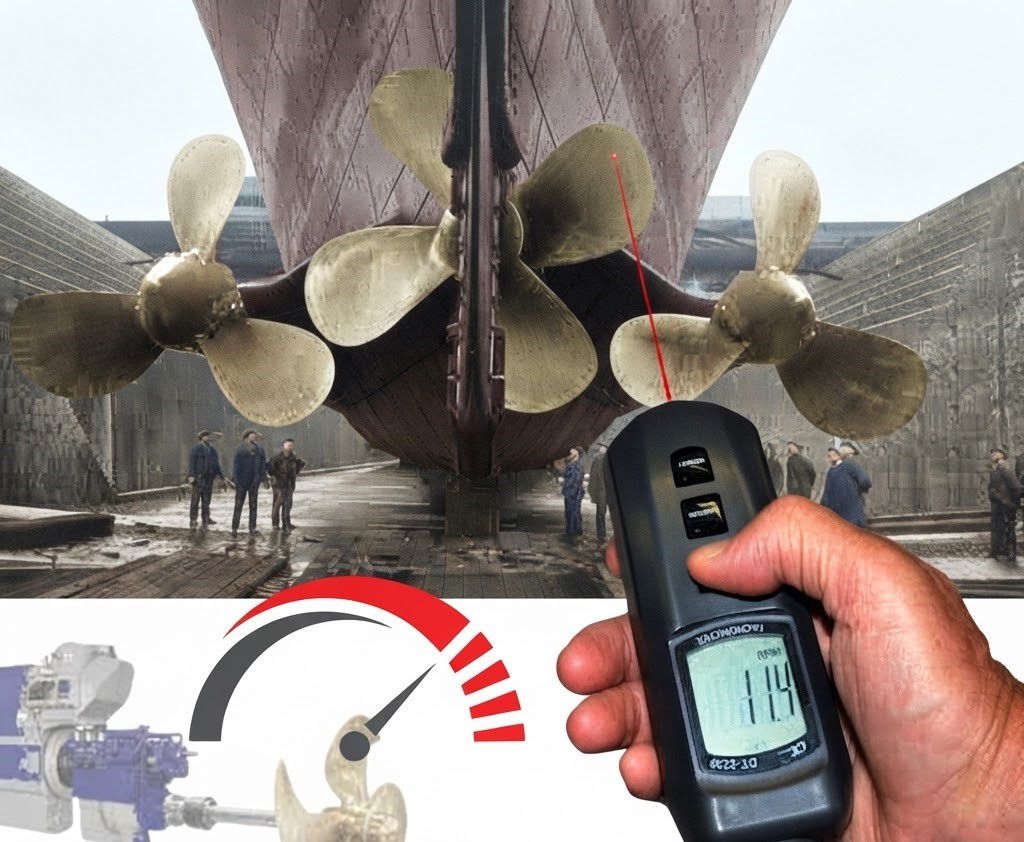
EMIN offers a wide range of tachometers utilizing both laser and contact technologies, designed to meet the testing needs for motors, pumps, industrial fans, conveyor belts, and factory drive systems. With just a few minutes of measurement, engineers gain the data needed to decide whether to continue operation, schedule maintenance, or take immediate corrective action before a failure impacts the entire production line.