When looking at the specifications of an electronic depth gauge, most people immediately notice the smallest division, the measuring range, or the water resistance. However, on the side of many models, there is an additional small port marked SPC

When looking at the specifications of an electronic depth gauge, most people immediately notice the smallest division, the measuring range, or the water resistance. However, on the side of many models, there is an additional small port marked SPC

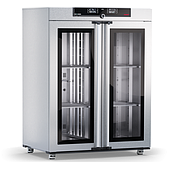
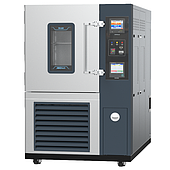
Some devices successfully complete full environmental test cycles, yet still develop corrosion, leakage current, or stability issues only a few months after being deployed in real-world conditions. In reliability testing and material durability evaluation, Temperature and Humidity Test Chamber systems are commonly used to simulate years of operation within just days or weeks. High temperature combined with elevated humidity accelerates aging processes, allowing engineers to observe failure mechanisms that would otherwise take a long time to appear under normal operating conditions.

When looking to buy a depth gauge, many people immediately look at the resolution because smaller numbers often give the impression of being more high-end. A display with 0.001 mm accuracy is quite appealing, especially with newer electronic models.

If you've observed electronics labs in recent years, you'll notice that the way they choose pulse generators has changed considerably. Previously, most attention was focused on specifications. The higher the MHz, the more waveforms, or the larger the display, the more likely the generator was to be preferred because it gave the impression of being durable and not becoming obsolete in the long run

A pulse generator might look very powerful in a catalog, but when you actually test it in a real circuit, quite a few annoying issues start to emerge. Some models produce a beautiful sine wave but have slight ripple at the edges of the pulse; some require many steps to change the waveform; and some models develop a loss of smoothness in the rotary knob or noticeably slow menu response after only a few months of use

Sometimes, a pulse signal may appear perfectly normal at first glance, but when viewed on an oscilloscope, it reveals slight vibrations, uneven amplitude, or timing deviations in cycles. The first reaction is usually to check the pulse generator, connections, or output load. However, many errors originate from the power supply section, especially the switching power supply

In many drive systems, people often only pay attention to whether the machine is still running, whether there are any unusually loud noises, or whether the motor temperature has risen excessively. But there is a rather subtle parameter that directly affects the durability of the entire drive system: RPM, or the actual rotational speed of the deviceIn many drive systems, people often only pay attention to whether the machine is still running, whether there are any unusually loud noises, or whether the motor temperature has risen excessively. But there is a rather subtle parameter that directly affects the durability of the entire drive system: RPM, or the actual rotational speed of the device

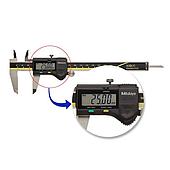
One of the biggest challenges when operating a temperature and humidity test chamber is that many deviations do not appear as obvious equipment failures. The system may continue running normally, the display readings may still look stable, and no alarms are triggered. However, during long-term reliability tests that run for hundreds of hours, even a small environmental deviation can make the entire test dataset unreliable.

In many mechanical workshops or QC departments, there's an interesting detail: the more surface measurement work is involved, the more granite surface plates are preferred over steel or aluminum. At first glance, this seems counterintuitive, as metal always feels much harder, stronger, and more "industrial" than stone

Increasing electricity costs month after month, even though the compressed air system is functioning normally, is a common situation faced by many factories. The compressor hasn't reported any errors, and the pressure is sufficient, so everything seems fine at first glance. Only during a thorough inspection do numerous leaks, long-standing and largely unnoticed, are discovered
인증된 전문가에게 직접 연결