The nature and role of pneumatic drilling machines in the production system
In mechanical workshops and industrial factories, hand-held pneumatic drills play an indispensable role in the assembly, manufacturing and repair chain. With the mechanism of using compressed air energy instead of electricity, this machine line is especially suitable in environments with high safety requirements, where the risk of fire and explosion is always present such as in the oil and gas, shipbuilding, chemical or automobile industries.

In addition, hand-held pneumatic drills are also popular thanks to their ability to work stably under continuous operating conditions, helping to maintain production efficiency in high-intensity industrial chains.
Unlike electric or battery-powered devices, handheld pneumatic drills have a simpler mechanical structure, generate less heat and do not cause sparks during operation. This not only helps prolong the life of the machine but also minimizes occupational safety risks during long shifts or in wet places. Therefore, understanding the nature of the operation of handheld pneumatic drills will be the foundation for operators to properly exploit their functions, thereby optimizing production efficiency in each technical stage.
Pneumatic principle creates rotary motion in handheld pneumatic drill
The hand-held air drill operates on the basis of the mechanism of using compressed air that is led from the air compressor through the pipe to the body of the machine. When the air flow with sufficient pressure enters the engine chamber inside the machine, it will act on the rotating vane or piston, creating a circular motion of the main shaft. This motion is then transmitted directly to the drill bit, creating the necessary drilling force to perform operations on metal, plastic or wood, depending on the specific application in the workshop.
The efficiency of the transmission process depends largely on the inlet air pressure and flow, as well as the internal design of the air engine. Details such as the directional valve assembly, crankshaft, bearings and lubrication system play an important role in maintaining the stability of the rotational motion, ensuring the machine works smoothly, without jerking or losing power.
Difference in operating principle between pneumatic and electric drills
Both hand drills and electric drills serve the purpose of drilling materials, but the difference lies in the power source and the mechanism that creates motion. While electric drills use electricity to power an electric motor that rotates the spindle, air drills use compressed air pressure to generate mechanical motion through internal rotating parts such as vanes or pistons. This difference creates distinct advantages and disadvantages between the two types of equipment.
Pneumatic drills are usually simpler in structure, do not generate sparks, generate less heat and are easy to control in environments requiring high safety. In contrast, electric drills can operate independently without a compressed air system but are prone to overheating if operated continuously at high intensity. Therefore, the choice between the two types of machines should be based on specific working conditions, especially the stability of the energy source and the requirements for labor safety in each production environment. This comparison will be clearer when going into practical application situations in the next section.
Practical application of pneumatic drilling machines in factories and mechanical workshops
In the auto repair and assembly industry
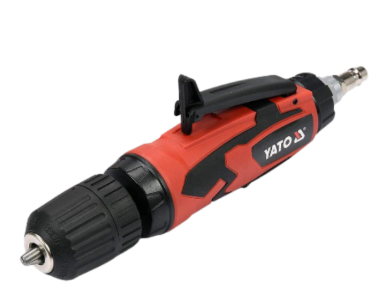
Handheld pneumatic drills are commonly used in garages and auto repair centers to drill and remove screws, chisel rusted parts or quickly drill threads on the chassis. Thanks to the mechanism of not generating electric sparks and generating little heat, this device ensures safety when operating near the fuel system or airtight areas. Many models such as the Yato YT-09695 have an integrated reverse function for quick disassembly, suitable for continuous vehicle repair processes and high speed requirements.
In mechanical factories and industrial production lines
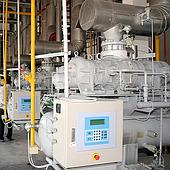
Pneumatic drills are often integrated into work tables or assembly lines, supporting workers to drill holes, screw or rivet quickly without being limited by a portable power source. Models such as the Airtec AT-490 operate stably under 6.3 bar air pressure, with a rotation speed of over 1800 rpm, enough to process light metal materials, aluminum, thin steel or engineering plastics. Using compressed air also helps reduce overall electricity costs in the factory.
In potentially explosive or harsh environments
Pneumatic drilling is the optimal solution in areas such as ship holds, chemical plants or paint shops where electrical sparks can pose a serious risk of fire or explosion. With a non-electric design, no magnetic interference and the ability to work continuously without heating, this device meets industrial safety requirements well, while reducing the maintenance burden in dusty, humid or greasy environments. This is also the reason why handheld pneumatic drilling machines are considered standard in many specialized pneumatic tool kits in large manufacturing enterprises...
Criteria to check before putting the handheld pneumatic drill into operation
- Air pressure and compressed air supply
Before operating the air drill, it is necessary to ensure that the compressed air source reaches the working pressure recommended by the manufacturer, which usually ranges from 6 to 6.5 bar. Low pressure will weaken the machine, reduce drilling speed, while too high pressure can easily wear out internal parts quickly and cause danger. The air compressor system needs to be maintained periodically to ensure clean, dry and stable air flow.
- Check the condition of the air ducts and connectors
Air hoses and quick connectors should be checked for tightness, leaks, and any kinks during use. Pneumatic drill models such as the Airtec 495/A typically use a standard 1/4-inch fitting, so all accompanying accessories must be fully compatible. In addition, the length and diameter of the hose should be appropriate to prevent pressure loss when delivering compressed air from the compressor to the tool.

- Lubricate and check the rotation of the drill head
The air drill needs to be lubricated periodically with specialized oil for pneumatic tools. This helps reduce friction, prevent corrosion and prolong the life of the rotating parts inside. Before drilling, gently rotate the drill head by hand to check for smoothness, avoid jamming the shaft or misaligning the bit. Some machines such as the Yato YT-09695 integrate a speed control knob right on the handle, also need to check the flexibility before operating.
Conclude:
Above are all the core contents to help you better understand the handheld pneumatic drill from the operating principle to practical applications and technical notes before operation. If you need more detailed information or advice on choosing the right equipment, do not hesitate to contact us to get the latest information!