How Inadequate Fresh Air Supply Harms Offices, Which Metrics to Measure, and How to Resolve It
Modern office buildings are designed to be airtight to retain cooling and reduce electricity costs for central HVAC systems. However, if fresh air supply falls below design specifications, indoor workspaces accumulate CO2, fine particulate matter, and volatile organic compounds. The resulting consequences affect employee health, work productivity, staffing expenses, and building reputation. This guide addresses key technical questions raised by business executives, facility managers, and HVAC engineers.
Are Frequent Headaches, Drowsiness, and Eye Irritation Caused by Insufficient Fresh Air?
In most instances, yes. A hallmark indicator of Sick Building Syndrome (SBS) is that symptoms occur exclusively during working hours and subside or disappear after leaving the building. Common manifestations include dull headaches, dizziness, mild nausea, dry throat, eye burning, nasal irritation, and general fatigue.
The primary cause lies in accumulated CO2 alongside recirculated indoor air pollutants. Because indoor oxygen levels rarely drop significantly, the sense of stuffiness stems from degraded air quality rather than oxygen depletion. Recirculating stale air through ductwork also creates ideal conditions for bacteria and viruses to spread rapidly among staff, increasing sick leave rates.
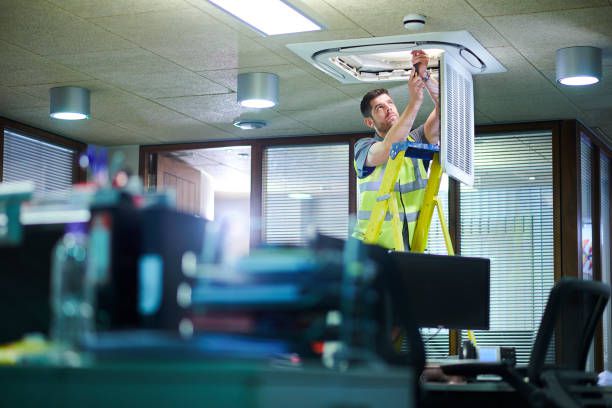
Human resources departments can identify early warnings through three signals: sealed meeting rooms smelling stuffy within 30 minutes, employees frequently stepping outside for fresh air, and localized complaints of headaches concentrated in specific building areas.
What CO2 Concentration Level Exceeds Safety Thresholds, and Why Are Meeting Rooms Most Vulnerable?
Outdoor ambient CO2 levels average around 420 ppm. Indoors, 1,000 ppm serves as a standard reference baseline for adequate ventilation in technical guidelines. Exceeding this threshold causes noticeable lethargy, drowsiness, and reduced focus; environmental research confirms that decision-making performance declines progressively as CO2 levels rise.

Meeting rooms represent critical hotspots due to high occupant density within confined footprints, closed doors, and extended occupancy times. A 10-person meeting room can breach 1,000 ppm in just 30 to 60 minutes if fresh air supply rates are inadequate. High-stakes discussions—such as contract negotiations or strategic approvals—often occur under degraded air conditions.
Which Pollutants Accumulate in Sealed Offices, and What Are Their Sources?
Beyond human respiration CO2, sealed indoor spaces trap internal emissions with no escape route.
- Volatile Organic Compounds (VOCs): Off-gassed from wall paints, carpeting, synthetic wood adhesives, partitions, printer inks, and cleaning chemicals. Newly renovated offices exhibit high VOC concentrations for months, causing chronic respiratory irritation.
- Fine Particulate Matter (PM2.5, PM10): Generated from fabric fibers, skin dander, outdoor dust ingress via entrances, and paper processing.
- Microorganisms: Flourish inside uncleaned cold air ducts over time. Mold spores and accumulated dust blow back into occupied spaces whenever systems restart, penetrating deep into human lungs.

These three pollutant categories exhibit compound impacts, meaning addressing a single variable is rarely sufficient.
What Financial Losses Does Insufficient Fresh Air Inflict on Businesses?
Personnel overhead far outweighs ventilation energy expenses; saving electricity by throttling ventilation creates larger losses elsewhere. Damages manifest across four areas:
- Reduced productivity, project delays, and increased error rates in engineering drawings, financial reports, and contracts.
- Elevated absenteeism, triggering temporary staffing costs, training expenses, and inter-departmental friction.
- Lower employee retention and higher turnover rates, impacting long-term growth strategies.
- For building owners, poor IAQ diminishes leasing competitiveness and generates tenant grievances.
A rapid estimate can be calculated as: Headcount × Average Salary × Productivity Loss Percentage. For example, 200 employees earning an average of 15 million VND monthly experiencing a 3% productivity loss yields 90 million VND per month—over 1 billion VND annually—excluding sick leave costs.
How Much Fresh Air Flow Is Required, and Which Standards Apply?
ASHRAE 62.1 serves as the primary technical reference for office ventilation. Older versions prescribed a fixed rate of ~20 CFM per person. Current revisions compute requirements using a two-part formula: occupant rate (~2.5 L/s per person) plus floor area rate (~0.3 L/s per m²) for standard office layouts. High-density spaces like conference rooms or training centers require separate calculations based on peak occupancy.

Regarding air supply equipment, two common system categories include:
- Heat Recovery Ventilation Systems (VAM): Exchange heat between outdoor fresh air and indoor exhaust air prior to distribution, recovering cooling energy.
- Primary Air Handling Units (PAU): Pre-condition outdoor air temperature and humidity before distribution, optimal for hot and humid climates.
Fine particle filtration at fresh air intakes, periodic duct cleaning, and regular filter replacements are essential, as fresh air passing through dirty ductwork introduces pollutants into office spaces.
Which Measuring Instruments Are Essential for Indoor Air Quality Control?
Subjective perception cannot provide an accurate basis for adjusting HVAC systems. A fundamental instrument suite includes:
- CO2 Monitors to track concentrations in meeting rooms and open workspaces, allowing fresh air supply adjustments based on real-time occupancy.
- Multi-function IAQ Meters to simultaneously log temperature, relative humidity, PM2.5, PM10, and VOCs for a comprehensive environmental profile.
- Air Velocity and Flow Meters to verify diffuser performance and duct airflow to ensure systems meet design capacity.
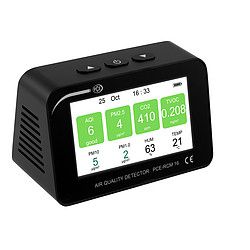
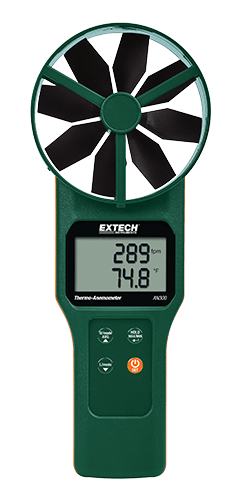
Sensor placement directly affects data reliability. Place sensors at breathing-zone height, away from air supply grilles and doorways, and monitor continuously across workdays to capture peak concentration levels during meetings and high-density hours.
What Are the Key Steps in an Office Air Quality Audit and Improvement Workflow?
For business enterprises, clear empirical data grounds every investment decision. For building management, this dataset serves as tangible proof of workplace environmental quality during tenant negotiations.