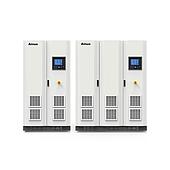
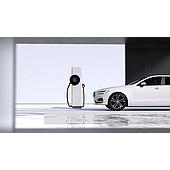
A DC power supply for solar-storage systems supports the movement and conversion of direct-current energy between photovoltaic generation, energy storage, and loads. Its value depends on the overall architecture: reducing unnecessary AC/DC conversion stages can improve system efficiency where direct DC coupling is appropriate.
The supplied technical information describes high-voltage DC, DC bus, and silicon carbide (SiC) approaches as important options for photovoltaic-storage applications. Actual results depend on the selected equipment, voltage design, protection scheme, and operating conditions.
Summary: DC architectures can directly couple photovoltaic generation, storage, and loads. The supplied data highlights 1500V DC, DC buses, and SiC devices. Protection and component availability remain practical considerations.
What does a DC power supply do in a solar-storage system?
A DC power supply manages or provides direct-current power within a system that may include photovoltaic arrays, batteries, conversion equipment, and DC loads. In a solar-storage design, it can be part of an architecture intended to avoid conversion steps that would otherwise occur between AC and DC.
The supplied information characterizes DC power supplies as moving from a supporting role toward a system-level role as photovoltaic-storage systems expand beyond generation into energy regulation. This does not mean every installation should use the same DC topology; the required design depends on the application.
Why can direct DC coupling improve solar-storage efficiency?
Direct DC coupling can improve efficiency because it may eliminate an AC/DC conversion link between photovoltaic generation, storage, and loads. The supplied data reports a 15% to 20% system-efficiency improvement for a DC bus architecture in applications such as bus stations.
A DC microgrid is described as directly coupling photovoltaic generation, energy storage, and loads on a DC bus. This arrangement is relevant when the connected sources and loads are compatible with a DC distribution approach.
How is a 1500V high-voltage DC architecture described?
The supplied information describes a 1500V high-voltage DC system as reducing power-conversion loss and reports photovoltaic generation efficiency above 98%. It also cites an 8% to 10% reduction relative to traditional solutions, but this figure should be read as a reported comparison rather than a universal result.
| Reported design element | Supplied specification or effect |
|---|---|
| Wide-dynamic MPPT control | Adapts to 200–1500V fluctuations; reported accuracy of ±0.1% |
| Nanocomposite insulation material | Reported volume resistivity of 10¹⁴ Ω·cm and 40% shorter creepage distance |
| Intelligent string design | 10kV/750V direct conversion through power electronic transformers; reported 20% lower distribution capacity |
Note: Voltage level, insulation coordination, creepage distance, and protection must be evaluated for the specific installation. The supplied figures do not establish performance for every system.
What role can SiC devices play in a DC power supply?
SiC devices are presented in the supplied data as a third-generation semiconductor option for DC power supplies. They are reported to enable switching frequencies above 100 kHz, which may support compact, high-frequency power-conversion designs.
The same information links digital-twin technology with predictive maintenance and reports accuracy reaching 92%. That result is application-specific in the supplied material, so it should not be treated as a guaranteed maintenance outcome.
Where are DC power architectures used beyond solar-storage?
The supplied examples include data centers, electric-vehicle charging, and smart microgrids. These applications use DC-related approaches for different purposes, including power modules with liquid cooling, 750V DC fast charging, and DC distribution with AI-based load prediction.
| Application example | Architecture or feature stated in the supplied data |
|---|---|
| Data center | Power module with liquid cooling |
| Electric-vehicle charging | 750V DC fast-charging pile |
| Smart microgrid | DC distribution with AI load prediction |
What challenges should be considered when selecting DC power equipment?
Protection and supply-chain readiness are key considerations identified in the supplied information. It notes a lack of DC arc-protection standards and reports that domestic production of components above 750V was below 40%, highlighting the need to assess component availability and protection strategy.
For a solar-storage project, selection should therefore begin with the required voltage range, source and load interfaces, conversion stages, monitoring needs, and protection requirements. A DC design is most meaningful when those system requirements support direct coupling rather than when DC is adopted as a standalone feature.