What effects will it have on the marine ecosystem?
The East Sea is one of the largest and most important seas in the world, playing an essential geopolitical role and being a rich source of resources. However, the salinity of sea water has a great impact on the ecosystems here.
Salinity determines the distribution and survival of marine species, such as corals and shellfish that require environments with stable and high salinity. Salinity levels that are too high or too low can hinder the development of eggs and larvae of many fish and invertebrates.
Changes in salinity also alter the composition and density of phytoplankton and zooplankton, affecting the entire food chain. Salinity affects the osmotic pressure in marine cells, affecting metabolism and cell function.
Climate change causing changes in salinity could lead to long-term changes in the structure and function of the East Sea ecosystem.
What is the average salinity of sea water when measured?
According to research by scientists, the average salinity of the East Sea water fluctuates around 3.5%. However, salinity can vary depending on geographical location and environmental factors such as river flow, rainfall and evaporation.
In coastal areas and estuaries, salinity is often lower because fresh water from rivers mixes in. For example, areas near the mouth of the Mekong River may have salinities below 30 ppt. Meanwhile, in the middle of the sea, salinity is often higher and more stable, about 33-34 ppt.
Salinity also changes with the seasons. The rainy season reduces salinity due to more freshwater flowing into the sea, while the dry season can increase salinity because of strong evaporation and little precipitation.
How to measure the average salinity of seawater most accurately:
After understanding the importance and average salinity index of East Sea water, you need to know how to measure salinity effectively. Currently, the fastest and most accurate method is to use a Refractometer measures salinity.
Mechanical refractometer: This type of machine operates on the principle of light refraction, measuring the change in the angle of refraction of light when passing through a water sample. High salinity will change the refractive index of water.
Digital refractometer: This is a comprehensive water quality testing device, integrating the ability to measure many indicators such as salinity, pH, temperature, and conductivity... quickly and accurately.
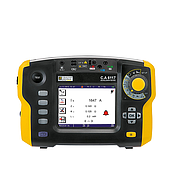
Refer to a few salinity meters below:
Hanna HI98319 salinity meter
EXTECH RF20 salinity refractometer
EXTECH EC170 salinity refractometer
A reputable supplier of salinity meters
If you need to buy a salinity meter to measure the average salinity of East Sea water, please refer to the products at EMIN company. We are committed to the best quality and service, ensuring the highest customer satisfaction. Products at EMIN always ensure accuracy, durability and outstanding performance, giving you complete peace of mind when using them.