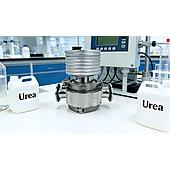
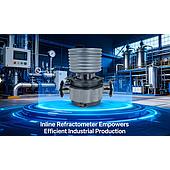
Urea production depends on consistent solution concentration at critical process stages. When concentration data arrive too late, operators may be working with conditions that have already changed. Inline refractometers for urea concentration monitoring provide a continuous measurement approach that can support faster process decisions, more consistent operating control, and reduced reliance on manual sampling.
Why continuous urea concentration monitoring matters
Offline sampling is a familiar method for checking urea solution concentration, but it adds several steps: sample collection, transport, laboratory analysis, and communication of the result. The supplied product information notes a typical delay of 15 to 30 minutes. In an active process, concentration may change during that interval, limiting the usefulness of the measurement for immediate adjustment.
Manual sampling can also introduce variation between operators and creates recurring sample loss. These factors are especially relevant where concentration affects reaction balance, crystallization, blending, or downstream product consistency.
An online measurement point is intended to establish a tighter operating loop: measure concentration, send data to the control environment, evaluate the process condition, and adjust when needed. The objective is not simply to collect more data, but to make concentration information available when it can still inform the process.
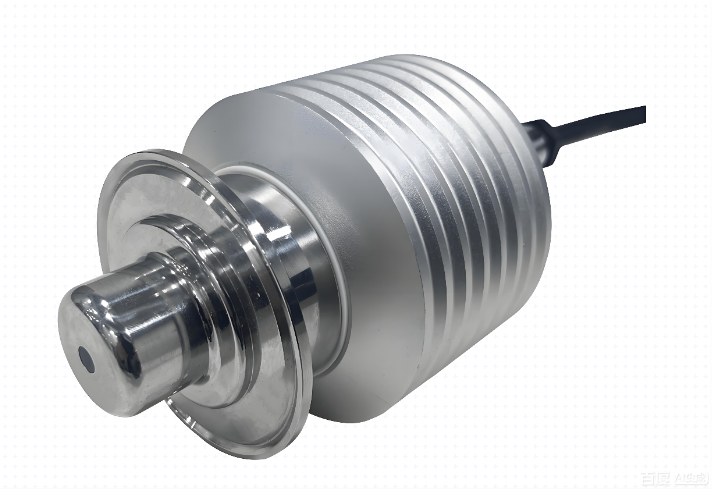
CHNSpec CRN50/52/56 series: measurement approach
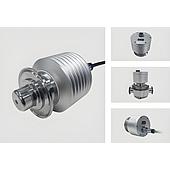
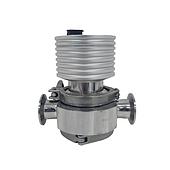
The CHNSpec CRN50/52/56 series Inline Refractometers use optical refraction to measure process liquid conditions and convert refractive-index data into urea concentration. According to the supplied information, the series measures every 0.5 seconds, with stated concentration accuracy of ±0.1% and resolution down to 0.01%.
Temperature is an important consideration because it can affect refractive-index readings. The supplied specifications describe a multi-point temperature-compensation system, a process temperature range of -20°C to 70°C, and temperature-control accuracy of 0.5°C. Process teams should still confirm that the selected configuration is suitable for their actual line temperature, pressure, fluid chemistry, and installation point.
Materials and process connection considerations
Urea applications can involve corrosion, suspended material, bubbles, and pressure variation. The supplied product information identifies SS316L stainless steel and sapphire windows for wetted components, with Hastelloy available as an option for more demanding corrosion conditions. It also states an IP68 protection rating.
For installation planning, the series is described as supporting pipeline connections with DN25–DN80 flanges as well as reactor installation. The appropriate location should provide representative process fluid and allow cleaning and maintenance without compromising normal operation.
Data integration and maintenance features
Measurement value is greatest when it can be used by the plant control architecture. The supplied information lists 4–20 mA and RS485 outputs, wireless transmission modules, and integration with DCS/PLC systems. It also describes multi-channel acquisition systems supporting up to 120 channels for centralized monitoring across multiple stages.
Maintenance planning should include window cleanliness, signal verification, inspection intervals, and response procedures for abnormal readings. The CHNSpec information describes CIP cleaning without disassembly, a probe self-diagnosis function with fault localization in under two minutes, and a 100,000-hour light source. These features may help simplify routine operation, but maintenance requirements should be assessed against the specific process environment.
Typical urea process applications
Fertilizer synthesis
In urea synthesis, concentration data can be used alongside operating controls to monitor process balance and support feed adjustments. Continuous measurement may help operators identify changes earlier than a periodic laboratory result.
Urea purification and crystallization
During purification and crystallization, concentration monitoring can support control of conditions associated with supersaturation. A stable measurement point can provide useful operating visibility where process consistency is important.
Automotive urea solution blending
For automotive urea solution, the supplied information identifies a 32.5% concentration target. Monitoring within blending tanks can support checks of concentration consistency and indicate when corrective additions may be needed.
How to evaluate an inline refractometer
Selection should begin with the required concentration range and the level of accuracy needed for the application. Next, assess process conditions, including temperature, pressure, corrosion potential, bubbles, turbidity, cleaning method, and available connection type. Finally, confirm how the instrument will communicate with existing control and data systems.
For larger facilities, centralized acquisition and industrial connectivity may be priorities. Smaller operations may focus on straightforward installation and essential signal outputs. In all cases, review stated performance against the actual process conditions, request applicable calibration or inspection documentation, and evaluate long-term stability rather than relying on a single specification alone.
Conclusion
Inline refractometers for urea concentration monitoring can help replace delayed, sample-based checks with continuous process visibility. The CHNSpec CRN50/52/56 series is described as combining frequent optical measurement, temperature compensation, process-oriented materials, cleaning support, and control-system connectivity. A sound selection decision should match these capabilities to the real operating demands of the urea process.