For many years, optical OTDR tester were mainly used only after a fiber link had already failed. Technicians typically began inspecting the fiber infrastructure only when signal attenuation became severe or when the system completely lost connectivity. This approach was once suitable for traditional optical networks with smaller scale deployments and relatively low traffic demand.
However, fiber infrastructure has changed dramatically. Fiber access network, data center, and high-speed transmission systems now operate almost continuously with extremely strict stability requirements. Even a minor increase in attenuation can create long periods of intermittent instability that are difficult to detect using conventional testing methods. This is why realtime OTDR monitoring is becoming increasingly common in modern optical networks.
When the Fiber Link Is Not Broken but the Network Has Already Become Unstable
A fiber link does not need to fail completely before problems begin to appear. In reality, many faults develop very gradually and almost invisibly.
Contaminated connectors, aging fusion splices, or slight fiber bending over an extended period can all increase attenuation by several decibels. In some cases, the change may not be large enough to completely interrupt the signal, but it can still cause intermittent transmission issues, degraded performance, or unstable operation during certain periods of the day.
One of the most frustrating aspects of these faults is that they are often cyclical. During the daytime, the network may appear completely normal. But when ambient temperature changes or traffic load increases, abnormal reflections can begin to introduce signal fluctuations that affect the stability of transmission equipment.
In many situations, operators only realize that a problem exists after customers begin reporting degraded service quality.
Realtime OTDR Monitoring Is More Than Continuously Refreshing the Trace on Screen
Many people assume that realtime mode simply means continuously updating the OTDR trace on the display. The greatest value of realtime OTDR monitoring lies in its ability to observe how the optical link changes over time.
An OTDR meter does far more than display reflected waveforms. It continuously records extremely small variations across the entire fiber link. When a splice begins generating abnormal reflections or attenuation slowly increases at a particular point, the system can detect these changes long before the fault becomes critical.
This represents a major shift in maintenance philosophy. Instead of searching for faults only after a failure occurs, modern OTDR systems focus on identifying early signs of degradation before service disruption happens.
In large-scale optical networks, this capability is especially important because it allows engineering teams to perform preventive maintenance before the fiber infrastructure experiences an actual outage.
Several OTDR Models Suitable for Realtime Monitoring
Some models OTDR are widely used for realtime fiber monitoring, troubleshooting, and long-duration link analysis.
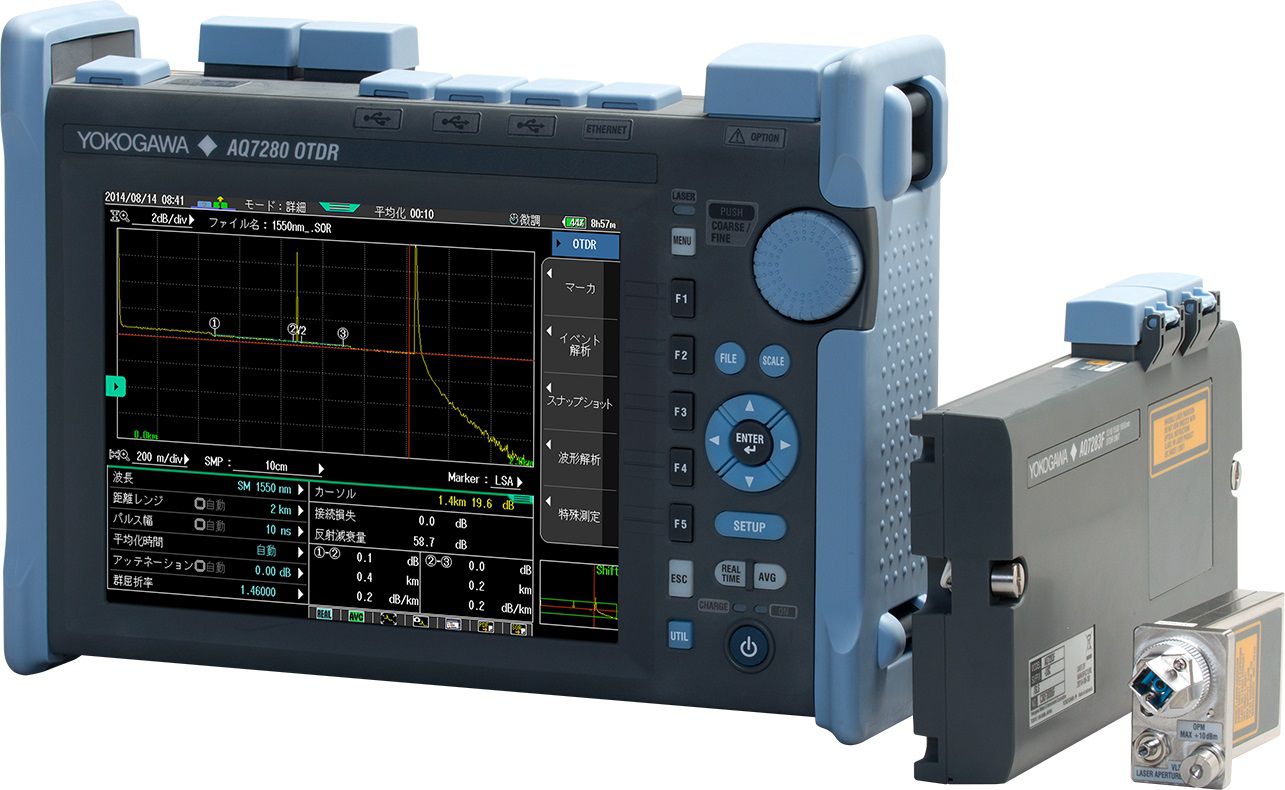
The AQ7280 is known for its fast signal processing and highly detailed reflection analysis on long-distance fiber links. It is commonly used for maintenance and troubleshooting in core networks and high-stability optical transmission systems.
The instrument supports continuous measurement and realtime trace analysis, making it highly effective for detecting intermittent attenuation changes and unstable reflection events that are difficult to capture with standard OTDR measurements.
The MaxTester 730D operates almost like an intelligent OTDR analysis assistant for complex fiber traces. It can automatically scan signals, separate events, identify optical components and mark abnormal attenuation points, significantly reducing trace interpretation errors.
This platform is particularly well known for its ability to monitor active fiber links without disrupting live traffic. It is widely used in FTTH access networks and optical transmission systems that require continuous monitoring and fast fault localization.