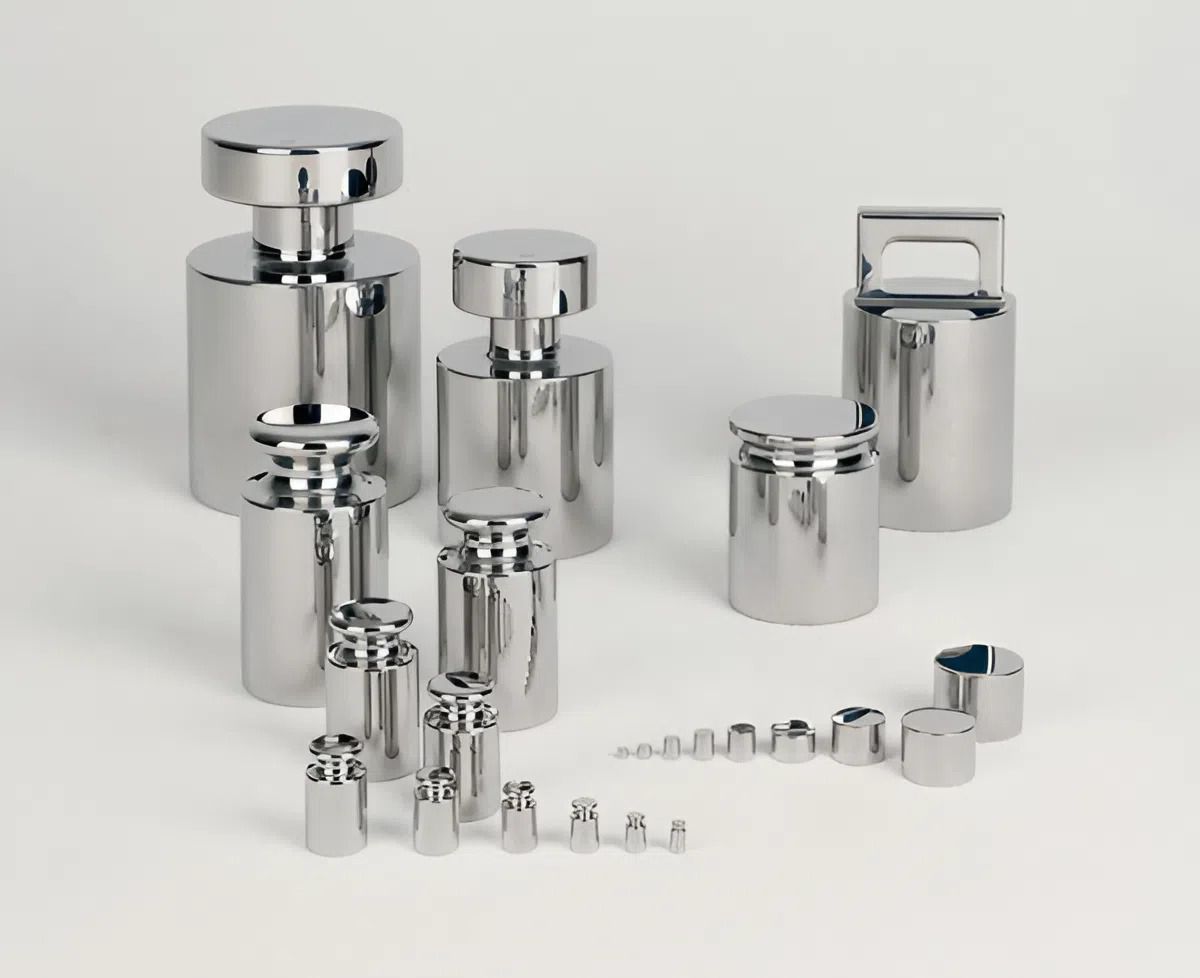
These are metal blocks manufactured with predetermined weights such as 1 g, 10 g, 100 g, 1 kg, etc. When placed on a scale, users can easily observe whether the displayed result matches the weight of the block.
Thanks to this simple method, many organizations can quickly check the condition of their scales after a period of use.
Use this when you need to quickly test an electronic scale.
In laboratories or material weighing areas, electronic scales are often used continuously every day. After a while, users usually place a standard weight on the scale to see if the displayed reading changes significantly from the initial weight.
For example, when placing a 1 kg weight on the scale, if the displayed reading remains close to 1 kg, the scale is still functioning properly. If the result differs significantly, the user will check the scale again before continuing to use it.
This testing method is quite simple and therefore widely applied in many different environments.
Used in laboratories and measurement centers
In the laboratory, standard weights are often used in sets of various weights. A set might include smaller increments such as:
-1 mg
-10 mg
-100 mg
-1 g
-10 g
-100 g
These weights are usually stored in specialized boxes for easy storage and convenient use.
Thanks to the variety of weights, users can test different values on the scale instead of using only a single increment.
Where can I use a calibration scale?
In many factories, electronic scales are used to weigh raw materials, chemicals, or products before packaging. In these cases, users sometimes place a standard weight on the scale before starting work.
This helps them feel more confident when using the scale to weigh materials or products. Therefore, in production areas, standard weights are usually kept on hand for use when needed.
Levels of standard weights
Standard weights are classified into different classes according to international measurement standards. Some common classes include:
There are also many other types M1, M2, and M3. See more: EMIN Calibration Scales
These classes mainly differ in the permissible error of the weight. Those with the E designation are commonly used in laboratories, while those with the M designation are more frequently seen in commercial or manufacturing operations.
Depending on the type of scale being used, the user will choose the appropriate weight.