If none of the above are the reasons, you most likely have a problem with the switch, typically if the switch is old or feels loose. There is a surefire way to check if the light switch is broken or not, which is to use a multimeter, which is both safe and gives accurate results. The article below will guide you through the simplest way to test a light switch with a multimeter!
Some basic tools to test light switches
Checking a Light Switch Might Be Easier Than You Think
Checking a light switch might be easier than you think when you know how to use a few basic tools. First, a screwdriver is essential—typically a flathead or Phillips type—to remove the switch and disconnect the wires. Don’t forget to have a non-contact voltage tester ready to ensure safety before touching the switch and wires. Finally, to perform the test, you will need a continuity tester or a multimeter.
A continuity tester is a simple electrical device with a metal probe, a test light, and a wire with a clip at one end. This device helps determine whether an electrical circuit is complete. If the circuit is "open," there is no continuity, whereas if the circuit is "closed," continuity is present. When you turn on the light switch, the circuit closes, allowing continuity; when you turn it off, the circuit opens, and continuity is lost. If the switch is faulty, it will fail to close the circuit, resulting in no continuity.
A multimeter is a multifunctional measuring device capable of measuring voltage, current, and resistance. It can also perform simple continuity tests. To set up a multimeter for a continuity test, turn the dial to the Continuity or Ohms setting.
Steps to use a multimeter to test a light switch
Step 1: Turn Off the Power
Before testing the light switch, turn off the power by turning off the circuit breaker. If you don't have a circuit breaker box, remove the fuse from the electrical panel.
Step 2: Check for Voltage
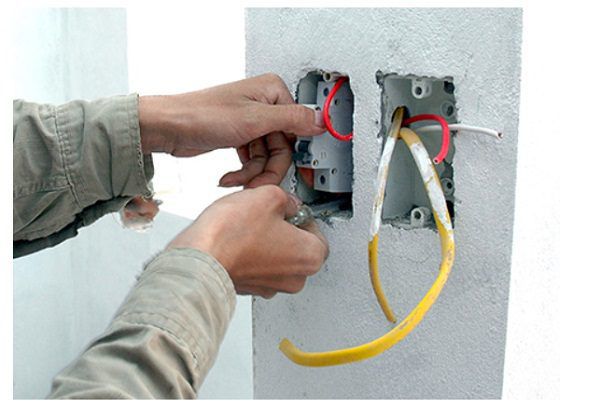
Remove the screws on the switch cover to expose the wires inside. Don't touch any of the wires, but test them with a non-contact voltage tester. Also, check each terminal on the switch.
Step 3: Testing the Switch with a Multimeter
Set the switch to the OFF position and check the terminals. Use the multimeter probes to touch one of the terminal screws while toggling the switch on and off. When the switch is ON, the multimeter should display "0," indicating continuity. When the switch is OFF, it should display "1," meaning no continuity.
Step 4: Reconnecting or Replacing the Switch
Reconnect the switch to the circuit wires, tightening each terminal screw securely. If the switch is faulty, replace it with a new one that has the same voltage and current rating as the original.
Step 5: Completing the Work
Push the switch back into place, neatly tuck the wires into the electrical box, and secure it with screws. Restore power and check if the light switch is functioning properly.
Suggest some models of DHVN to check light switches
A multimeter helps you test household appliances like outlets or switches when a light bulb is flickering. One of the best options for this repair is a digital multimeter.
Hioki 3244-60 Multimeter
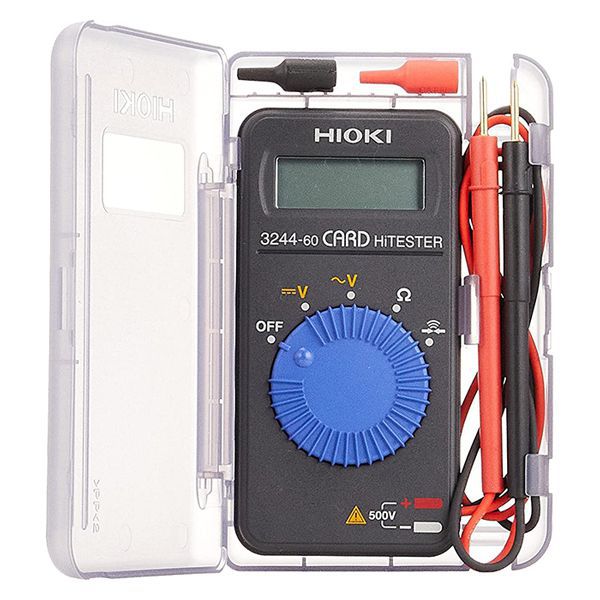
This is a modern device manufactured by Hioki - a famous brand from Japan. This device is capable of measuring DC voltage and AC voltage with high accuracy. In addition, it can also measure continuity and resistance.
With a compact, slim and lightweight design, Hioki 3244-60 is easy to move and use, ensuring high safety and user-friendliness.
Kyoritsu 1018H Multimeter
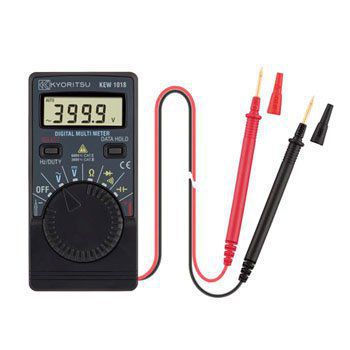
The Kyoritsu 1018H is a highly rated multimeter by both professional and amateur repairmen. It is widely used in everything from home repairs to commercial and service applications.
It can measure AC/DC up to 600V, and can measure frequency, resistance, capacitors, and diode tests. With its affordable price, sturdy design, and compact size, the Kyoritsu 1018H is a worthy choice.
Kyoritsu 1110 Multimeter
Despite its needle indicator design, the Kyoritsu 1110 still proves its worth. This device can measure AC voltage up to 600V, test batteries, LED lights and measure temperature.
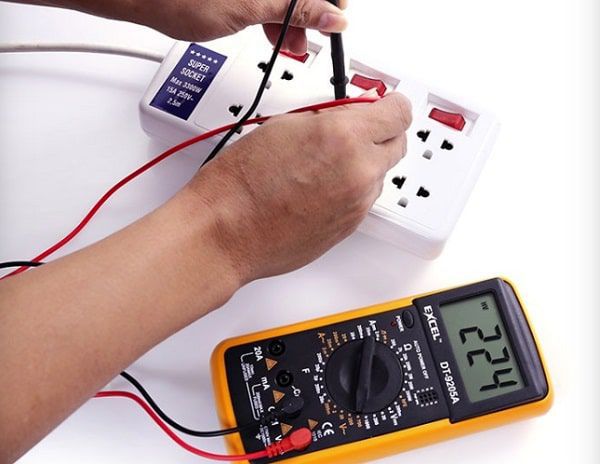
The Kyoritsu 1110 is favored by many electricians and is among the top products to own when repairing and testing devices such as electrical outlets, switches and household sockets.
Additionally, you may also refer to code C.A 5275 of Chauvin Arnoux.