In testing environments such as oil and gas, metallurgy or aviation, surface hardness measurement has become a mandatory standard. This is the step to verify the bearing capacity, stability and real quality of metal parts, factors that can determine the performance and safety of the entire system.
To meet the testing needs in many real-life situations, Novotest has developed a line of devices that combine two hardness measurement methods: UCI (ultrasonic contact) and Leeb (dynamic), flexibly integrated in a single device, the Novotest T‑UD3 Hardness Tester. Designed specifically for intensive testing, suitable for heavy industrial production environments and real-life sites.

Benefits evident from the first trial
First, the UCI method allows hardness measurements on 1–2mm details such as gear teeth, weld areas, and thin surfaces without leaving obvious marks. The accuracy of this method is based on a very small ultrasonic sensor, which can be applied to fine materials, in accordance with ASTM A1038. It creates a microscopic effect on the surface, helping to ensure product integrity.
When dealing with large, thick or rough surfaces, the Leeb method is an effective solution. Leeb measures quickly and is easy to operate on site, suitable for materials such as steel, cast iron, and raw alloys where surface preparation is not too thorough but still ensures reliable results. This method complies with ASTM A956, allowing for actual hardness measurements without the need for standard environmental conditions as in the lab.
The special feature of Novotest T‑UD3 lies in the ability to combine two methods in a single device, flexibly switching between UCI and Leeb depending on the requirements of the part and the measurement surface. Users do not need to change machines, do not need complicated calibration between each measurement situation. The device works right out of the box, no need to re-calibrate in the spirit of "out of the box"
UCI Hardware Testing Solution Works with the UCI Lab Wireless Device
In addition to the combination device T‑UD3, Novotest also offers a dedicated UCI hardness testing solution for the UCI Lab model - the NOVOTEST UCI Wireless Hardness Tester, an extremely compact wireless device, optimized for quick testing in the field or in production lines requiring simple handling. With its portable modular design, directly connected to a smartphone or tablet via the NOVOTEST Lab app, the UCI Lab allows users to perform hardness measurements without carrying a separate display device.
The device retains the high accuracy of the UCI method, making it particularly suitable for small, thin parts, finely-grained materials or treated surfaces. The app provides an intuitive interface, allowing for real-time results monitoring, easy data management and export. For situations requiring quick measurements, factory output quality checks or preliminary field assessments, the Lab UCI is a flexible choice that still ensures the reliability of the Novotest brand.
Visual Measurement Data Combined with Automated Reporting
In addition, T‑UD3 also supports systematic data management. With the NOVOTEST Lab application connection on Android, users can control the device, monitor real-time measurement results in graph form, take photos of the measurement area and create complete reports, all right on their phone or tablet. Data can be exported, stored or sent via email, serving future inspections, certifications or quality tracing.
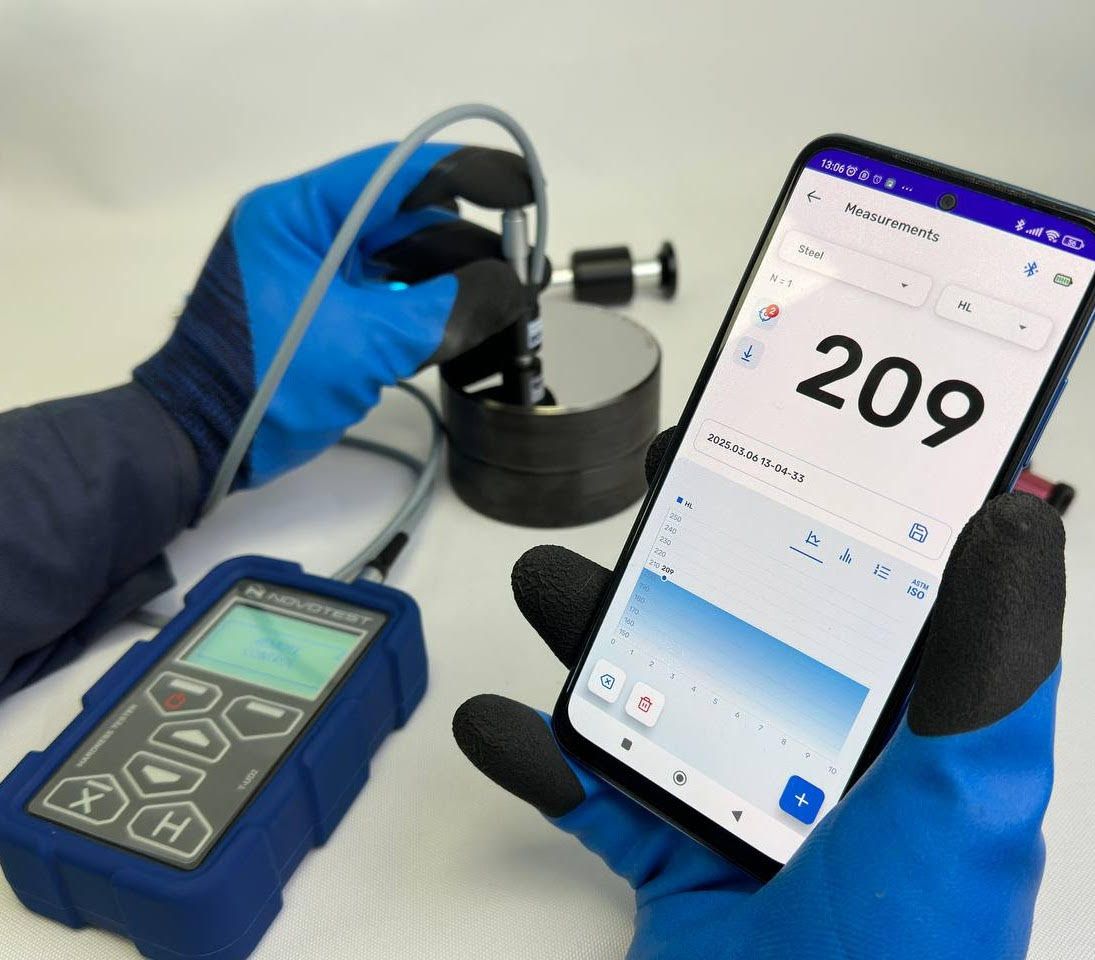
The device also supports many international hardness scales such as HRC, HRB, HB, HV, MPa, helping users to be flexible in each customer's requirements or industry standards.
When testing is more than just measurement
In practice, many parts such as turbine blades, steel shafts or alloy castings often have curves, welds or difficult-to-reach locations.
The Novotest T‑UD3 with its small UCI ultrasonic probe enables precise measurements even in small grooves or hidden corners on turbines or rotating parts (novotest.biz). When necessary, the probe with a push-button adjustment of only 10N is enough to create a small footprint for reading without deforming the part.
Industries such as oil and gas, pipeline inspection, pressure valves or alloy product testing with strict requirements for hard surface layers can benefit from this device.
Optimized for Quality Control and Audit Processes
Novotest T‑UD3 is a great support for the QA/QC department in the factory. With the ability to store data in batches, quickly export reports and retrieve information for each measurement point, the device helps standardize the quality control process, especially useful during periodic inspections or audits from customers and external organizations.
The device is also equipped with a built-in camera, a rare plus point on handheld devices in the same segment. This feature helps record the measurement location and quickly compare the material condition, supporting technical reporting and error analysis.
User experience and environmental sustainability
An engineer at the inspection plant once shared: when using Novotest T‑UD3 in the field outdoors, in temperatures down to -25°C, the device still operates stably, does not need to be recalibrated, the screen is clear and there are no problems due to the cold environment. The impact-resistant rubber protective shell structure helps the device withstand the harsh industrial environment.
Mobile Solutions for Field and Factory
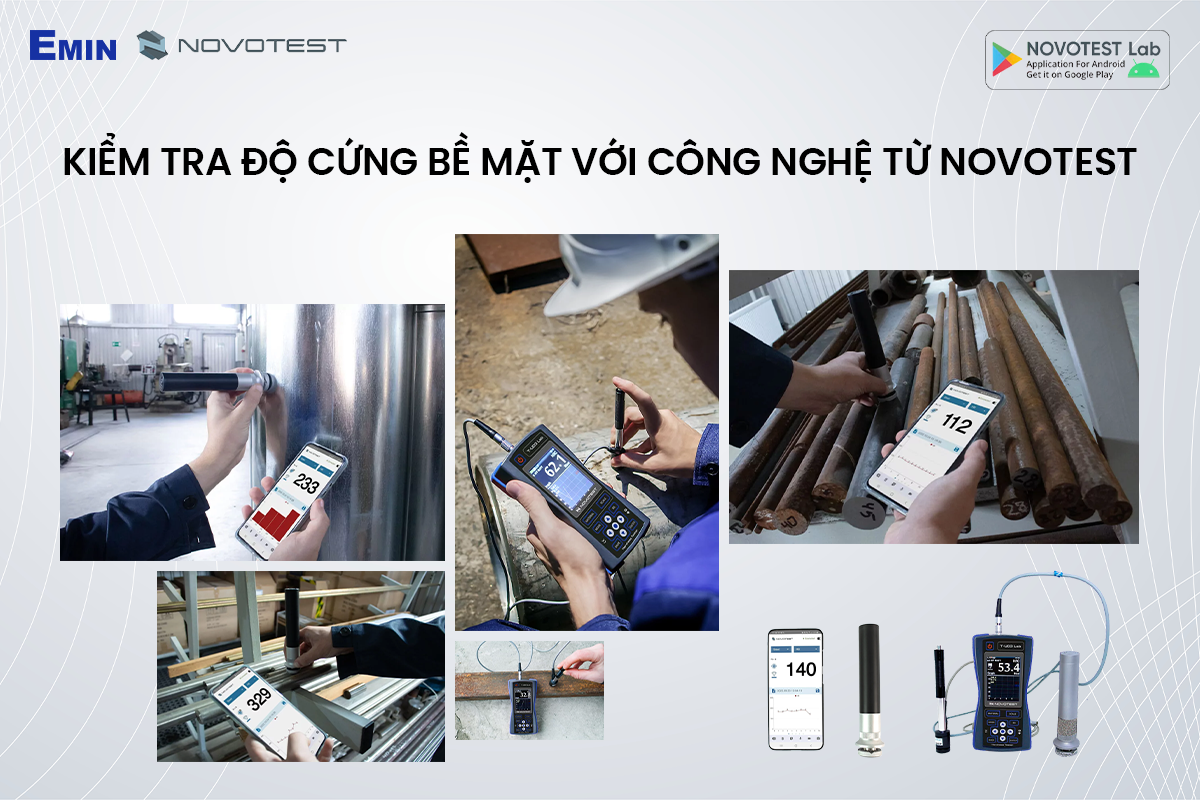
The design of the Novotest T‑UD3 is geared towards practical applications in production and field inspection. The high-contrast color display ensures clear visibility even in bright sunlight or low-light environments. The shock-resistant rubber housing ensures stable operation even when dropped or subjected to force.
An engineer once shared: "We used the T‑UD3 for field turbine testing in winter. Even when the outdoor temperature dropped below −20°C, the device still operated smoothly, without the need for recalibration." This is a testament to the durability and accuracy of the device in real industrial environments.
See more product lines in the category: Novotest Ultrasonic Hardness Tester
Conclude:
Above is a review of surface hardness testing with technology from Novotest. Through this article, we hope to bring you a more practical and in-depth look at UCI hardness testing equipment and combinations. Currently, EMIN is distributing Hardness Testers from Novotest, if you need further advice or want to experience the equipment directly, do not hesitate to contact us.