Simply changing the thread pitch can significantly alter the characteristics of the entire joint. Some parts may look quite similar, but one type is suitable for steel structures, while the other is found in engines, molds, or high-pressure hydraulic systems.
Therefore, coarse and fine threads coexist in the mechanical engineering industry. Each type is designed to meet very specific requirements regarding assembly speed, load capacity, and joint stability.
What is the difference between coarse lace and fine lace?
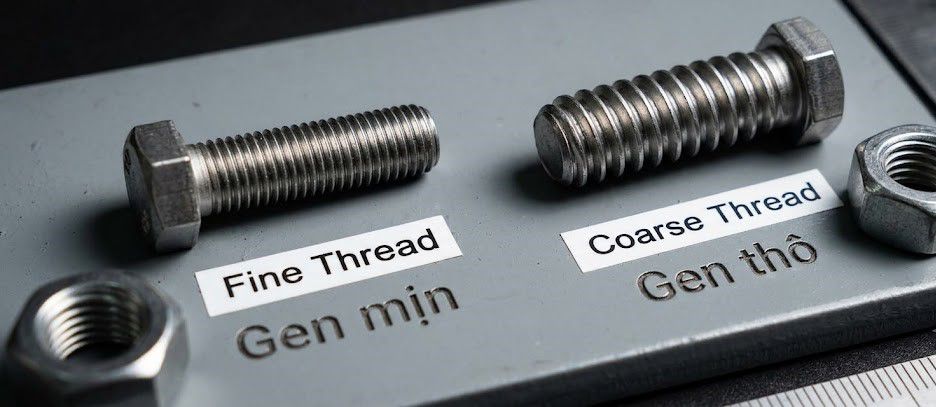
The most noticeable difference lies in the spacing between the thread turns. Coarse thread has a large pitch, wide spacing between thread crests, and relatively large thread depth. This is also the most common type of thread on most standard bolts and nuts. Fine thread has a smaller pitch and a higher number of thread turns per length.
Examples:
- M10×1.5 belongs to the coarse thread group.
- M10×1.25 or M10×1.0 belong to the fine thread group.
Even a difference of a few tenths of a millimeter in thread pitch can create very different working characteristics.
Where is coarse lace typically found?
Wide thread spacing allows for quick assembly and is less susceptible to dirt or light rust. Deep threads also improve grip on materials such as aluminum, cast iron, or soft alloys.
Therefore, coarse threads are quite common in:
+ General industrial machinery.
+ Steel structures.
+ Construction equipment.
+ Assemblies requiring periodic disassembly and reassembly.
Most standard bolts on the market use this thread type due to its simple machining and wide application.
Reference article: How do metric and inch thread gauges differ?
What applications are fine lace suitable for?
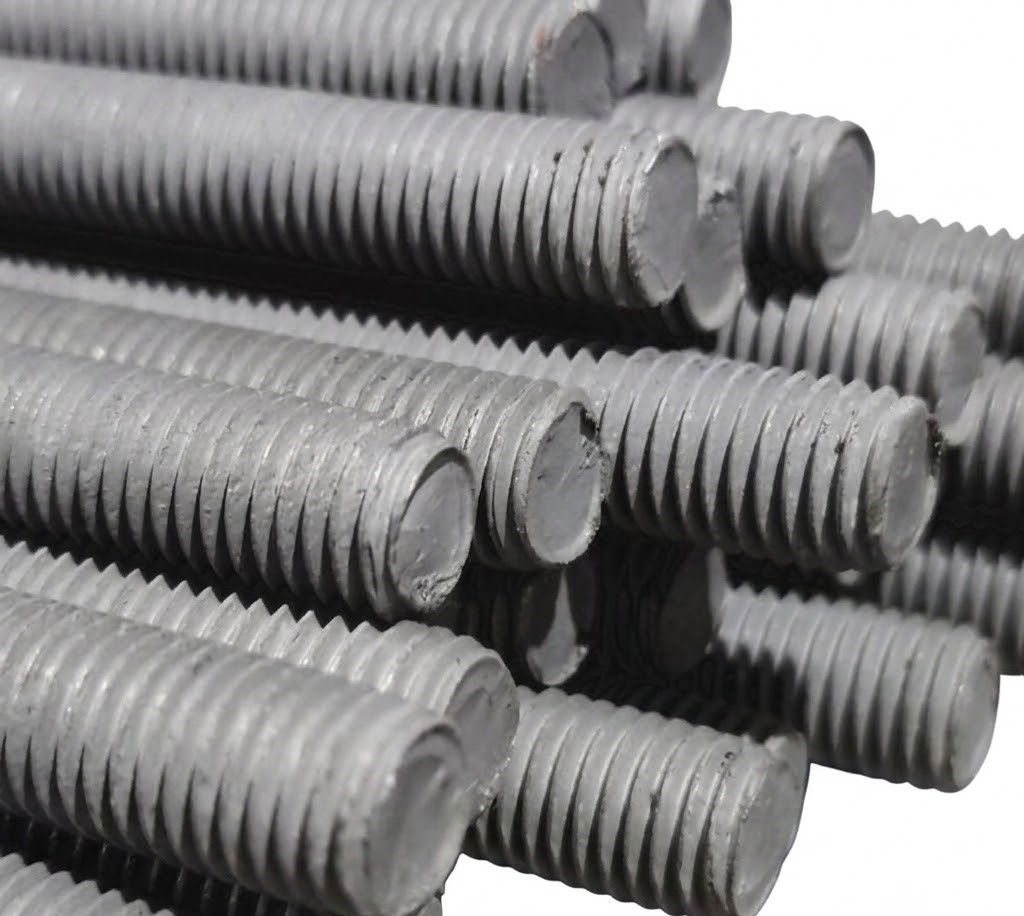
When a joint is subjected to continuous vibration or requires maintaining a stable tightening force for an extended period, fine threads are generally preferred.
The small spacing between the threads increases the number of interlocking threads, resulting in more even force distribution and reduced loosening.
Common applications of fine threads include:
+ Automotive engines.
+ Gearboxes.
+ Drive shafts.
+ Hydraulic systems.
+ Precision molds.
+ Aerospace equipment.
High precision requires tighter machining, therefore fine threads are often found on high-value components or those requiring high stability.
Which thread can withstand more force?
Fine threads generally have higher tensile strength due to the greater number of interlocking threads per length.
Conversely, coarse threads offer advantages in terms of durability during repeated assembly and disassembly, and the ability to work in dusty or greasy environments.
Therefore, each type of thread has its own strengths. The technical requirements of the part are the deciding factor in choosing which type to use.
Can we use the same diameter interchangeable parts?
Many people mistakenly think that M12 is M12, believing that as long as the diameter is the same, they can be fitted together.
In reality, M12×1.75 and M12×1.5 have the same nominal diameter but completely different thread pitches. Bolts and nuts will not fit if the wrong type is used.
Forcing the bolts too hard often leads to thread damage, especially on high-precision parts. A similar situation occurs between metric and inch threads. The article "How do metric and inch thread gauges differ?" will help you better understand common thread standards.
How can you distinguish between coarse and fine lace?
Technical drawings usually clearly show thread pitch specifications.
For example:
+ M12×1.75 is a coarse thread.
+ M12×1.5 is a fine thread.
+ M20×2.5 is a coarse thread.
+ M20×1.5 is a fine thread.
In practical testing, thread pitch gauges or GO/NOGO thread gauges will provide faster and more accurate results.
EMIN currently distributes many INSIZE thread gauge lines such as INSIZE 4820-1241 along with GO/NOGO gauge sets for post-machining thread inspection, supporting quick determination of thread pitch and assessment of joint quality.
Should you choose coarse lace or fine lace?
Joints requiring quick assembly and disassembly, those used in the field, or those exposed to dust and dirt often favor coarse threads due to their ability to withstand harsh working conditions. Conversely, assemblies subjected to continuous vibration or requiring stable tightening force over extended periods often feature finer threads.
Simply selecting the correct thread type during the design and manufacturing stages significantly improves the lifespan of the entire system, reducing the risk of thread failure and subsequent repair costs.