
For full functionality of this site it is necessary to enable JavaScript.
EMIN.VN
0

What is the Effective Method for Measuring Dust Concentration to Check Living Spaces?

2025년 12월 13일 11시 58분 55초

Did you know how much toxic fine dust is "hiding" in the air around your home? With air pollution worsening in major cities like Hanoi - which ranks among the world's worst for PM2.5 - knowing the method for measuring dust concentration not only helps you protect your family but also brings true peace of mind.

Fine Dust Pollution Status in Major Cities

Hanoi is leading the list of the world's most polluted cities by fine dust (PM2.5), with indices often exceeding 100 - 200g/m3 during the dry season. According to recent data, Vietnam's capital ranks globally No. 1 for the highest dust concentration, surpassing urban areas in India or China.

Other major cities like Ho Chi Minh City, Beijing, and Delhi face similar issues. Fine dust from traffic, construction, and industry infiltrates the lungs, causing asthma and cardiovascular diseases. Do you think your indoor air is safe? In reality, indoor dust can be double the outdoor concentration due to cooking and smoking.

In Hanoi, the dry season forecast for 2025–2026 indicates a surge in pollution, with the current 61 monitoring stations deemed insufficient. The method for measuring dust concentration on-site becomes an urgent necessity for every household. This has driven residents to seek personalized solutions.
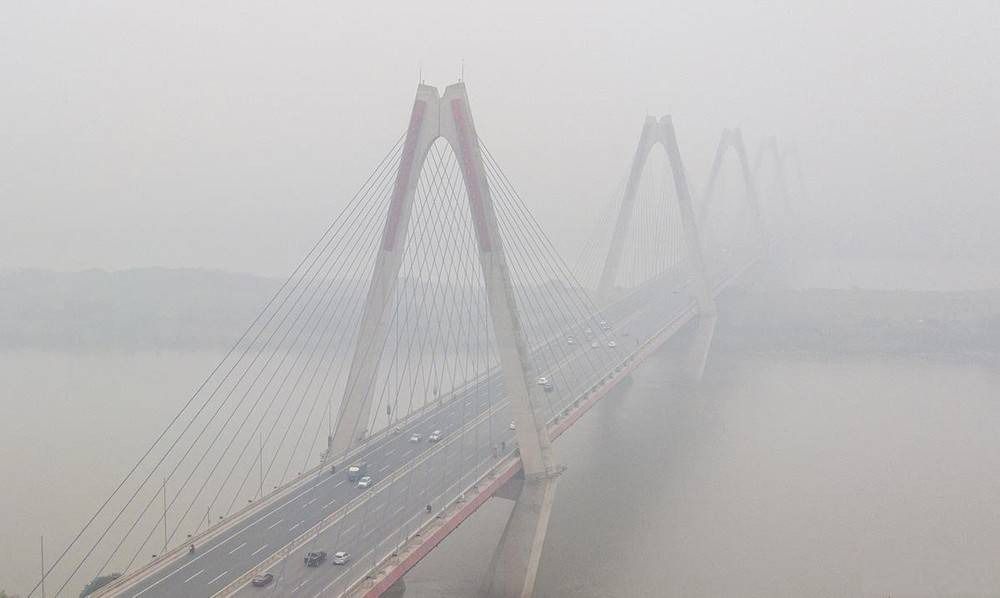
Current fine dust situation

Effective Methods for Measuring Dust Concentration in Living Spaces

The most common method for measuring dust concentration is laser light scattering, where dust particles deflect a laser beam to calculate real-time PM2.5/PM10 levels. This technique is fast, taking only a few seconds, making it suitable for daily home checks. Unlike traditional gravimetric methods which require lab analysis, light scattering provides instantaneous data.

Another option is the Piezo sensor, which measures the change in crystal frequency as dust adheres to it. This method for measuring dust concentration is highly accurate, often used in professional monitors adhering to EPA standards. However, for residential use, laser scattering is more convenient due to its affordability and portability. The Temtop S1+ Air Quality Monitor utilizes a high-grade laser sensor combined with a powerful fan. This device measures PM2.5 from $0-999g/m3, AQI, temperature, and humidity in just one minute. With Bluetooth, you can view data remotely on an app, and a 3-color LED (green-yellow-red) clearly signals the status.

Additionally, the Beta Attenuation Method (BAM) uses beta rays to measure dust mass, an EPA standard for outdoor monitoring.

Temtop Air Quality Monitor at EMIN

Related topic:

Quick answers about fine dust index pm 1.0 and pm 2.5 in polluted air

The Core Difference Between PM10, PM2.5, PM1.0 and Ultrafine Particulates (UFP)

How to Protect Yourself and Your Family Against Pollution

Firstly, apply a daily method for measuring dust concentration to grasp the situation. With the Temtop S1+, you receive an app alert when PM2.5 exceeds 50g/m3 - the WHO safety threshold. This helps you decide when to open windows or turn on the air purifier promptly.

Next, wear an N95 mask when going outside, especially during peak seasons in Hanoi. Indoors, clean wet surfaces instead of sweeping dry to avoid dust resuspension.

Grow indoor plants like snake plants or English ivy for natural dust filtration. Maintain humidity at 40 - 60% based on the device's data to limit dust settlement.

Limit frying and searing when cooking, and use a strong range hood. For children and the elderly, prioritize a private room with a monitor. The Temtop S1+ Bluetooth allows multi - room monitoring via the app, sending daily reports for convenience.

Finally, check your HVAC system regularly, as accumulated dust can spread pollution. A personalized method for measuring dust concentration like the Temtop S1+ turns you into your "home's air quality expert." The result? A healthier family every day.

An effective method for measuring dust concentration like laser scattering on the Temtop S1+ helps you control your living space amidst the pollution in Hanoi.


관련 뉴스

Guide to Selecting Case and Sensor Materials for Pressure Gauges in Corrosive Chemical Environments
2026년 10월 13일 11시 14분 57초

In chemical processing plants, wastewater treatment facilities, oil & gas operations, and food production, selecting the wrong material for a pressure gauge often leads to severe consequences: Bourdon tube failure, toxic chemical leaks, equipment breakdown, and serious occupational safety hazards. This article provides practical technical criteria for selecting the correct case and sensor materials when measuring pressure in corrosive environments.

Measuring COD and TOC in Electroplating Wastewater Using a Benchtop Analyzer? What Sources of Error Should Be Avoided?
2026년 10월 13일 10시 55분 11초

The current situation regarding electroplating wastewater analysis presents challenges: the wastewater contains acids, alkalis, and heavy metals (such as Cr, Ni, and Cu), alongside persistent cyclic organic compounds derived from brightening agents, anti-misting additives, and degreasing solvents. This complex composition causes significant fluctuations in COD levels depending on the specific process stage and production shift. Sending samples to external laboratories results in a delay of several days—by which time the biological treatment tanks or coagulation systems may have already been operating improperly for too long. Utilizing a benchtop COD analyzer on-site reduces this turnaround time to just a few hours, provided the user fully understands the specific sources of error associated with electroplating wastewater

How to Rapidly Reduce COD in Domestic Wastewater?
2026년 10월 13일 10시 25분 11초

Wastewater treatment plants serving apartment complexes, buildings, and residential areas sometimes experience effluent COD levels approaching regulatory limits, particularly following sudden load surges or shortly before scheduled compliance sampling. QCVN 14:2025/BTNMT, applicable to domestic wastewater from September 1, 2025, sets COD limits based on discharge volume and the receiving water body, while allowing dischargers to choose between TOC and COD parameters

Challenges of Pressure Gauges in Hydrogen Environments
2026년 10월 12일 16시 47분 15초

The global energy transition trend is driving industrial plants, chemical facilities, and renewable energy sites to integrate hydrogen as a strategic fuel source to achieve decarbonization goals. However, practical experience shows that traditional mechanical pressure gauges rapidly degrade in service life and experience dangerous failures when in direct contact with hydrogen environments.

The Trend of Eliminating Mechanical Pressure Gauges in Semiconductor Fabrication Plants
2026년 10월 12일 14시 44분 38초

In semiconductor cleanrooms, a single microscopic dust particle or a tiny toxic gas leak is enough to ruin an entire wafer batch worth millions of dollars. This vital requirement is accelerating a complete transition from traditional mechanical pressure gauges to digital pressure sensors and electronic pressure gauges.

혜택 소식 받아보기

대량 할인, 도매 가격 업데이트 및 신제품 소식을 이메일로 받아보세요.

구독하면 당사의 서비스 이용약관 및 개인정보 처리방침에 동의하는 것으로 간주됩니다.

빠른 지원

인증된 전문가에게 직접 연결


