Where Do Transient Overvoltage Surges in Solar Power Plants Come From, and Why Do Clamp Meters Need an Appropriate CAT Rating?
Accidents like this do not require a direct lightning strike on a person; it only takes a measurement tool in hand that cannot withstand the surge. In the previous article, we discussed the Autocheck self-test feature of the F404T clamp meter. This article takes a deeper technical step forward: Exploring where Transient Surges originate from and why a CAT IV 1000V / CAT III 1500V safety rating in the spec sheet is vital for technician safety.
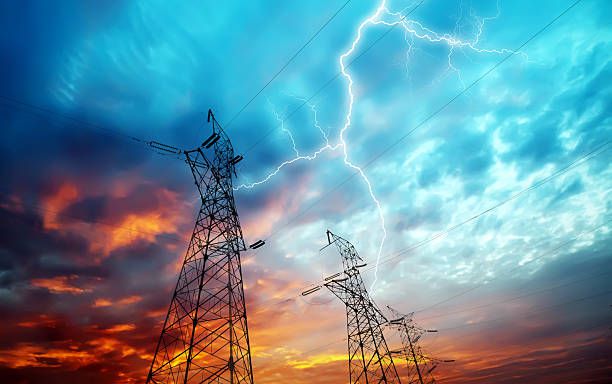
What is a transient overvoltage surge, and why can it destroy equipment in just a few microseconds?
A transient overvoltage surge is a peak voltage spike that rises extremely fast and extinguishes rapidly, typically lasting from microseconds to milliseconds. Because the duration is so brief, standard multimeters cannot capture it on screen. However, the immense energy concentrated in that instant is enough to puncture insulation, burn semiconductor components, or trigger explosive arc flashes right inside the meter enclosure.
Transient surges occur completely without warning. The system operates normally under a cloudless sky, yet a switching operation at a distant substation can still generate a surge. Therefore, the proper industrial safety mindset is to consider transient surges a guaranteed operational working condition, rather than a rare incident.
How does lightning impact solar power plants?
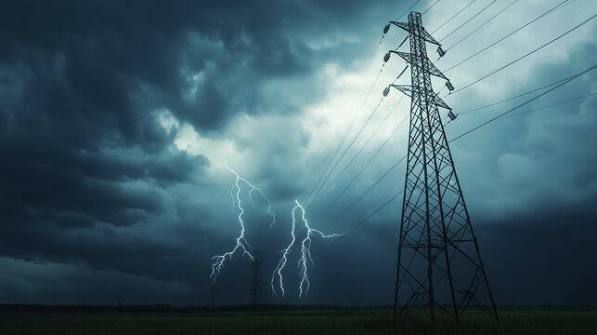
Solar power plants spread across vast areas with few high obstacles nearby, featuring kilometers of outdoor DC and AC cabling. This creates ideal conditions for lightning to affect the system via two distinct pathways:
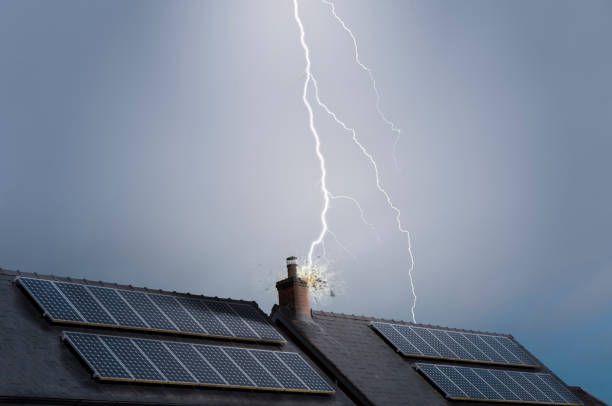
1. Direct Lightning Strikes
Lightning directly strikes solar panels, mounting structures, lightning rods, or cable lines. A massive surge current flows into the system, generating voltage spikes of thousands of Volts that propagate along both the DC string circuits and AC inverter circuits.
2. Induced Surge Propagation
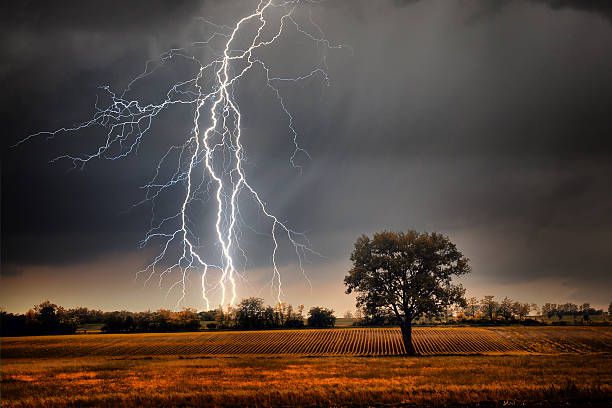
Lightning strikes nearby ground. Rapidly changing magnetic fields sweep across cable loops, generating high-voltage surges directly within conductors without needing a physical strike on the plant. Longer string cables induce significantly higher surge voltages.
How do internal switching operations generate overvoltage surges?
Nature is not the only source of surges. Everyday internal plant operations continuously produce them as well:
- Transformer & Inductor Switching: When interrupting circuits abruptly, magnetic fields stored in coils release instantaneously, concentrating into high-voltage transients on the line (similar to suddenly constricting a high-flow water pipe).
- Switching Breakers, Contactors & Disconnectors: Every time contacts open or close, electric arcs appearing in microscopic gaps create transient voltage noise lasting micro- to milliseconds.
- DC-Side Operations: Disconnecting MC4 connectors or replacing DC fuses under load creates direct arcing right where the technician is holding the test tool.
The greatest danger lies in the measurement tool in your hands
A clamp meter with insufficient insulation category can suffer a voltage surge flashover straight through its outer housing, triggering a high-temperature arc flash right in the user's hands. Range only tells you how much a meter can read; the CAT Rating tells you how the meter protects your life during a surge!
CAT Safety Categories (Measurement Category) according to IEC 61010
The international standard IEC 61010 categorizes electrical measurement locations based on potential surge energy levels. The closer to the primary power source and the lower the line impedance, the higher the destructive surge energy, requiring a higher CAT category:
Suitable only for end-use equipment. Absolutely do not use in industrial switchboards or Solar plants.
The mandatory minimum safety level for performing maintenance inside solar power plant systems.

The highest protection level, capable of handling maximum surge energy from outdoor utility lines.
Important Technical Note on Impulse Withstand Voltage:
Even when both rated at 1000V, a CAT IV 1000V rated device withstands test impulse voltages up to 12,000 V, whereas a CAT III 1000V device withstands only 8,000 V. This represents a critical safety margin gap.
How does the Chauvin Arnoux F404T clamp meter meet safety standards?
Chauvin Arnoux F404T, Comprehensive Protection
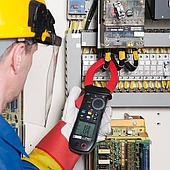
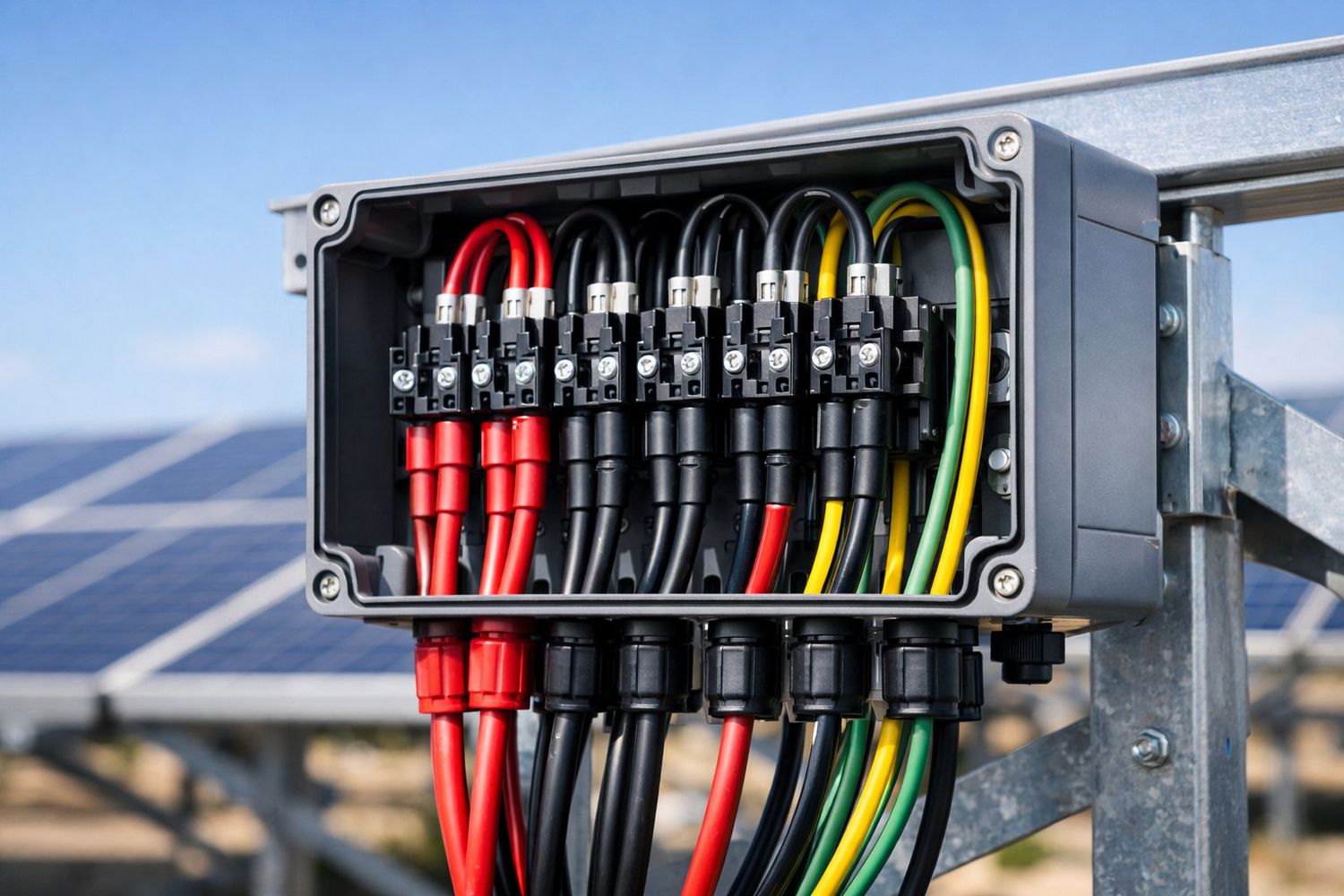
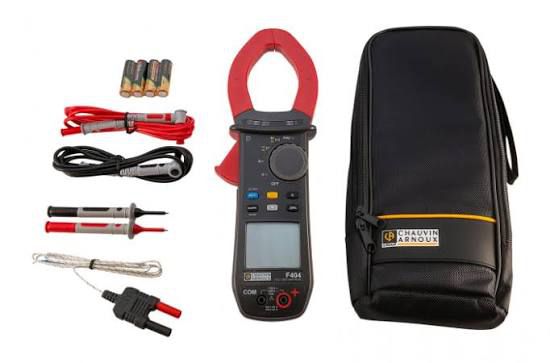
The Chauvin Arnoux F404T clamp meter features a dual safety rating of CAT IV 1000V / CAT III 1500V, allowing technicians to inspect flexibly from DC Combiner Boxes and 1500V DC strings to AC inverter stations without switching test tools.
- Superior Impulse Withstand: Protects users against lightning surges and sudden switching transients.
- Patented Autocheck Feature: Automatically validates measurement circuit integrity before concluding zero current (0 A).
- Rugged Environmental Design: IP54 dust and splash-proof housing with a wide 48mm jaw for easy one-handed operation wearing protective gloves.
Key Advice for Selecting Clamp Meters for Solar Power Plants
A CAT III 600V rated device is NOT safe for 1500V DC string measurements, even if the voltage range appears sufficient.
Most string maintenance measurements involve Direct Current (DC). Select tools supporting at least 1000A - 1500A DC.
Avoid meters that read incorrectly while displaying a plausible number. Autocheck is your final safety barrier.
EPC contractors, plant operators, and technicians interested in European safety-standard measurement solutions can view detailed pricing and technical specifications for the Chauvin Arnoux F404T officially distributed by EMIN Group at EMIN.VN.
Additionally, you can read the detailed guide on this product line from Chauvin Arnoux at: Avoiding DC Arc Flash Risks in Solar Maintenance: Safety Testing with the F404T Clamp Meter