Why Magnetic Stirrers Maintain a Smooth 30 RPM Without Stalling or Jerking
Running a magnetic stirrer at high speeds from 1,000 to 1,500 rpm is relatively easy. However, maintaining a continuous, stable speed of 30 rpm without jerking or stir bar decoupling (spin-out) presents a complex technical challenge. This ultra-low speed range is essential for suspension cell culture, microcarrier cultivation, shear-sensitive solutions, and mixtures with continuously evolving viscosity. Even a slight speed fluctuation can disrupt the entire reaction process. This article addresses key technical questions that technicians and lab managers frequently encounter when selecting stirrers for low-speed operations.
1. Why Is Maintaining 30 RPM Difficult, and Which Models Can Achieve It?
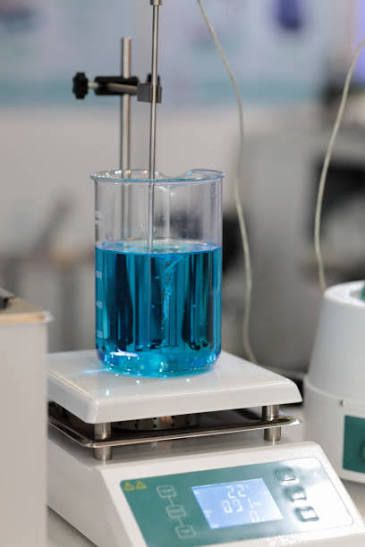
At low speeds, the electrical power delivered to the motor is minimal, leaving any frictional interference—no matter how small—clearly exposed. The load on the stir bar changes according to fluid viscosity, weakening the magnetic coupling between the motor drive magnet and the stir bar. Under these conditions, even slight resistance can cause the stir bar to decouple and slip out of synchronization (spin-out).
For smooth operation, a stirrer must integrate three key elements: a closed-loop control circuit, a stable motor drive, and exceptionally strong magnetic coupling.
The first parameter to check is the manufacturer's published speed range. Standard heated magnetic stirrers typically operate between 50 and 1,500 rpm with setting increments of 10 rpm, making a 30 rpm setting fall outside their standard operational window. Conversely, specialized low-speed culture stirrers offer much lower operating ranges: some models support from 1 to 150 rpm (1 rpm resolution), while others operate from 30 to 500 rpm with a speed deviation of only ±1% to ±2%. These dedicated units are designed specifically for spinner flasks in cell culture applications (typically unheated models).
2. How Do Brushless DC Motors & Closed-Loop Control Keep Speed Stable?
Many high-end magnetic stirrers now utilize Brushless DC (BLDC) motors, which offer outstanding advantages: exceptional durability, zero maintenance, and extremely quiet operation. Cell culture workflows particularly favor BLDC motors because stirrers must run continuously for days or weeks inside incubators, cold rooms, or CO2 chambers. High-efficiency BLDC motors transfer virtually zero excess heat to samples—a critical requirement when handling living cells. Standard models are engineered to operate reliably in harsh ambient environments from -10°C to 40°C with up to 80% relative humidity.
Regarding control architecture, the microprocessor operates on a Closed-Loop PID Control algorithm. Sensor inputs continuously measure actual rotation speed, automatically adjusting power delivered to the motor to match the setpoint precisely. Open-loop stirrers, in contrast, rely on fixed voltage supply; their actual speed drops sharply when fluid load increases, particularly within ultra-low speed bands.
3. How Does the Stirrer Maintain Set Speed as Fluid Viscosity Increases Mid-Process?
As liquid viscosity rises during a reaction, resistance against the stir bar increases proportionally. A closed-loop control system immediately detects the subtle drop in rotational speed and automatically increases motor power to compensate. Advanced stirrer models distributed by EMIN also incorporate viscosity trend measurement features, giving technicians real-time monitoring of sample thickening or thinning over time.
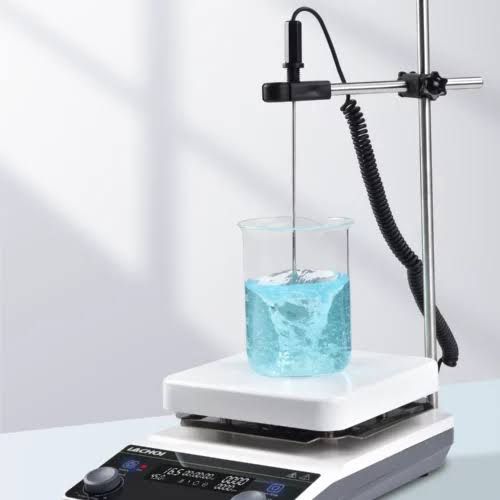
However, automatic compensation has physical limits. If the solution becomes excessively thick beyond the magnetic field's holding force, the stir bar can still decouple despite surplus motor torque. Laboratories must carefully cross-reference the manufacturer's published maximum volume and viscosity ratings against their specific sample properties.
4. The Influence of Magnetic Coupling, Stir Bars & Vessels on Spin-Out
The magnetic coupling serves as the sole transmission link transferring rotational force from the internal drive motor to the stir bar inside the vessel. Strong, evenly distributed magnetic fields keep the stir bar concentric with the motor axis, minimizing spin-out risks when encountering drag. Certain manufacturers utilize Alnico alloy magnets in heated stirrer lines to maintain magnetic strength at high operating temperatures.
Beyond the internal hardware, stir bar sizing and accessory choices play an equally vital role:
5. What Benefits Does the Soft Start Feature Provide?
Modern magnetic stirrers supplied by EMIN feature Soft Start (Ramping) functions, accelerating the motor gradually rather than jerking abruptly to set speed. This controlled acceleration enables smooth magnetic coupling catch-up, eliminates liquid splashing, protects shear-sensitive cell structures, and prevents stir bar decoupling from the center axis.
6. Technical Parameter Selection Checklist for Low-Speed Stirrers
When considering investments in low-speed agitation equipment, evaluate the detailed metrology parameter checklist below rather than choosing solely by general model series:
| Technical Parameter | Operational Significance & Metrological Value |
|---|---|
| Lowest Published Speed Range | Confirms whether the unit can operate stably at 30 RPM without stalling. |
| Speed Setting Resolution | A 1 RPM resolution increment offers vastly superior accuracy over 10 RPM steps at low speeds. |
| Published Speed Deviation Accuracy | Achieves ±1% to ±2% in specialized culture lines vs. ±2% at 1,500 RPM unloaded in standard units. |
| Motor Construction Type | Prefers Brushless DC (BLDC) motors for reliable, maintenance-free 24/7 continuous operation. |
| Closed-Loop Control System (PID) | Automatically holds set speed constant during changing loads or sample viscosity shifts. |
| Soft Start / Ramping Function | Minimizes shear stress, prevents sample splashing, and stops stir bar spin-out. |
| Timer Functions | Many models support digital timers up to 160 hours, automatically shutting off with audible alerts. |
| Max Volume & Stir Bar Capacity | Defines maximum sample liquid limits and usable vessel base sizes. |
| Safe Operating Environment Rating | Ensures durable operation inside CO2 incubators, environmental chambers, or high-humidity rooms. |
Explore the full range of genuine digital magnetic stirrers available at EMIN: Explore the EMIN Magnetic Stirrer Catalog
For research laboratories regularly handling sensitive proteins, enzymes, cell cultures, or long-duration chemical synthesis, investing in a magnetic stirrer standardized according to these technical parameters guarantees analytical accuracy and trial-to-trial reproducibility.
Related Articles:
Upgrading Laboratory Heating Magnetic Stirrers: Temperature Accuracy, Hotplate Materials & Cleanroom Safety Standards
DaiHan HP-20D vs. HP-30D Digital Hotplates for Labs: How to Choose the Right Model for Your Application