Barley has high yield potential, good tolerance to spring drought, and a relatively early maturity period. To make effective use of these characteristics, growers need to monitor the entire production process, from soil preparation, seeding, and nutrient management to crop protection and grain quality control at harvest using a grain moisture meter.
Start winter barley cultivation with field conditions
According to reference data, winter barley performs well in fertile soils with medium to heavy texture and a balanced pH. The recommended pH range is reported to be 6.0 to 7.2. Using a pH meter gives growers additional information for evaluating soil conditions.
Crop rotation also has a role in creating a good starting position. Winter rapeseed, potatoes, and legumes are listed as useful preceding crops because they do not deplete the soil in the same way and may help maintain its structure. Field preparation can begin soon after the previous harvest. Plowing followed by a short period of rest is described as a way to create conditions for germination.
A soil pH measurement can be part of this preparation stage. The Dramiński PHG is identified in the source as a digital pH meter for soil and liquids. Its result should be interpreted within the wider agronomic plan for the particular field.
Sowing timing and nutrient planning
The source identifies the first or second week of September as the preferred sowing period for winter barley. Early sowing can encourage tillering, although it can also increase disease risk. This trade-off makes field-specific planning important, especially when weather or harvest timing delays establishment.
A typical seeding rate stated in the source is 125 to 140 kg/ha. The selected rate should reflect soil conditions and sowing timing, with a higher rate potentially considered for later sowing. These figures are a reference from the supplied material, not a substitute for an assessment of local field conditions.
Nutrient planning covers nitrogen, phosphorus, potassium, and micronutrients including manganese, copper, and zinc. An autumn nitrogen dose of up to 20 kg/ha is noted as support for root development. The main nitrogen application is then generally made in spring in two stages: at the start of vegetation and before stem elongation.
Manage weeds and disease pressure
Winter barley may be resilient compared with many cereal crops, but it remains exposed to weeds and disease. Treated seed is presented as an initial measure against seed-borne diseases. Autumn herbicide application can reduce weed pressure early in the season.
In spring, preventive fungicide treatments may be relevant where risk is high. The diseases named in the source are powdery mildew, barley rust, and net blotch. Monitoring crop development and risk conditions helps ensure that protection decisions are made at an appropriate time.
Harvest timing and grain moisture control
Winter barley is typically harvested from late June to early July, according to the source. Grain is considered ready when it is fully mature and its moisture content is below 15%. Harvest timing matters because grain condition influences both its quality and its suitability for storage or sale.
Grain harvested at excessive moisture can be vulnerable to mold development. Drying may also create losses, while reduced quality can affect commercial use. Conversely, harvesting too early can result in mechanical losses and immature grain. Checking moisture directly in the field can therefore support the decision to harvest, dry, store, or market the grain.
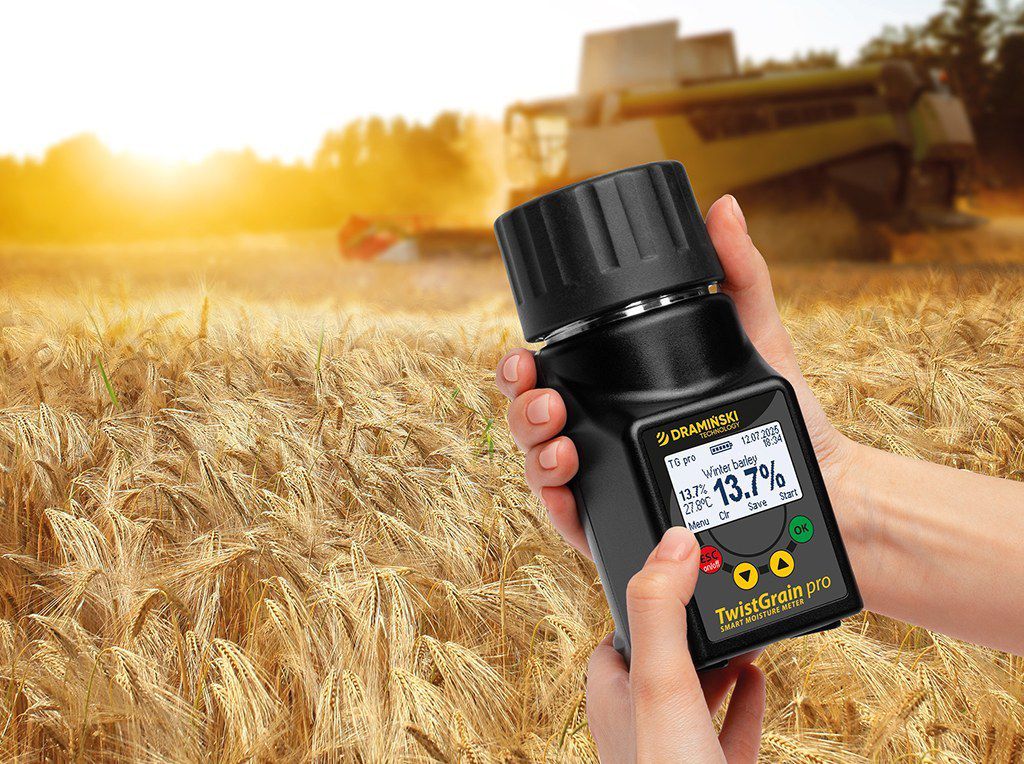
The TwistGrain pro is described in the source as a smart moisture meter with sample compression. A moisture meter reading taken immediately after harvest provides a measurable basis for handling decisions instead of relying on visual estimation alone. This is particularly useful when field conditions change quickly and each hour of harvest can affect the final outcome.
Using a Grain Moisture Meter to Determine Harvest Time
Successful winter barley cultivation combines agronomic preparation with quality control at harvest. Soil pH assessment can inform field preparation, while grain moisture measurement can help determine the appropriate handling route after combining. Used at the right stage, these measurements support decisions that protect grain quality and reduce avoidable uncertainty.
Checking moisture content immediately after harvest with a suitable grain moisture meter provides growers with specific data rather than relying on visual or sensory assessment. This is particularly useful when the grain needs to be processed within a short period after harvest
Growing winter barley involves more than selecting a variety, sowing seeds, and applying fertilizer. Final crop quality also depends on maintaining suitable soil conditions, monitoring disease risks, and, most importantly, determining the right time for harvest. Agricultural moisture meter is a practical tool in this process, helping protect the quality and usability of the harvested grain