Hydrography & Oceanography Survey Equipment
Reliable water-depth and seabed data are essential in dredging, port maintenance, inland waterway surveys, offshore construction, and many environmental assessment projects. Choosing the right Hydrography & Oceanography Survey Equipment helps survey teams collect cleaner data, work more efficiently on the water, and match instrument capability to the depth range and survey objective of each job.
This category brings together practical systems used for bathymetric and hydrographic work, from compact depth meters for straightforward sounding tasks to more advanced echo sounding solutions for detailed seabed mapping. Depending on the application, buyers may be looking for portable equipment for small vessels, dual-channel systems for broader operational flexibility, or multibeam platforms for higher-density coverage and more complete bottom characterization.
Equipment scope for hydrographic and oceanographic survey work
In day-to-day field operations, hydrographic survey equipment is selected based on the type of depth information required, the expected seabed conditions, and the level of positional integration needed. Some projects focus on fast and simple depth checking, while others require continuous sounding, compatibility with navigation and survey software, and support for more advanced data workflows.
Within that range, depth meters and echo sounders play a central role. A portable unit such as the Hondex PS7F.L Water depth meter can suit basic water-depth verification and spot measurements, while systems like the SATLAB HydroBeam S2 Dual-Channel Echo Sounder are more aligned with survey tasks that demand broader depth capability, digital interfaces, and structured output for hydrographic operations. For users comparing adjacent technologies, related categories such as Doppler Radar or speed sensors may also be relevant in wider motion and navigation measurement setups.
From basic depth sounding to higher-resolution seabed mapping
Not every survey requires the same level of detail. For small boats, fisheries support, river checks, reservoir inspection, or quick depth confirmation, a compact handheld or portable depth meter may be enough. In those cases, the priority is often ease of transport, straightforward operation, and a workable measurement range for nearshore or inland applications.
When projects move toward channel surveying, dredging control, hydraulic engineering, or detailed bottom profiling, echo sounders become more important. A dual-channel platform can support different frequencies for varying depth ranges and bottom conditions, while a multibeam echosounder extends capability further by collecting a dense swath of depth soundings across the seabed rather than a single line beneath the vessel. That difference has a direct impact on survey speed, coverage, and final map quality.
Representative solutions in this category
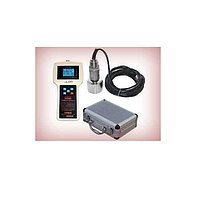
Hondex is represented here by the PS7F.L Water depth meter, a compact solution intended for practical depth measurement where portability and simple deployment matter. Based on the available product context, it is suitable for users who need an external test lead arrangement and a moderate sounding range without moving into a full survey-console setup.
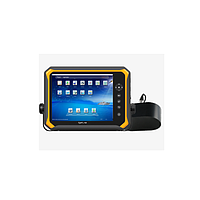
SATLAB offers the HydroBeam S2 Dual-Channel Echo Sounder, which is better suited to professional hydrographic workflows requiring screen-based operation, interface connectivity, and support for recognized raw data output formats. Its dual-channel architecture is useful when users need flexibility across shallower and deeper measurement conditions.
For more advanced seabed mapping, R2sonic Sonic 2022V plus Multibeam Echosounder targets high-density bathymetric surveying. In practical terms, this class of system is relevant when the goal is not just depth at a single point, but wide-swath acquisition, high sounding density, and additional water-column or seabed information for demanding marine survey tasks.
How to choose the right system for your survey
The first selection factor is survey objective. If the requirement is simple depth confirmation, a portable depth meter may be more efficient and cost-effective than a larger hydrographic package. If the project involves dredging, route clearance, harbor maintenance, or engineering-grade bathymetry, users typically need an echo sounding platform with better integration, data handling, and measurement control.
The second factor is depth range and operating environment. Shallow inland waters, rivers, ponds, and nearshore areas often call for different frequency behavior and installation methods than coastal or offshore projects. Vessel size, mounting constraints, power availability, and expected survey speed should all be considered before choosing between compact instruments, single-beam or dual-channel systems, and multibeam equipment.
A third factor is data workflow. Professional survey teams often need outputs that can be integrated with positioning equipment, logging software, and post-processing tools. If the final deliverable includes contouring, dredge volume estimation, cross-section analysis, or seabed models, it is important to choose equipment that fits the required survey process rather than looking only at headline measurement range.
Typical applications across marine and inland projects
This equipment category is relevant to a wide range of operational scenarios. Common examples include hydrographic surveys for rivers and lakes, harbor and berth maintenance, dredging support, bridge and dam inspection, coastal engineering, and search operations where underwater depth information improves situational awareness.
Oceanographic and marine contractors may also use these systems for seabed assessment, route planning, or baseline measurement before construction and installation work. In more complex setups, hydrographic equipment is often paired with positioning, motion, and vessel-related sensors to improve data consistency. Users building a broader survey toolkit may also explore the wider hydrography and oceanography equipment range together with communication tools such as walkie-talkies for field coordination.
Key considerations for B2B procurement
For engineering firms, survey companies, dredging contractors, and public-sector buyers, the procurement decision usually goes beyond product type alone. It is important to review installation requirements, transport practicality, onboard power conditions, interface compatibility, and the intended survey standard. A compact unit can be ideal for one-person field use, while a larger survey-grade echosounder may be a better fit for repeatable project delivery and reporting.
It is also worth comparing how each system fits vessel deployment and operator workflow. Factors such as display readability, physical footprint, ease of connection, and available data export options can affect real-world productivity as much as measurement capability. In hydrographic operations, equipment that aligns with the crew’s workflow often reduces setup time and helps maintain more consistent field results.
Finding a suitable fit for your hydrographic workflow
The most effective choice depends on how much detail the survey requires, how often the equipment will be used, and whether the project calls for portable depth checking or full seabed mapping capability. Hondex, SATLAB, and R2sonic illustrate different levels of hydrographic instrumentation, from straightforward water-depth measurement to more advanced echosounding and multibeam survey applications.
For B2B buyers, the best approach is to match instrument class to operational need: simple sounding for quick checks, dual-channel echo sounding for flexible hydrographic work, or multibeam technology for dense coverage and higher-resolution seabed data. This category is designed to support that comparison and help users move toward equipment that fits both field conditions and project deliverables.
인증된 전문가에게 직접 연결