Proper management of chemical storage areas is not only essential for regulatory compliance but also helps maintain sample integrity, protect chemical storage cabinets, and minimize interruptions to laboratory operations.
Many laboratory incidents begin with seemingly minor issues, such as placing a chemical container in the wrong location, using a corroded spill tray, or allowing identification labels to fade over time. As these small problems accumulate, the overall safety of the laboratory gradually declines.
Storing Chemicals Wherever Space Is Available Instead of Grouping Them by Compatibility
As the number of chemicals increases, any available space inside the cabinet is often used first. Although this approach maximizes storage capacity, it may place incompatible chemicals next to one another.
Even when containers are tightly sealed, small amounts of chemical vapors can still be released into the cabinet. Over time, these vapors may accelerate corrosion or affect the stability of sensitive chemicals.
Some laboratories also store strong oxidizing agents alongside organic solvents to save space. This practice significantly increases the risk of fire, as oxidizers can intensify combustion if a leak or spill occurs.
Instead of sharing the same compartment, incompatible chemicals should be separated into different shelves or dedicated cabinets. Chemicals should be organized according to their hazard classes, such as acids, bases, organic solvents, and oxidizing agents, with individual spill containment trays provided for each group.
Worn or Faded Labels Increase the Risk of Handling Errors
Prolonged exposure to humidity, solvent vapors, and cleaning agents can cause chemical labels to peel, fade, or lose critical hazard information.
When labels become difficult to read, laboratory personnel often rely on memory or experience rather than clear visual identification, increasing the likelihood of handling the wrong chemical.
A routine label inspection and replacement program significantly reduces identification errors while improving inventory management, expiration tracking, and chemical traceability.
Cabinet Capacity Should Match Storage Requirements
The size of a chemical storage cabinet should be selected based on the quantity of chemicals being stored.
If only a few containers are placed inside an oversized cabinet, they are more likely to shift whenever the door is opened or closed. Repeated movement may crack glass bottles or damage container caps. Oversized cabinets also result in higher initial investment costs than necessary.
Adjustable shelves, dividers, and bottle restraints help keep containers securely in place without requiring major changes to the storage system.
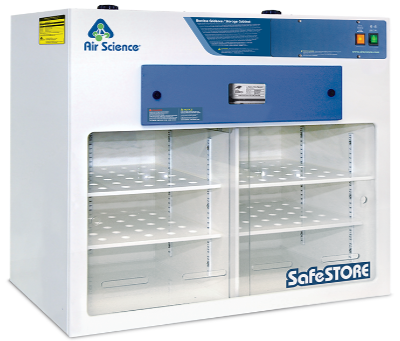
Chemical Storage Cabinets Becoming General Storage Areas
Over time, chemical storage cabinets are sometimes used to store paper towels, laboratory supplies, sampling tools, or even small electrical devices.
Adding unrelated items reduces the cabinet's intended safety function. During a spill or leak, these objects can obstruct emergency response and make cleanup more difficult.
A laboratory chemical storage cabinet should be reserved exclusively for chemicals and accessories directly related to chemical storage.
Ventilation Systems Are Rarely Inspected After Installation
For volatile chemicals, ventilation performance gradually decreases if air vents become clogged with dust or if door seals lose their airtightness after years of use.
The continuous buildup of chemical vapors not only affects storage conditions but can also shorten the service life of the cabinet itself.
Regular inspection of ventilation openings and door gaskets helps maintain consistent performance throughout the cabinet's operating life.
Choosing the Right Chemical Storage Cabinet Reduces Long-Term Operating Costs
No single chemical storage cabinet is suitable for every type of chemical. Different chemicals present different hazards, including flammability, corrosiveness, and toxic vapor emissions, requiring specialized storage solutions.
Flammable solvents such as ethanol, methanol, acetone, and isopropanol should be stored in flammable safety cabinets that comply with recognized safety standards. These cabinets feature double-wall construction, fire-resistant materials, and self-closing doors to slow heat transfer during a fire and reduce the spread of flames.
Strong acids and concentrated alkalis, including sulfuric acid, nitric acid, hydrochloric acid, and sodium hydroxide, require cabinets with excellent corrosion resistance. Polypropylene (PP) chemical storage cabinets or other chemically resistant cabinet designs are generally more suitable than standard steel cabinets, which are more susceptible to corrosion caused by chemical vapors.
For toxic or highly volatile chemicals, laboratories should consider ventilated chemical storage cabinets or cabinets connected to the laboratory exhaust system. Proper ventilation minimizes vapor accumulation, improves indoor air quality, and provides a safer working environment.
Selecting a cabinet designed for the specific chemicals being stored helps reduce corrosion, lower maintenance costs, and extend the service life of both the cabinet and its contents. Features such as spill containment trays, adjustable shelves, secure locking systems, and effective ventilation further enhance operational safety.
When chemical storage areas are properly managed and the appropriate chemical storage cabinets are used, laboratories not only improve safety compliance but also preserve chemical stability, reduce maintenance expenses, and support uninterrupted research and testing activities.