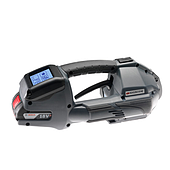
To effectively resolve capacity bottlenecks without wasting capital investment, industrial engineers must evaluate equipment based on actual packaging throughput, the consistency of package dimensions, and the floor layout of the dispatch area.
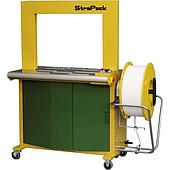
To effectively resolve capacity bottlenecks without wasting capital investment, industrial engineers must evaluate equipment based on actual packaging throughput, the consistency of package dimensions, and the floor layout of the dispatch area.
Switching from steel strapping to PET plastic strapping is not merely a change in consumables; it represents a shift in load-securing mechanisms, end-of-line operational procedures, and workplace safety standards.

Understanding the thermomechanical principles of each technology helps factory engineers and procurement teams select the right strapping machine configuration, preventing joint failure when packages are exposed to container vibrations or sudden temperature changes.

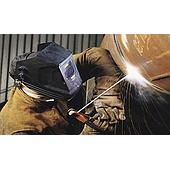
Welding machine power describes the electrical input required to create and sustain an arc. Choose it by checking the available supply, welding process, duty cycle, material thickness, and expected operating time.

A three-phase welding machine typically uses 380V industrial power and suits workshops that need stable operation for heavier or recurring welding work. Choose the process, capacity, input supply, and working intensity together.

Gasless MIG welding uses self-shielded flux-cored wire, making it practical for mobile and outdoor work on carbon and structural steel. It produces slag and more fumes, so it is less suited to thin materials or high-finish work.

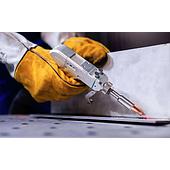
Aluminum welding requires stable arc and heat control. MIG suits repeatable production, TIG AC suits thin material and appearance-sensitive work, while laser welding supports precision and automation.

Aluminum can be MIG welded with aluminum-specific preparation and consumables. Clean the oxide layer, use appropriate shielding gas and wire, move quickly, and manage heat to reduce burn-through, cracking, porosity, and distortion.

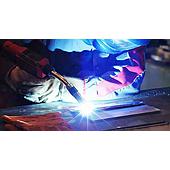
Black TIG welds on low-carbon steel can result from contamination, unsuitable shielding-gas flow, incorrect current settings, or inadequate gas coverage caused by torch angle. Clean and dry the joint, use parameters suited to material thickness, and maintain a steady technique.

Stick-welder settings should match electrode diameter, material thickness, welding position, polarity instructions, and the machine’s duty cycle. Start within the applicable amp range, run a test weld, then make small adjustments based on arc behavior and bead appearance.
直接联系认证专家