Color consistency is an important part of appearance quality in many manufacturing environments. When color varies between materials, production batches, or finished products, it can affect product evaluation and brand presentation. Choosing a colorimeter should therefore begin with a clear view of the organization’s color-control needs rather than with a single feature or purchase price.
For electronics manufacturing and other quality-focused operations, the right instrument can support more consistent color measurement in the locations where work is actually performed. A structured evaluation helps teams compare options on measurement requirements, operating conditions, functionality, support, and overall value.
Start by defining color measurement requirements
Before comparing instruments, document what the product and process require. Different industries and products may prioritize different aspects of color. For example, textiles may focus on color vividness and color fastness, while automotive manufacturing may place greater emphasis on body-color uniformity and weather resistance.
Use these questions to build a practical requirement list:
- What level of color accuracy is required for the product?
- Which colors or color ranges need to be measured?
- Will measurement take place on the production floor, in a laboratory, or in both locations?
- Does the workflow need data storage, analysis, or report printing?
- Must the instrument work with an existing color-management process?
Higher-precision instruments may provide more detailed measurement results, but they may also involve a higher price. The goal is to select an instrument whose capabilities correspond to the required level of control. Similarly, confirm that the color matching machine covers the color range relevant to the products being assessed. An instrument intended for a limited range or particular color space may not suit a more varied product portfolio.
Compare handheld, portable, and desktop colorimeters
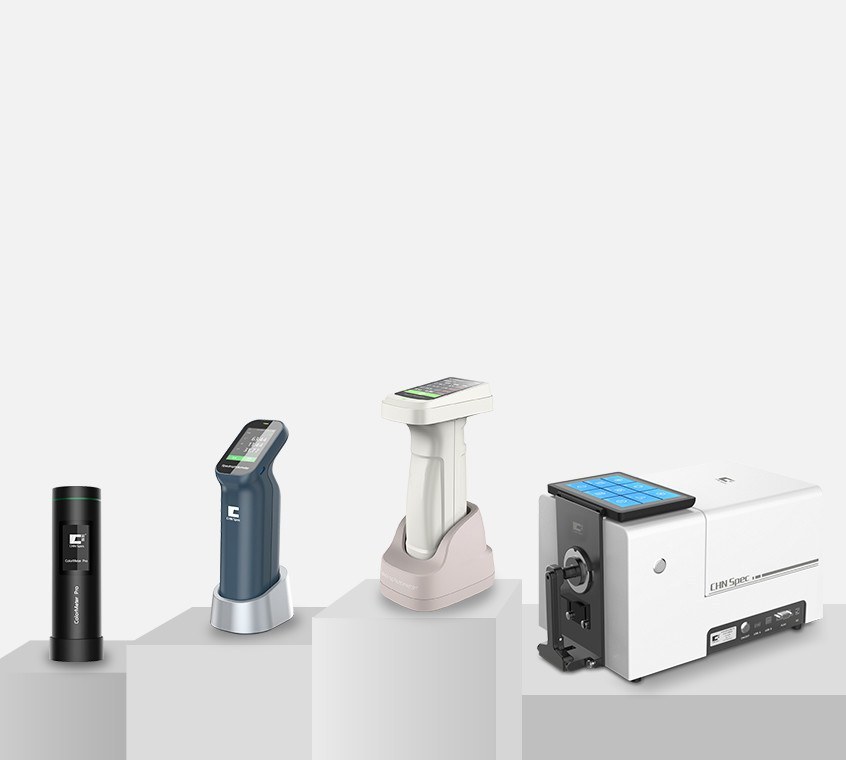
Colorimeters are commonly considered in three broad formats. Each format involves a different balance between portability, measurement capability, and working environment.
Handheld colorimeters
Handheld colorimeters are compact and easy to carry, making them useful for rapid on-site checks. They can be a practical choice where convenience and quick measurement are the main priorities. However, the source material notes that their measurement accuracy is relatively lower, so they may be better suited to applications where color requirements are less stringent.
Desktop colorimeters
Desktop colorimeters are associated with high measurement accuracy and extensive functionality. They are intended for enterprises or laboratories with especially strict color requirements. Their trade-offs are size, cost, and limited portability. A desktop format can be appropriate when measurements are performed in a fixed location and precision is the leading concern.
Assess workflow features, not only measurement results
A colorimeter is part of a broader quality workflow. Consider how results will be recorded, reviewed, and communicated after the measurement is complete. Depending on operational needs, useful functions may include data storage, data analysis, and report printing. These capabilities can help organize measurement records and support day-to-day quality management.
Operational simplicity matters as well. During evaluation, assess whether the instrument is convenient for the people who will use it and whether its routine operation fits the available time and work procedures. Stability should also be considered during testing, since a colorimeter needs to perform reliably within the intended process.
Request practical testing before making a decision
Once a shortlist has been created, practical testing is an important step. Ask suppliers for sample instruments where possible, then evaluate them in conditions that reflect real work. This approach allows the team to examine measurement accuracy, ease of operation, and stability directly rather than relying only on product descriptions.
Testing should also include compatibility with the organization’s current color-management system or process. The purpose is to determine whether the selected colorimeter can be integrated smoothly into production and quality-control activities. A technically capable instrument may still create unnecessary friction if its data handling or routine use does not match the existing workflow.
Review supplier support and long-term service
Supplier support is a significant consideration in colorimeter selection. Review the available warranty period, maintenance service, and technical support. The supplier’s ability to respond to operational questions and provide professional assistance can affect how effectively the instrument is used over time.
Brand reputation can also be part of the review process. Teams can consider product feedback, consult industry specialists, and compare the experiences of other users. This research should complement practical testing, not replace it.
Make a value-based purchasing decision
Price is relevant, but it should not be the only selection criterion. Compare price alongside measurement performance, quality, functions, supplier support, and suitability for the actual application. The best choice is the option that meets the organization’s defined requirements while providing an appropriate balance of capability and cost.
To choose a spectrophotometer effectively, establish requirements first, compare the available instrument formats, test shortlisted options in real conditions, and verify support arrangements. This process creates a more informed basis for color quality control and helps align the selected instrument with the organization’s production needs.