Glossiness and color measurement are closely connected in print quality control. A printed sheet may meet a target ink color while still looking different from another sheet because its surface reflects light differently. For this reason, evaluating printed materials involves more than looking at color alone. Gloss level and measured color should be considered together when assessing appearance and maintaining a consistent printed result.
Why gloss changes the appearance of printed color
Gloss describes how a surface reflects light. A high-gloss printed surface is generally smoother and reflects light more directly. This can make colors appear brighter, more saturated, and higher in contrast. The visual effect can be especially noticeable when comparing the same printed color on high-gloss and matte materials.
On a lower-gloss surface, light is scattered more broadly. As a result, the same color may appear softer or darker, with lower apparent saturation and contrast. This does not necessarily mean that the ink formulation has changed. It means that the surface condition is contributing to the way the printed color is perceived.
The relationship is important because print buyers, operators, and end users judge appearance visually. A smooth, glossy finish can create a vivid visual impression, while a matte or low-gloss finish can produce a more subdued appearance. Neither finish is inherently better; the relevant requirement is whether the finished material meets the intended gloss and color standard.
Key visual effects of gloss on print
Color saturation and contrast
Higher gloss can strengthen the perceived saturation and contrast of a printed color. With a smoother reflecting surface, the color may look cleaner and more lively. Lower gloss can reduce this effect, creating a more muted visual result.
Color lightness
Gloss can also influence perceived lightness. Changes in surface reflection affect how much light reaches the viewer and how the printed area is seen. Therefore, a change in gloss may alter the apparent lightness of a color even when the print design and ink color are otherwise intended to remain consistent.
Overall visual texture
Surface gloss contributes to the overall texture and appeal of printed matter. A glossy surface may emphasize a polished appearance, whereas a low-gloss surface may support a softer look. Measuring both properties helps distinguish a true color issue from an appearance difference caused by the surface finish.
Measuring gloss on printed materials
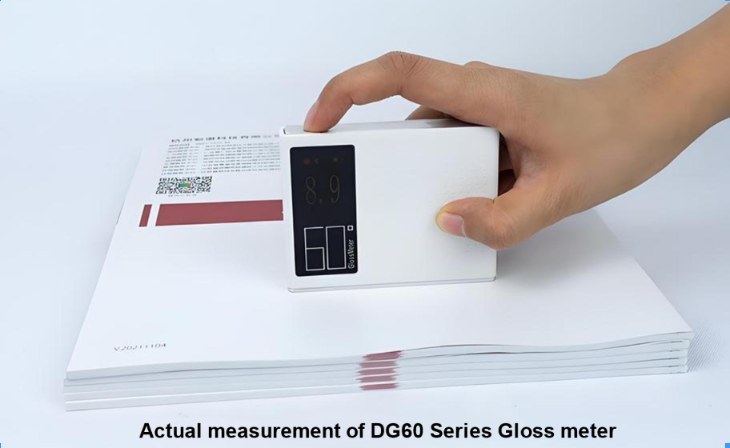
A gloss meter is used to obtain gloss values from the printed surface. The CHN SPEC DG60 series gloss meter is presented as a tool for measuring gloss on printed paper, including high-gloss, semi-gloss, and matte surfaces. The resulting data can support process adjustments and help manufacturers compare production batches with their established gloss requirements.
Before measurement, the instrument should be calibrated and the measurement environment kept stable. External light and temperature conditions can interfere with the measurement process, so they should be controlled as far as practical. Position the measuring probe vertically on the printed surface, then record the displayed gloss value.
One reading may not represent the entire sheet or batch. Measuring several locations and calculating an average provides a more reliable view of the material’s gloss condition. This approach is particularly useful when the surface finish may vary across a printed area.
Measuring printed color with a spectrophotometer
Color measurement is typically performed with a spectrophotometer. The CHN SPEC DS-700 series spectrophotometer is identified for measuring the appearance color of printed materials and supporting digital management of printed appearance. Color data gives production teams an objective basis for evaluating whether printed output remains aligned with the intended appearance.
Gloss and color data should be reviewed as complementary information. If a print looks different, measuring color without considering gloss may leave part of the appearance change unexplained. Conversely, gloss data alone cannot describe the color of the printed image. Using the appropriate measurement method for each characteristic supports a more complete assessment.
A practical print quality workflow
Start by defining the expected visual finish for the printed material, including its gloss condition and intended color appearance. Measure gloss at multiple representative locations, record the results, and compare them across sheets or batches. Measure appearance color with a spectrophotometer and retain the results as part of the quality record.
When a difference is observed, review gloss and color together before adjusting the printing process. This structured approach helps teams evaluate printed materials more consistently and supports decisions based on measurement data rather than visual impression alone.