What is the nature of air flow?
Airflow is the volume of air moving through a given area in a given period of time. It is usually measured in kilograms (the mass of air passing through a given point in space) in a given time (usually hours). The common unit used to measure airflow is the mass of air passing through each square meter in one second (kg/m²/s). Airflow can also be converted to other units such as air volume per second (m³/s) or air mass per second (kg/s).
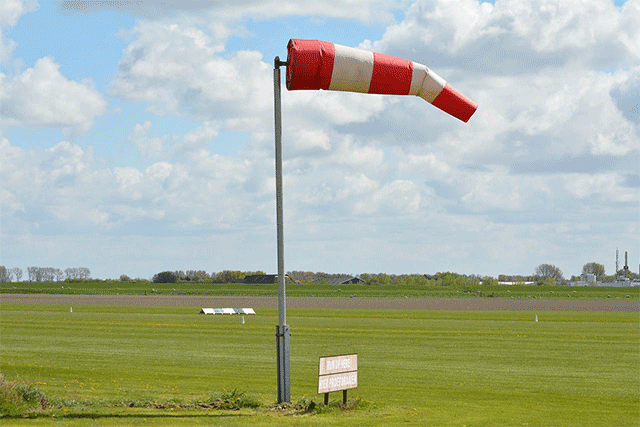
This parameter plays a particularly important role in evaluating the operating efficiency of equipment such as fans, air compressors or ventilation systems. In addition, air flow is also a factor of interest in many fields such as wind energy, environmental management and meteorology.
So what units are used to measure wind flow?
As mentioned in the concept section, units of wind flow measurement are divided into two main groups: volumetric and mass. Specifically as follows:
Volume units
l/s (liters per second)
m³/h (cubic meter per hour)
ft³/h (cubic feet per hour)
ft³/min (cubic feet per minute, also known as CFM)
Mass units
kg/s (kilograms per second)
What formula calculates air flow?
The formula for determining wind flow is based on the relationship between wind speed and cross-sectional area through which the wind flows. Specifically, the formula is expressed as follows:
Q = A × V
Where:
Q is wind flow (unit: m³/s)
A is cross-sectional area where the wind passes (unit: m²)
V is wind speed (unit: m/s)
To calculate the wind flow, it is necessary to accurately determine two factors: wind speed and cross-sectional area at the measurement location. Wind speed can be measured by a Kitsuda meter or other specialized measuring devices. The cross-sectional area is determined based on the size of the area through which the wind flows. Once these two parameters are available, simply apply the above formula to calculate the wind flow value at the measurement point.
For example: If the measured wind speed is 10 m/s and the cross-sectional area is 5 m², applying the formula we have:
Q = 5 m² × 10 m/s = 50 m³/s
Thus, the wind flow at that location will be 50 m³/s.
What is an air flow meter?
Air flow measuring devices are used to check the performance of wind systems and ensure they meet technical standards and safety requirements. To measure air flow, people often use wind sensors or wind flow meters. Current devices are often integrated with the function of measuring wind speed. Applied technologies include: measuring by hot wire, measuring by fan blade and measuring cup.
Suggest some best air flow meters
After learning about common wind flow measurement units, if you are looking to buy a flow or wind speed meter for use, you can refer to the following devices:
Anemometer TES-3145
TES-3145 is an anemometer capable of measuring wind flow in the range of 0 to 999900 m³/min / 0.001 m³/min, with an accuracy of ±3% of reading ±1%FS. In addition, the device also integrates functions such as: measuring wind speed, measuring air volume, measuring temperature, humidity and atmospheric pressure.
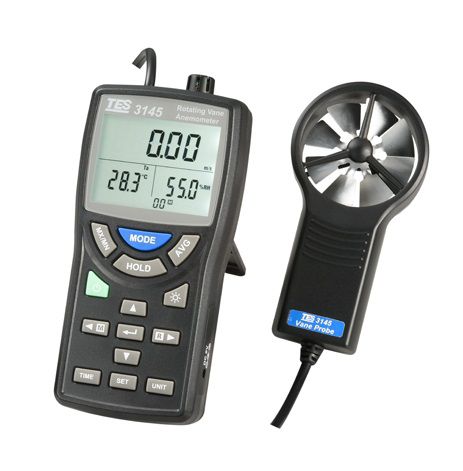
TES-3145 can also calculate parameters such as dew point temperature, wet bulb temperature, air cooling temperature, heat index temperature and humidity index. Some outstanding features of the device include:
Instantaneous, average, 2/3 air volume measurement
Wind speed unit selection: meter/second, feet/minute
Relative humidity, temperature, and barometric pressure measurement
Data lock and max/min/average function
Manual data memory and reading function: 99 groups
Tenmars TM-412A Temperature, Speed, Air Flow Meter
TM-412A is a device from the widely known TENMARS brand today. The device allows measuring air flow in two ranges 09999 CMM and 09999 CFM. In addition, the device is also capable of measuring absolute pressure, temperature, humidity and wind speed.
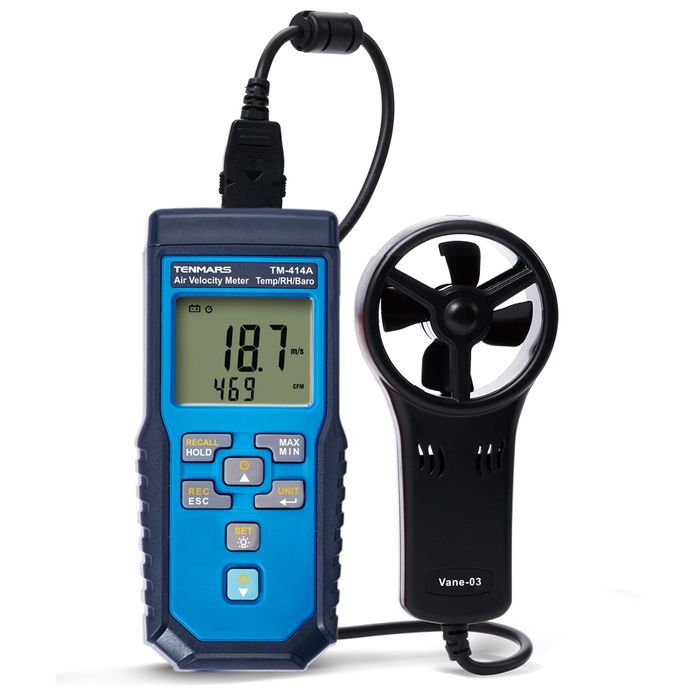
Advantages of Tenmars TM-412A include:
High sensitivity 0.4 m/s
Max/Min/Avg measurement, hold measurement data
Automatic power off or hard button shutdown
Data recording with memory up to 99 records
Easy to use in many different environments while still ensuring work efficiency
Testo 420 Air Velocity and Flow Meter
Testo 420 is capable of measuring air flow in the range of 40 to 4000 m³/h, with an accuracy of ±3% of the measured value + 12 m³/h and a fast response time of just 1 second. The device stands out with many features:
Measurement of velocity, flow, absolute pressure, temperature and humidity
Flexible application in spaces such as offices, shopping malls, hospitals...
Supports Bluetooth connection for measurement at air supply sources in HVAC systems
Auto Zero feature for increased pressure measurement accuracy
Large, backlit display for clear results
Analyze, generate reports on-site and send via email via Bluetooth connection (via app)
Supports point-to-point and time-based average calculations